



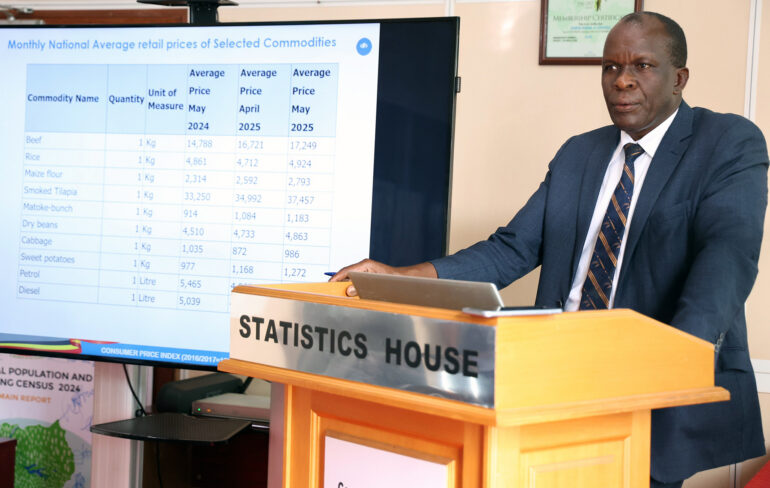
Uganda’s Annual Headline Inflation rose to 3.8% in the 12 months ending May 2025, up slightly from 3.5% in April 2025, according to the latest Consumer Price Index (CPI) report by the Uganda Bureau of Statistics (UBOS). The increase, though modest, reflects mounting pressure on consumer wallets, mainly due to rising food and core commodity prices. The report shows that Annual Core Inflation climbed to 4.2% in May, from 3.9% in April, with the “Other Goods” category being a major driver. Prices for essential commodities such as beef, maize flour, and fish saw notable increases. Beef prices rose by 16.3% in May, up from 10.1% in April 2025, according to the report, while maize flour inflation jumped to 7.4%, compared to just 0.2% a month earlier. Fish and seafood prices increased by 8.1% in May, from 3.1% in April. Even though sugar prices remained in deflation territory, the pace of decline slowed, with the commodity registering a -4.0% change in May compared to -10.8% in April. In addition, Annual Food Crops and Related Items Inflation significantly contributed to the inflationary rise, hitting 4.3% in May, up from 2.4% in April. This was primarily driven by sharp increases in the prices of staple foods. “Cooking bananas (Matooke) increased by 29.8%, a dramatic jump from 2.9% the previous month, while sweet potatoes rose by 27.8%, compared to 14.5% in April 2025,†the report stated. Samuel Echoku, Head of Macroeconomic Statistics at UBOS, explained that the increases were linked to seasonal transitions and unpredictable weather patterns. “Season changes have greatly contributed to the price changes for food crops like Matooke,†Echoku said. “A lot of Matooke was sold off or dried during the dry season. With the onset of rains, farmers have replanted, but the new crops are not yet ready for harvest.†This supply gap has resulted in heightened demand and consequently, price surges for key staples. Meanwhile, Annual Energy Fuel and Utilities (EFU) Inflation dropped to -0.9% in May, from 0.0% in April. This decline is mainly attributed to reduced prices of liquefied petroleum gas, kerosene, petrol, diesel, and a slowdown in the price increase of charcoal and firewood. The EFU decline provided some relief amid the broader inflationary environment. UBOS data revealed disparities in inflation across regions, with Masaka recording the highest annual inflation at 5.3%, while Mbale registered the lowest inflation rate at just 0.5%. Despite the annual increase, Monthly Headline Inflation remained steady at 0.5% in May, mirroring April’s figure. This stability was maintained despite rising costs in food and core goods, thanks in part to the continued decline in energy-related inflation. Economists warn that while the inflation figures remain within the Central bank’s target range, the underlying trends in food and essential commodity prices could undermine purchasing power, especially for low-income households. The increase in food prices could also ripple into other sectors, impacting the cost of living, business operations, and wage demands. If seasonal conditions do not improve quickly, food inflation may continue to pressure headline inflation in the coming months. Policymakers and supply chain actors may need to focus on stabilizing agricultural output and food exports and mitigating the prices of inputs to prevent further inflationary build-up.
May inflation up to 3.8% as food prices surge

Last updated: