




Uganda’s financial sector is undergoing a rapid transformation, with digital finance infrastructure expanding at a pace that far outstrips the growth of traditional bank branches.
The latest Microeconomic Indicators and Developments (MIND) Report for December 2025 shows that agent networks — both bank-affiliated and mobile money, have become the dominant access points for financial services, reshaping how households and businesses participate in the economy through payments.
The report indicates that commercial banks are increasingly extending their reach through third-party agents rather than physical branches.
Bank-affiliated agents grew by 20 percent, rising from 32,076 in September 2024 to 38,757 by September 2025.
This model allows banks to serve more customers at lower operating costs while penetrating rural and peri-urban areas that have long been underserved by conventional banking infrastructure.
Mobile money agents, largely driven by telecommunications companies, recorded even stronger growth. Their numbers expanded by 23.8 percent over the same period, increasing from 883,343 to more than 1.09 million agents nationwide.
According to the Ministry of Finance, Planning and Economic Development, this surge reflects sustained private-sector investment in a distributed financial ecosystem that brings services closer to where people live and work.
“This growth reflects the private sector’s investment in a distributed financial ecosystem, making it easier for citizens to access essential services without travelling to urban branches,” the Ministry noted in its analysis of the report.
For Small and Medium Enterprises (SMEs), informal traders, and households in rural areas, the proliferation of agents is proving transformational.
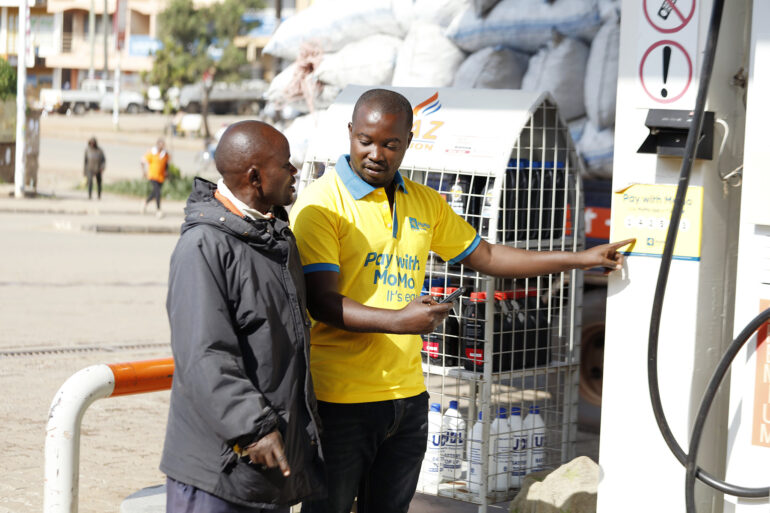
These digital access points now function as neighbourhood “bank branches,” offering cash deposits and withdrawals, bill payments, and digital transfers close to business premises and homes.
By reducing the need for long-distance travel to towns, agents offer lower transaction costs and save time, while digital payments reduce the risks associated with handling large amounts of cash.
Beyond convenience, agent-based transactions are helping to integrate more Ugandans into the formal financial system.
Transaction histories generated at agent points are increasingly being used to build financial identities for traders and micro-entrepreneurs who previously operated entirely in cash.
Analysts say this data is enabling more people to qualify for micro-loans and other financial products, supporting business expansion and income stability.
The combined growth of bank and mobile money agents is therefore creating a foundational ecosystem for financial inclusion and economic resilience, particularly in under-served districts.
Analysts argue that this network is critical to supporting Uganda’s broader development agenda, including the government’s ambition to expand the economy ten-fold over the coming decades.
As Uganda advances the objectives of National Development Plan IV, policymakers are shifting their focus from access to usage.
Mobile money agents are increasingly being positioned not just as cash-in and cash-out points, but as gateways to a broader range of financial services, including insurance, pensions, and long-term savings products.