


Uganda is one of the leading recipients of philanthropy in Africa, a new report by the Organisation for Economic Co-operation and Development (OECD) has shown.
The report by the OECD, an international body of 38 mostly wealthy member countries that works to shape economic and social policies worldwide, indicates that between 2020 and 2023, private philanthropic foundations channeled USD 68.2 billion to low- and middle-income countries worldwide – roughly 10% of official donor assistance from development partners.
The bulk of the support targeted the health sector, education and climate change mitigation and adaptation.
Evidently, philanthropy is fast becoming something perhaps more valuable than official support from foreign governments: a nimble, risk-tolerant force that goes where governments and multilateral institutions often cannot or will not.
These are the central findings of the OECD’s third edition of Private Philanthropy for Development, and for Uganda and its East African partners, the report carries particularly significant implications.
Africa is the single largest destination for cross-border philanthropic flows globally, receiving USD 17.6 billion – fully a third of the worldwide total – over the four-year period. Annual flows to the continent grew steadily, from USD 4.0 billion in 2020 to USD 4.8 billion by 2023, even as Asia and Latin America saw declines.
East Africa has emerged as the continent’s strategic epicentre for philanthropic capital. Kenya led the region with USD 1.6 billion, followed by Ethiopia at USD 1.4 billion.
Uganda received USD 700 million, ranking it firmly among Africa’s top philanthropy recipients alongside Nigeria.
Collectively, Kenya, Ethiopia, Uganda, and Tanzania absorbed 40% of all philanthropic funding directed globally to fragile and conflict-affected states – a reflection of both the region’s acute needs and the confidence international foundations place in it.
During the COVID-19 pandemic alone, Uganda received USD 100 million in philanthropic support, underscoring the sector’s capacity to mobilise rapidly when crises demand it.
The Top Givers
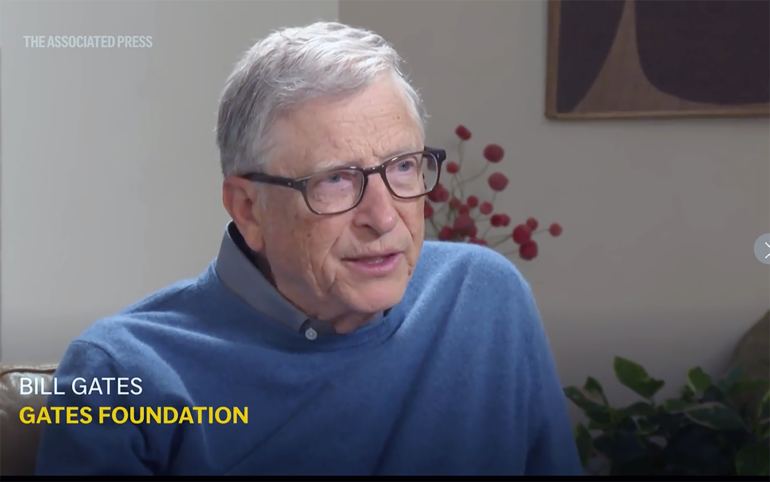
The Bill & Melinda Gates Foundation remains the undisputed heavyweight, directing USD 6.4 billion to Africa, with a sharp focus on infectious disease control, family planning, and health systems.
The Mastercard Foundation contributed USD 4.6 billion, concentrated primarily in education and youth employment. Together, these two foundations accounted for nearly half of all COVID-19-related philanthropy on the continent.
Health absorbs 40% of total global philanthropic flows, and Africa commands the lion’s share of that. Education receives 11%, with climate change adaptation accounting for approximately 10% of giving.
Despite the volume of money flowing in, a troubling paradox persists. Only 11% of cross-border philanthropic flows were channelled directly to local organisations between 2020 and 2023.
In East Africa, local actors remain largely positioned as implementers rather than co-designers. Less than 10% of external partners in co-financing arrangements were domestic or local NGOs. High transaction costs and burdensome due diligence processes are among the reasons given.
The OECD’s recommendation is pointed: foundations must increase the provision of longer-term, unrestricted funding – particularly for frontline NGOs operating at the community level.
Short project cycles and tightly earmarked grants, the report argues, undermine the very sustainability that philanthropy claims to champion.
This recommendation lands at an awkward moment for Uganda. The government’s recent moves to restrict and regulate NGO funding have stirred controversy, raising fears of a chilling effect on the civil society organisations that serve as the last mile of development delivery.
For frontline NGOs already navigating tight funding windows and heavy reporting requirements, the prospect of additional State-imposed restrictions threatens to shrink an already narrow operating space.
A Catalyst, Not a Substitute
To be clear: private philanthropy is not a replacement for official development assistance, which still dwarfs it in volume. Its power lies in flexibility – the ability to fund innovation, absorb risk, and test models that governments can later take to scale. The OECD envisions a clear division of labour: foundations fund the experiments; governments deliver the scale.
That logic holds only if the enabling environment allows it. For Uganda to fully benefit from its position as a top philanthropy destination in Africa, the relationship between the State, Civil Society, and international foundations must be one of strategic partnership rather than suspicion and pointing of fingers.
The world’s richest individuals are willing to give of their wealth to lift humanity from poverty. The question is whether it will be allowed to actually work or will be missed because of suspicion.