




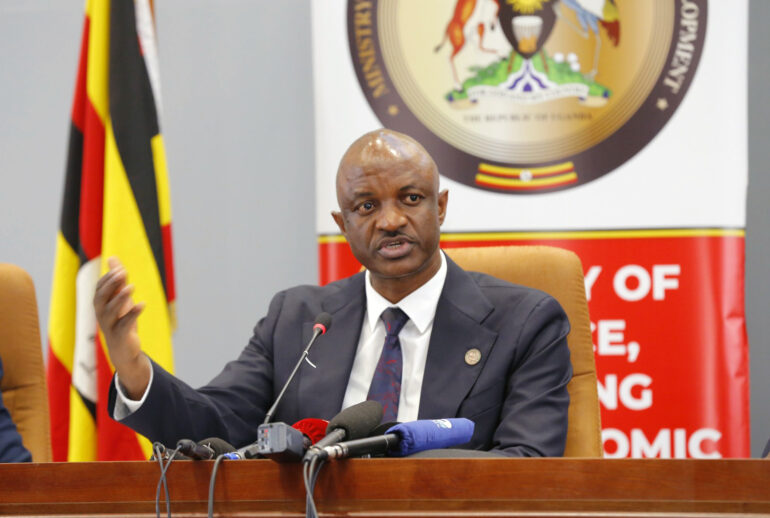
The numbers from the Ministry of Finance are, on the surface, impressive.
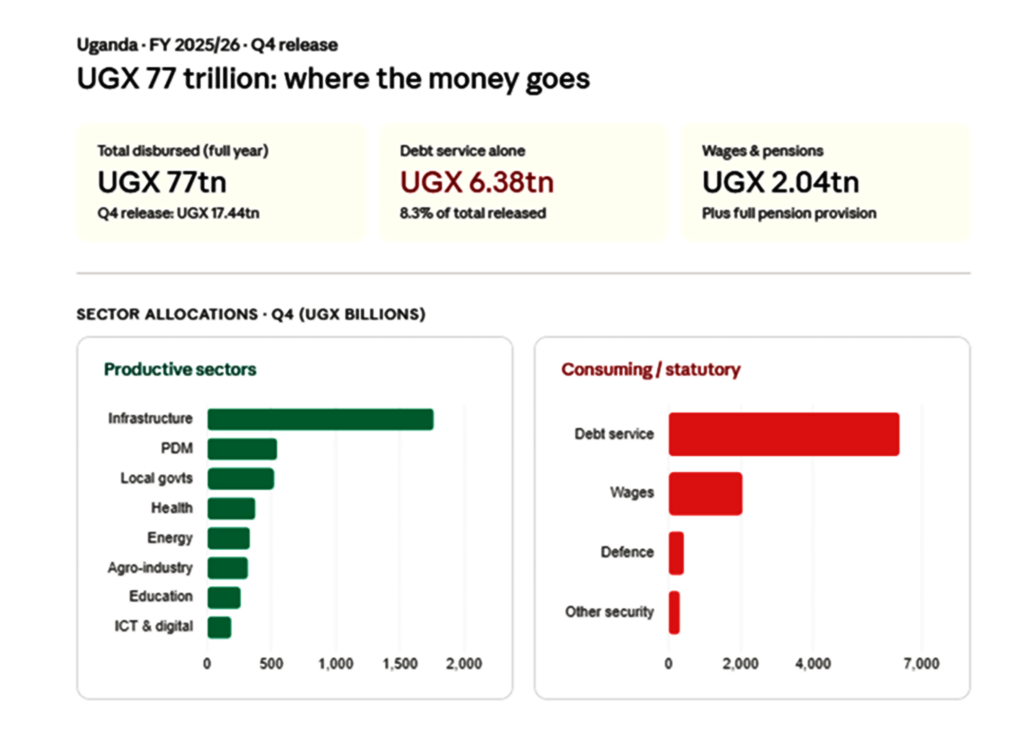
Uganda has disbursed UGX 77 trillion across the financial year, with a fresh UGX 17.44 trillion released for the final quarter.
GDP is growing at 8.5% — the strongest in recent memory. Investor confidence is up. Reserves are holding.
The official narrative is one of momentum and discipline. And to a meaningful degree, it is true.
But headlines rarely tell the full story. The real test of a budget is not how large it is; it’s what it does.
And when you look carefully at where this money is going, the picture is more nuanced than the press release suggests.
The productive bet
Credit where it is due: government has made some meaningful investments in the sectors that actually build an economy.
Infrastructure leads the pack, with UGX 1.76 trillion going to works and transport and UGX 331 billion to energy. Roads and power are not glamorous, but they are the foundation on which factories run and farms sell.
Agro-industrialisation — covering research, innovation, and livestock — gets UGX 314.9 billion, a modest but real signal that the government understands agriculture must move beyond the hoe.
The Parish Development Model, Uganda’s flagship rural wealth-creation programme, receives UGX 542.3 billion, with an additional UGX 74.7 billion for farmers and enterprises.
The digital economy agenda picks up UGX 184.5 billion for ICT and innovation. These allocations, taken together, point to a government that at least understands the language of productive investment.
The consuming burden
Now for the harder conversation. Uganda is spending UGX 6.38 trillion — in a single year — just to service its debt.
That is not paying off debt. That is paying to keep it. Add UGX 2.04 trillion in wages and the full provision for pensions and gratuities, and statutory obligations alone consume a jaw-dropping share of every shilling released.
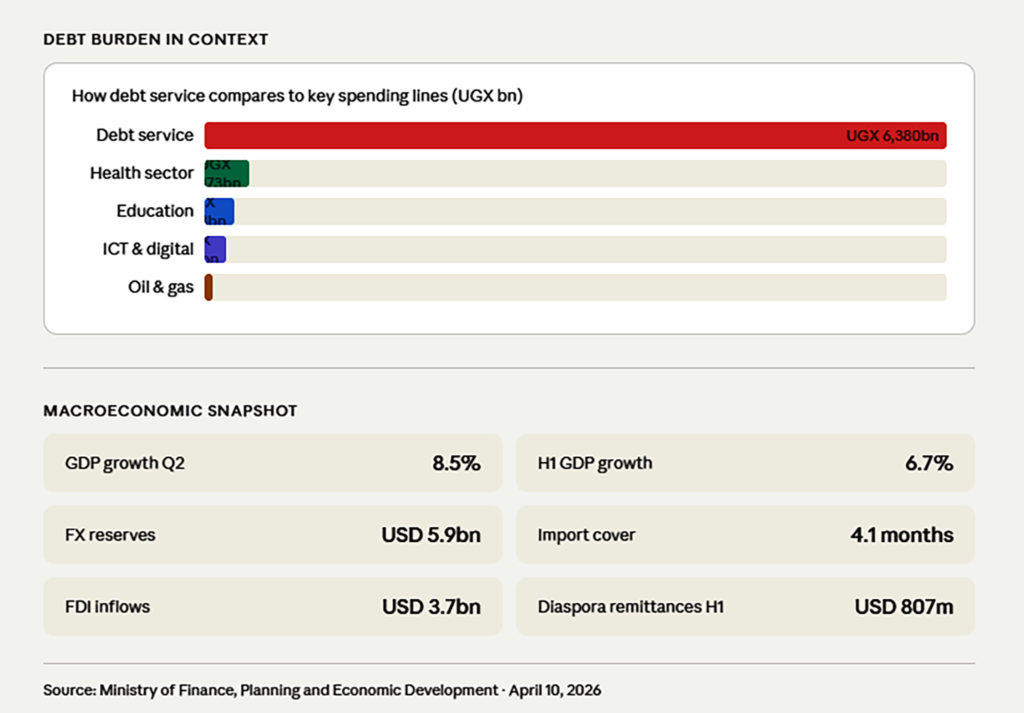
For context, the entire health budget for this quarter — hospitals, medicines, public facilities — is UGX 372.8 billion.
The debt bill is more than seventeen times that figure. Security expenditure, at over UGX 414.5 billion for defence alone with additional allocations for police, prisons and intelligence, is another major consumer.
These are not unimportant expenditures, but they produce nothing directly. They are the cost of running the state, not the reward of building one.
The debt trap
UGX 6.38 trillion in debt repayments is not just a large number; it is a verdict.
It tells us that Uganda has been living beyond its means, borrowing to fund ambitions that domestic revenues cannot fully support.
With foreign exchange reserves at USD 5.9 billion – approximately 4.1 months of import cover -the country is not in immediate danger, but the trajectory demands honest reflection.
Every trillion paid to creditors today is a trillion not building a hospital, upgrading a university, or electrifying a rural district.
Diaspora remittances of USD 807 million and strong FDI of USD 3.7 billion are welcome buffers, but they should not become excuses to delay fiscal consolidation.
The government must curb its borrowing appetite — not in a way that kills investment, but in a way that ensures every borrowed shilling is tied to a project that will generate more than it costs.
Uganda’s growth story is real, but it will not remain so if debt service continues to crowd out the very spending that sustains it.