



On February 28, the United States and Israeli forces struck Iran. Within days, the Strait of Hormuz, through which nearly a fifth of the world’s oil has long flowed, was effectively sealed.
The International Energy Agency reports that global supply fell by 10.1 million barrels per day in March alone, the largest disruption on record.
Middle East Gulf shipments collapsed from over 20 million barrels per day in February to just 3.8 million by early April.
Rerouting by Saudi Arabia, the UAE and Iraq has helped, but cannot close a gap of more than 13 million barrels. For the first in years, the benchmark crude surged past $100 a barrel and remains elevated.
Uganda is landlocked. Every litre of fuel travels by road from Mombasa Port, hundreds of kilometres away.
That geography means every dollar added to the global barrel price arrives in Kampala magnified – freight, transit fees, and retailer margins all stacked on top.
Indeed, a minimum of UGX200 has already been added on the pump price per litre.
The boda boda rider, the market vendor, the smallholder farmer in Mbale or Mbarara absorb that shock with the thinnest financial cushions.
Government says prices remain stable, that a vessel carrying 119 million litres docked at Mombasa on 15 April, and UNOC, which now imports fuel directly – cutting out costly middlemen — has further shipments in the pipeline.
That is reassuring. But stable at an elevated level is still painful.
Uganda is not alone. Kenya, Tanzania, Rwanda and the DRC are all oil importers feeding off the same Mombasa pipeline.
When the global price spikes, every node along that supply chain feels it: transport costs rise, food prices follow (because food moves by truck), manufacturing slows, and currencies weaken against the dollar in which oil is priced.
Across Africa broadly, the IEA projects a historic reversal — from demand growth to an outright contraction of 80,000 barrels per day for 2026.
If disruptions stretch beyond May, the damage could reach 5 million barrels per day below last year’s levels.
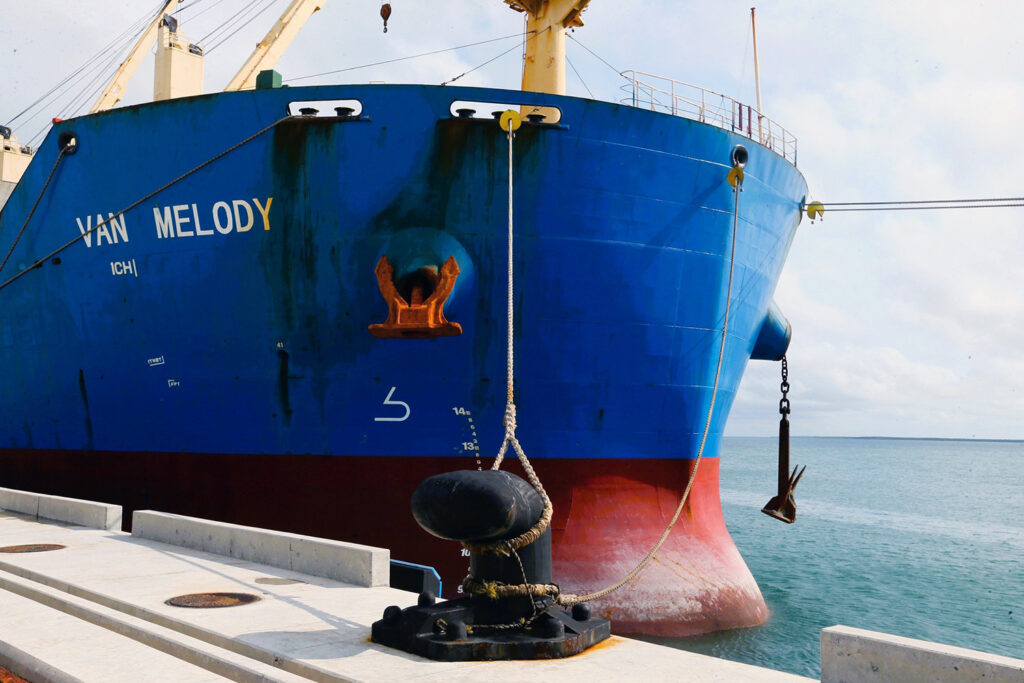
An oil ship in dock at Mombasa Port in Kenya. KPA PHOTO
Africa’s oil importers, with neither Europe’s fiscal buffers nor America’s strategic reserves, will bear a disproportionate share.
Three responses matter most. Targeted relief — tax breaks on essential transport fuels, not blanket subsidies that drain the treasury — can protect the most vulnerable without fiscal recklessness.
Energy diversification is urgent: Uganda’s solar, hydro and geothermal potential is enormous, and oil dependence is a policy choice, not a permanent condition.
And the East African Community must act collectively — joint reserves, coordinated pricing, shared logistics — because small economies that negotiate alone are permanently disadvantaged.
Reports say diplomatic talks between Washington and Tehran are set to resume, and oil prices pulled back from their peak on that news.
The IEA believes restored Hormuz flows could tip the market into surplus by the second half of the year. But hope is not a plan.
This crisis will pass. The next one will come. The real test of governance is not surviving today’s shock; it is being less exposed when the next one arrives.