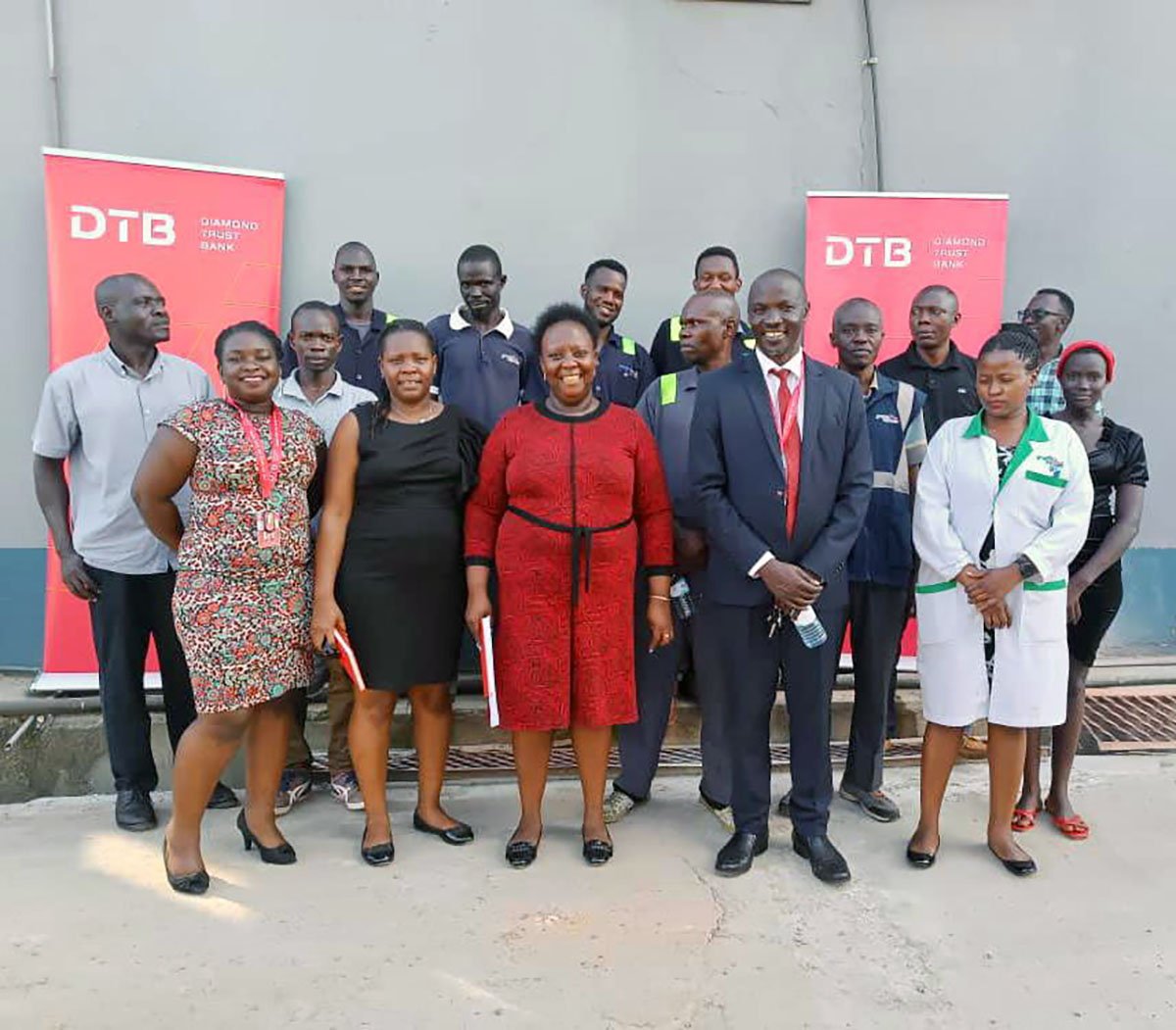
Individuals and businesses should take advantage of the current fragile economic situation to adopt a culture of saving, which is crucial for sustaining the growth of their social well-being. Samuel Matekha, the head of Marketing and Communications at Diamond Trust Bank (DTB), says many Ugandans have remained poor because they lack basic saving and investment skills, which are needed to optimally utilize the available resources. Addressing a financial literacy workshop for employees of Graphic Systems Ltd at Luzira, Matekha said people should avoid overspending if they are to survive the difficult economic times. “Don’t be ashamed to live within your means. In fact, the best thing you can do is to live within your means and save something for the rainy day. As financial institutions, we are obligated to teach you how to manage your money, so that you can save and get yourself out of poverty with your savings,” he said. Matekha said it is crucial for financial institutions to conduct financial literacy drives at work places, to ensure that every employee learns to manage their earnings effectively and to prepare for future uncertainties and earning higher yields from investments accumulated from savings. He pointed out that pride often prevents employees from engaging in side work, leading to financial instability as they fail to save from their salaries.
He advised employees to set financial goals and develop plans to spend wisely, urging them to save at least 20% of their income.
Immaculate Onyota, the Human Resource Manager at Graphic Systems, expressed gratitude to DTB for providing the financial literacy training. She said many employees are inexperienced with saving and investments, the reason for which they often spend all their salary in a matter of days, leaving nothing to save.
She insisted that it is important for every employee in Uganda to receive financial literacy training, in order to lift themselves out of poverty, and improve the national savings culture.
“As a company, we have gained from this training, and we look forward to more in future to help our employees to improve their social well-being,” she said Studies have shown that Ugandans save less than 10% of their income, which makes it a challenge to invest in projects that could generate more revenue in the future.