




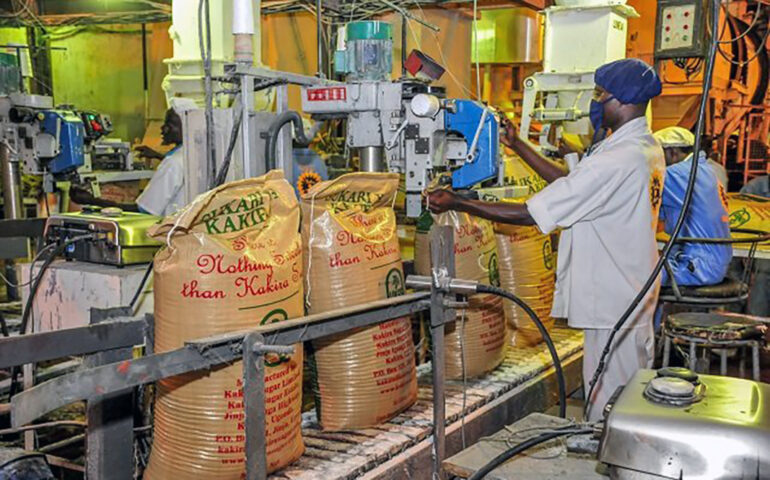
Ugandan sugar millers are recording a strong export upswing as Kenya’s worsening sugar shortage forces the country to rely heavily on regional suppliers to stabilise domestic prices.
Data from the Kenya National Bureau of Statistics (KNBS) shows that Kenya’s sugar imports from Uganda and Tanzania jumped by more than 700 percent to UGX 170.1 billion in the three months to September 2025.
Uganda emerged as the biggest beneficiary, with Kenyan purchases of Ugandan sugar rising nearly fivefold during the quarter to UGX 4.36 billion.
The sharp increase followed a directive by the Kenya Sugar Board ordering seven major factories in western Kenya to temporarily halt milling to allow sugarcane to mature, after authorities reported a severe shortage of harvest-ready cane.
The move disrupted domestic supply and tightened sugar availability across the Kenyan market.
Although milling was expected to resume gradually, recovery has been undermined by erratic weather and the early harvesting of immature cane, which further reduced output.
As stocks tightened, retail sugar prices climbed, prompting importers to turn to neighbouring countries.
Ugandan millers moved quickly to bridge the supply gap, supported by relatively stable production and logistical proximity to Kenya.
Tanzania has also strengthened its foothold in the market. Once a minor supplier, Tanzania recorded an almost 19,000 percent surge in sugar exports to Kenya over the same period, signalling a major shift in regional trade flows.
Speaking to this publication, Ugandan economist Dr. Isaac Shinyekwa, a senior research fellow at the Economic Policy Research Centre (EPRC), said the developments reflect both opportunity and vulnerability within the East African Community (EAC).
“Kenya’s sugar supply shock has created short-term export opportunities for Ugandan millers, particularly in terms of foreign exchange earnings and improved factory utilisation,” Shinyekwa said.
“However, these gains may not be permanent if Kenya succeeds in restoring cane production and milling capacity.”
He added that the trend underscores the importance of competitiveness within regional trade. “For Uganda to maintain its position, millers must focus on productivity, cost efficiency and consistent quality, otherwise the advantage could easily shift as market conditions change,” he noted.
The situation has reignited debate over the long-term sustainability of regional sugar trade and whether Kenya’s domestic industry can recover before imports from neighbouring countries become entrenched.
For now, as Kenya grapples with supply constraints and rising prices, Ugandan millers continue to enjoy a notable export boost driven by regional demand pressures.
Historically marred by protectionist quotas and non-tariff barriers, trade between the two neighbors saw some stability following a landmark 2025 Free Trade Agreement between Kenyan President William Ruto and his Ugandan counterpart Yoweri Museveni.
By treating sugar as a ‘transfer’ rather than an import, both nations have reduced border delays at Malaba and Busia.
This synergy has cemented Uganda as Kenya’s primary regional supplier, boosting Ugandan export earnings by over 50%.