


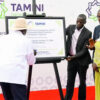


The Uganda Development Bank (UDB) has secured a Euro 40 million (approximately UGX 169 billion) credit facility from the French Development Agency (AFD) in a move set to significantly expand long-term financing for enterprises across Uganda.
The agreement, which also includes Euro 800,000 (about UGX3.4 billion) in technical assistance, marks a strategic boost to Uganda’s development finance architecture at a time when businesses are seeking affordable, patient capital to scale operations.
The financing agreement was signed in Kampala by AFD Country Director Marc Trouyet and UDB Managing Director Patricia Ojangole, in the presence of French Ambassador Virginie Leroy, underscoring the strengthening economic cooperation between Uganda and France.
Unlike traditional lenders that prioritize short-term returns, UDB provides long-tenor financing structured to unlock productivity, industrialization and value addition.
Currently, 75% of the bank’s loan portfolio is concentrated in agriculture, agro-industrialization and manufacturing sectors – widely regarded as central to Uganda’s structural transformation and export competitiveness.
UDB Managing Director Patricia Ojangole emphasized the strategic importance of the credit facility: “This €40 million credit line is a significant milestone in strengthening our capacity to deliver long-term, affordable capital to enterprises that are driving Uganda’s industrial growth.
It enhances our ability to reach businesses that are often underserved by traditional financial institutions.”
Ojangole added that the funding will specifically target small and medium enterprises (SMEs), as well as women and youth-led ventures in underserved regions.
AFD Country Director Marc Trouyet described the partnership as a reaffirmation of France’s commitment to Uganda’s private sector development.
“Through this financing, AFD is supporting Uganda’s efforts to accelerate industrialization and promote inclusive growth,” Trouyet said.
“Development finance institutions such as UDB play a pivotal role in de-risking strategic sectors and mobilizing private investment.”
From a macroeconomic standpoint, the UGX169 billion injection provides patient capital at a time when global financial conditions remain tight and domestic borrowing costs relatively elevated.
Long-term concessional financing enables enterprises to invest in capital-intensive projects such as modern machinery, processing facilities and climate-resilient infrastructure without immediate repayment pressure.
Industry analysts argue that the facility could generate multiplier effects across the economy.
By strengthening agro-processing and manufacturing capacity, the funding may accelerate value addition to agricultural commodities, thereby reducing Uganda’s reliance on raw commodity exports.
This structural shift is critical for stabilizing export earnings and mitigating exposure to volatile global commodity prices.
For SMEs, improved access to long-term financing could translate into expanded production lines, technology upgrades and market diversification.
Enterprises investing in mechanization and climate-smart infrastructure are better positioned to withstand environmental shocks and meet evolving international standards, particularly in regional and global export markets.
The focus on women and youth-led enterprises also carries significant socio-economic implications. “Targeted financing for youth and women entrepreneurs is not only a matter of equity but of economic efficiency,” Ojangole stressed.
“These segments represent immense untapped potential for innovation, job creation and inclusive growth.”
Trouyet noted that the partnership between the two institutions reflects “strong investor confidence” in Uganda’s development trajectory, adding that by combining concessional capital with technical expertise, they are laying the foundation for sustainable and transformative economic growth.