




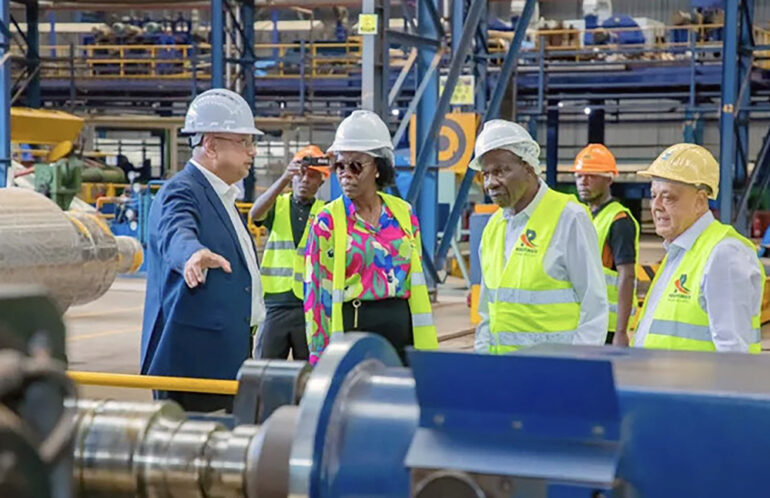
Uganda’s investment pipeline strengthened in the 2024/25 fiscal year as the Uganda Investment Authority (UIA) licensed 481 new investment projects, up from 426 projects approved in the previous year.
The projects, worth $3.2 billion, are expected to generate more than 53,000 direct jobs, underscoring the growing role of private investment in driving industrial growth and employment creation.
The rise in licensed projects reflects steady investor confidence despite global economic headwinds, with manufacturing, agro-processing, energy, logistics and services among the leading sectors attracting capital, according to UIA officials.
The improved performance is also linked to targeted reforms aimed at easing business entry, streamlining licensing processes and promoting Uganda as a competitive investment destination within the region.
UIA is now seeking UGX255.1 billion for the 2026/27 fiscal year to expand industrial parks and intensify investment promotion efforts.
The funding request was presented by UIA Director General Robert Mukiza to Parliament’s Finance Committee during the defence of the authority’s Budget Framework Paper.
Mukiza told legislators that the proposed budget is critical to sustaining investment momentum and translating licensed projects into operational businesses.
He explained that the funding would be directed towards three key pillars: attracting and retaining both domestic and foreign investors, developing fully serviced industrial parks, and strengthening institutional capacity within UIA and across the private sector.
According to Mukiza, demand for space in government industrial parks continues to outstrip supply, with several investors facing delays due to infrastructure gaps.
“Our industrialisation drive depends heavily on the availability of serviced land, reliable utilities and efficient investor support services,” he said, adding that additional funding would allow the authority to fast-track park expansion and maintenance.
Beyond physical infrastructure, the authority plans to roll out targeted interventions to unlock investment in priority sectors.
These include the implementation of affordable agricultural financing to support agro-based industries, continued infrastructure maintenance within free zones, and the expansion of digital investment facilitation platforms to reduce transaction costs and approval timelines.
UIA is also prioritising support for small and medium enterprises, particularly those seeking to integrate into regional and global value chains.
Part of the proposed budget will be used to support product certification and standards compliance for small businesses, a move expected to improve market access and boost exports.
Officials say this approach aligns with the government’s broader strategy of promoting value addition and reducing reliance on imported finished goods.
Finance Committee chairperson Amos Kankunda commended UIA for its contribution to job creation and value addition. Kankunda noted that increased investment in manufacturing and agro-processing is essential for import substitution and long-term revenue growth.
“The authority’s work directly supports government priorities of industrialisation, employment creation and domestic revenue mobilisation,” Kankunda said, pledging the committee’s support for the proposed budget.
He emphasised the need to ensure that licensed projects translate into operational factories and services that contribute to the tax base.