




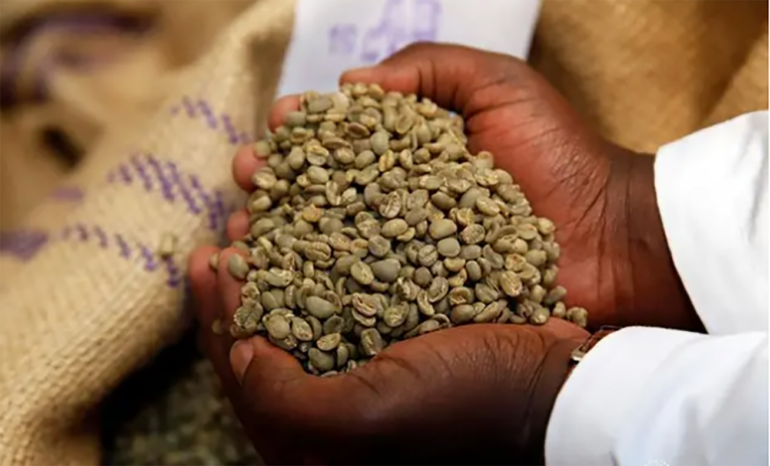
Uganda exported 651,933 bags of coffee in February 2026, up from 555,756 bags in the same month a year earlier – a 17.3% surge in volume that pushed total earnings to $180 million (UGX 684 billion), a 7.9% increase year-on-year, reports Pedson Mumbere.
On the surface, those are strong numbers.
But to understand what they really mean, you have to look at what was happening globally – because the story behind the numbers is one of extraordinary market turbulence, shifting supply power, and a quiet opportunity quietly unfolding for Uganda’s smallholder farmers.
Exactly one year ago, in February 2025, global coffee prices were on fire.
The ICO Composite Indicator Price averaged 354.32 US cents per pound – the highest monthly average ever recorded, surpassing price peaks that had stood since 1977.
At its peak on February 13th 2025, Arabica futures briefly touched 440 US cents per pound. Uganda rode that wave beautifully: the country’s average export price hit $5.03 per kg, and the combined effect of high prices and rising volumes produced a 103% increase in export value compared to February 2024. That was a golden month.
February 2026 was a different world altogether.
The ICO Composite Indicator Price fell to 267.57 US cents per pound – a 9.9% drop from January 2026 alone, and the lowest level since August 2025.
Uganda’s average unit price slipped to $4.63 per kg, down 8% from the year before. The result: Uganda shipped significantly more coffee but earned a more modest premium for it.
The driving force behind the price correction is a forecast from Brazil’s Conab agency projecting a record harvest of 66.2 million bags for the 2026/27 coffee year – a 17.2% increase year-on-year, with some independent analysts forecasting even higher figures of up to 72 million bags.
Favorable rainfall in Minas Gerais, Brazil’s key coffee-growing belt, has further solidified that outlook.
Vietnam, meanwhile, recorded a 67% surge in exports in the January–February period, marking a strong Robusta recovery after three years of below-average production.
Together, Brazil and Vietnam signaled a decisive turn from scarcity to surplus — and global traders responded accordingly.
Yet here is the irony: despite being the architect of the price correction, Brazil itself exported less in early 2026.
South American exports fell by 21.3% during this period, largely because an appreciating Brazilian Real reduced farmer incentives to sell forward in US dollars.
In other words, Brazil’s farmers are holding back, even as the market prices in their upcoming abundance.
Uganda’s moment
This is precisely where Uganda’s smallholder farmers are seizing ground.
With Brazilian supply tightened in the short term, buyers in Italy, Germany, India, Sudan, and Morocco have been absorbing Ugandan coffee at scale.
Italy alone accounted for 28.8% of Uganda’s February shipments.
African markets took 140,694 bags – 22% of total exports – reflecting growing intra-continental appetite.
Uganda’s Arabica shipments surged by over 50% year-on-year, a remarkable feat driven by improved agronomic practices, government extension services, and favorable weather in key growing regions.
The window may not stay open forever.
Once Brazil’s record harvest hits the market in the 2026/27 cycle, prices will face further downward pressure.
For Uganda’s millions of smallholder farmers – who largely sell at spot prices with little hedging protection — that moment could bite.
The Permanent Secretary at the Ministry of Agriculture, Animal Industry and Fisheries, David Kasura Kyomukama, put it plainly: “The focus now is to consolidate these gains through agro-industrialisation and improved access to premium markets.”
That is exactly right. Uganda is moving more coffee than ever.
The challenge – and the opportunity – is to ensure it starts earning more for each cup drunk by every coffee-thirsty consumer.