




There is a number that should focus every policymaker’s mind in Uganda: 75. That is the percentage of this country’s population that is under the age of 30.
It is a demographic dividend of extraordinary promise – and, if left unmanaged, an equally extraordinary risk, and worse still in a global economy that is increasingly being digitized.
Uganda’s youth unemployment already sits at 16.1 percent, according to the 2024 National Census, and the economy is not generating jobs fast enough to absorb the tide of young people washing into the labour market each year.
The question is not whether Uganda needs to act. The question is how, and who will lead.
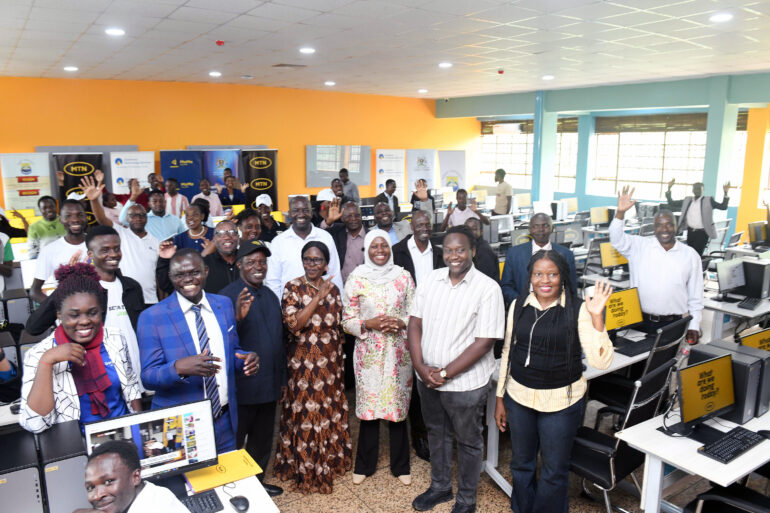
MTN Uganda’s handover of a regional innovation hub at Kabale University last week offers one compelling answer.
The facility – the Kabale Spark Hub – is the first of four planned regional hubs under MTN’s ACE (Accelerated Career and Economic Empowerment) Programme, a private-sector intervention that has committed a combined UGX6 billion across two phases to bridge the yawning gap between what universities teach and what the digital economy actually demands.
Three more hubs are set to follow at Busitema, Gulu, and Soroti universities, with the full network expected to serve more than 20,000 students and community members.
What makes the Kabale facility significant is not just its size or its funding. It is what it represents: a deliberate act of decentralisation at a time when Uganda’s digital infrastructure has remained stubbornly concentrated in Kampala Metropolitan Area.
The hub gives students in southwestern Uganda something they have not had before – LAN-connected workstations, open collaborative zones, and the kind of physical environment that signals, from the moment you walk through the door, that ideas are expected here.

Kabale University Vice Chancellor Joy Kwesiga described it as closing “the gap between academic learning and practical, market-relevant skills development” — a gap that has long been the graveyard of promising graduates.
The ACE Programme itself is structured with unusual sophistication for a corporate social responsibility initiative.
It runs three parallel tracks: ACE Skilling, which targets both in-school and out-of-school youth with foundational digital and entrepreneurial training; ACE Career, which pairs fresh graduates with three months of professional development followed by internship placements; and ACE Tech, the programme’s innovation engine, which nurtures digital startups and links them to the National ICT Innovation Hub in Nakawa.
The programme aims to equip more than 8,000 young Ugandans with digital skills and incubate 150 startups over three years – and it has already produced results. KaCyber, a transport ticketing platform, and RideLink, a logistics startup, are among the ventures it has already brought to life.
These are not abstract ambitions. They are precisely the kinds of outcomes that Uganda’s overarching development framework demands.
Vision 2040 charts a course toward upper-middle-income status anchored in a knowledge-based economy.
The Digital Transformation Roadmap (2023–2028) translates that vision into operational targets – 90 percent broadband coverage, youth digital skilling as a core pillar, and innovation hubs explicitly identified as the delivery vehicle.
As Dr. Aminah Zawedde, the Permanent Secretary at the Ministry of ICT, observed at the handover, the Kabale Spark Hub is “exactly what the roadmap calls for” – infrastructure that reaches beyond the capital to turn young Ugandans into creators rather than job seekers.
Prof. William Bazeyo, an MTN Foundation Board Member, framed it with equal clarity: “Talent is widely distributed, even where access is not.”
That sentence is the entire argument for why this hub matters. Uganda’s digital future will not be built in Kampala alone.
It will be built wherever a young woman in Kabale can access high-speed connectivity, wherever a student in Gulu can prototype an idea without travelling 300 kilometres to find a decent workstation.
The Kabale Spark Hub is not a corporate gesture. It is infrastructure – and in a country where the median age is barely 17 years, getting that infrastructure right, and getting it distributed, may be the most important economic policy decision of the decade.