



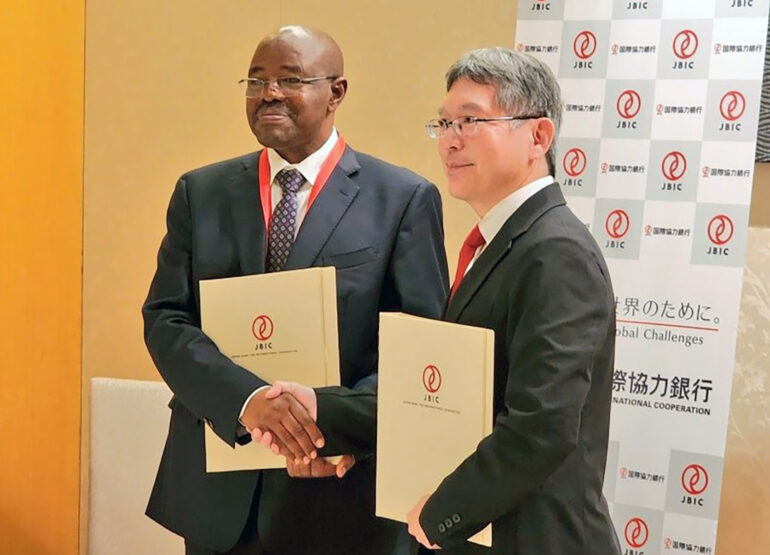
Uganda has taken a leap in attracting long-term investment, following the signing of a landmark memorandum of understanding (MoU) with the Japan Bank for International Cooperation (JBIC). Amos Lugoloobi, the Minister of State for Planning, signed the deal with Nobumitsu Hayashi, the JBIC Governor, during the 9th Tokyo International Conference on African Development (TICAD9) held in Yokohama, Japan. A press release said the agreement signals a new era of financial cooperation between the two countries, designed to strengthen Uganda’s access to concessional financing, while encouraging Japanese companies to take advantage of the country’s vast investment opportunities. Beyond the financing framework, it lays out pathways for joint projects in energy, infrastructure, manufacturing, and agro-industrialization sectors central to Uganda’s transformation agenda. JBIC is a financial institution wholly owned by the Japanese government. Established in 1999, JBIC’s mission is to contribute to the sound development of Japan and the international economy and society. The release said Uganda’s investment case was strongly presented at a TICAD9 side event organized by the African Development Bank (AfDB) and the Japan External Trade Organization (JETRO). Lugoloobi eloquently outlined opportunities in commercial agriculture, manufacturing, industrial parks, mining, tourism, and renewable energy. “The MoU with JBIC is not just about funding; it is about building sustainable partnerships that will drive Uganda’s socio-economic development while delivering profitable ventures for investors,†he emphasized. JBIC has already played a crucial role in Uganda’s transport sector. In 2017, the bank financed the procurement of 1,151 pieces of road construction equipment worth USD100 million (UGX 374 billion), which expanded road networks across districts and cut down maintenance costs. JBIC Governor Nobumitsu Hayashi underscored that the bank’s financing model goes beyond loans. “We are committed to providing risk mitigation tools, equity participation, and technical assistance to ensure that Japanese companies investing in Uganda achieve sustainable growth,†he said. With the new agreement, financing is to focus on larger infrastructure ventures such as highways, bridges, industrial park connectivity, and power distribution networks – all of which provide stable, long-term returns for investors through public-private partnerships (PPPs). Agriculture remains Uganda’s backbone, employing over 60% of the population. With JBIC’s backing, opportunities exist in large-scale irrigation, fertilizer production, and mechanization ventures that guarantee strong returns while ensuring food security. Manufacturing and industrialization are equally ripe for investment, with the government targeting 25 industrial parks by 2030. Investors can tap into agro-processing, pharmaceuticals, construction materials, and textiles, supported by abundant raw materials and growing domestic demand. For Uganda, the MoU helps bridge its infrastructure financing gap, estimated at USD 1.4 billion (UGX 5.2 trillion) annually. For Japan, it provides a gateway into one of Africa’s fastest-growing economies, projected to expand at 6% in 2025, outpacing many global peers. Investors benefit not only from Uganda’s natural resource base and youthful workforce but also from its improving macroeconomic stability and commitment to industrial policy. The Uganda–JBIC partnership demonstrates how financial cooperation can serve both investor interests and national development priorities.
By channeling Japanese capital, expertise, and technology into Uganda’s key growth sectors, the MoU positions Uganda as a hub for regional investment while offering Japanese firms reliable returns in a diversifying market.
Uganda, Japanese bank sign financial cooperation deal

Last updated: