



The April 24 commissioning of Yaobai International Holding’s $300 million (UGX 1.1 trillion) cement plant in Moroto, Karamoja, marks the first time Uganda has produced clinker – cement’s critical raw material – at industrial scale on home soil.
It is a milestone that redraws not just a supply chain, but the entire competitive landscape of one of Uganda’s fastest-growing industries.
The new Moroto plant currently pumps 6,000 tonnes of clinker per day into the market. When the second production line comes online, that figure doubles to 12,000 tonnes daily – translating to roughly 2 million tonnes of clinker and 3 million tonnes of cement annually.
A companion grinding plant in Jinja, with a 3-million-tonne-per-annum capacity, will serve the central and western markets.
President Yoweri Museveni, speaking at the commissioning, cut straight to the economic logic. Uganda had been spending approximately $260 million every year importing clinker.
“The industries were losing. Now this factory has saved them from the burden of importation,” he said.
The plant is projected to save Uganda between $200 million and $260 million annually in foreign exchange – money that was flowing out to Asia and the Middle East and is now staying home.
Museveni also noted the limestone riches underpinning the investment: over 67 million tonnes of deposits in the impoverished region, with an estimated 180 million tonnes in Rupa Sub-county alone. For Karamoja, long perceived as Uganda’s forgotten frontier, this is an economic turning point.
A Market Turned Upside Down
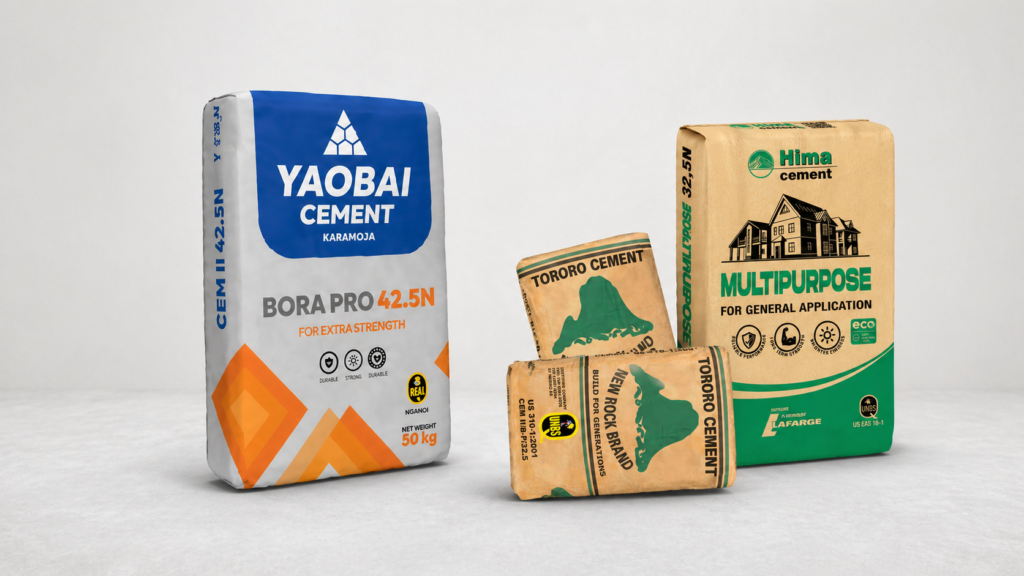
Before Yaobai arrived, Tororo Cement and Hima Cement controlled over 70% of Uganda’s cement market. That comfortable duopoly has been disrupted.
Yaobai, which markets its product under the brand Bora, enters with a structural cost advantage none of its rivals can easily replicate: it processes limestone in Moroto, eliminating the costly, time-consuming logistics of trucking imported clinker from Mombasa Port to Kasese and Tororo. Industry analysts estimate this alone reduces manufacturing costs by $30 to $50 per tonne.
Tororo Cement, still the market leader with approximately 3 million tonnes of capacity, is racing to complete its own local mineral processing upgrades by June 2026 to stay competitive in the Eastern and Central corridors.
Hima, anchored in the west and carrying a “green cement” positioning, faces pressure on its overall market share as Bora Cement targets the North and East.
With a combined potential of 6 million tonnes across two phases, Yaobai is credibly positioned to challenge for market leadership in Uganda – and potentially across East Africa – by 2027.
Uganda’s total national cement capacity now stands at approximately 9 million tonnes per year, against a domestic market significantly smaller than that. The arithmetic is clear: Uganda has a surplus, and producers must export to the region or stagnate.
The Regional Export Play
That surplus – projected at nearly 4 million tonnes in 2026 – is being pointed squarely at Uganda’s neighbours. The primary targets are South Sudan, eastern Democratic Republic of Congo, and western Kenya.
These are volume-hungry markets, particularly the DRC’s eastern provinces, where local supply chains are weak and Ugandan cement now holds a decisive logistical edge over alternatives trucked in from Kinshasa or Mombasa – both hundreds of kilometers away.
Uganda is actively positioning its eastern and northern plants as a “cement corridor” for landlocked neighbours, with regional cement demand expected to exceed 100 million tonnes by 2030.
For ordinary Ugandans, the most immediate implication is downward pressure on cement prices – a product that directly affects the cost of building a home, a commercial building, or a road.
For the market, a price war in the second half of 2026 looks increasingly likely as manufacturers compete to offload surplus capacity into the region.
Uganda has moved, in one commissioning ceremony, from a country that packaged other people’s raw materials to one that manufactures its own.
The question now is not whether the cement market will change – it already has – but how quickly established players adapt before Bora claims their shelf space.