Africa's film industry is struggling to turn growing demand for local content into sustainable revenues, with limited distribution networks, high internet costs and gaps in financing restricting the reach of productions, a new study has found.
The continent's paid television and online streaming market is projected to reach $5.2 billion by 2030, but filmmakers face difficulties getting their work onto mainstream platforms and reaching audiences beyond major cities.
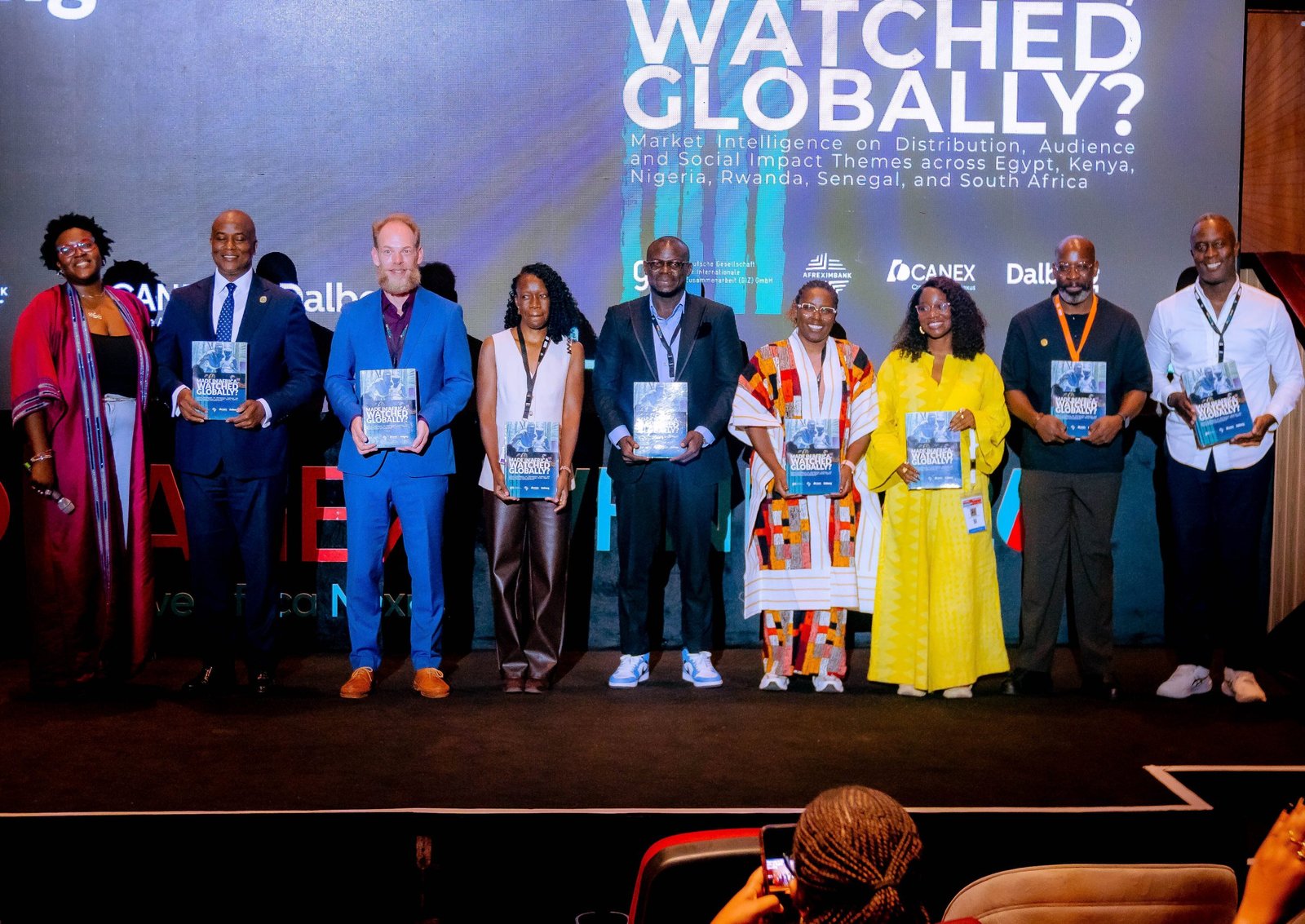
The study, titled Made in Africa, Watched Globally? released on November 11 in Lagos, Nigeria, says expanding production alone will not be enough to capture the market's potential without investment in distribution, marketing and affordable access.
Commissioned by German development agency GIZ and the African Export-Import Bank (Afreximbank), through its Creative Africa Nexus (CANEX) programme, the research was produced by Dalberg.
It draws on 91 stakeholder interviews, a survey of 1,630 film viewers and five case studies covering Egypt, Kenya, Nigeria, Rwanda, Senegal and South Africa.
Quality and relevance of productions
The findings suggest that audience demand is not the only constraint facing African filmmakers. Viewers also cite the quality and relevance of productions, while many struggle to find local films on established distribution platforms.
In Rwanda, 56% of respondents said a lack of interest in the stories or themes was a reason they did not watch local or African films.
In South Africa, 98% of respondents considered acting quality important when selecting a film, while 96% cited plot and technical quality.
The results indicate that filmmakers must compete on production quality and storytelling as well as cultural relevance, the study suggests.
Access to content is another obstacle. In Kenya, 52% of respondents said local and African films were difficult to find on mainstream platforms.
YouTube has become an important distribution channel, with 87% of Kenyan and 98% of Senegalese respondents who stream films saying they use the platform.
However, the platform's reach has not necessarily translated into reliable earnings for producers, as advertising revenues can be limited and emerging filmmakers face difficulties building sustainable commercial models.
Africa's cinema infrastructure is also relatively small. The continent has approximately one cinema screen for every 787,000 people, compared with one for every 8,700 people in the United States.
In Kenya, more than 75% of fewer than 50 cinema screens are concentrated in Nairobi, while about 90% of Egypt's screens are located in Cairo and Alexandria.
The concentration leaves audiences in smaller towns and rural areas with fewer opportunities to watch films in cinemas.
Mobile streaming offers an alternative, but the cost of internet access limits its reach. The study estimates that 1GB of mobile data costs the equivalent of 3.1% of monthly income across many African markets, above the global affordability benchmark of 2%.
Possible recommendations
It recommends advertising-supported streaming, offline downloads and partnerships between telecommunications companies and content platforms to make films more affordable.
Some African businesses have already adopted models aimed at reaching price-sensitive audiences.
Senegal's Marodi TV has attracted 8.67 million YouTube subscribers and generated 4.6 billion views through a free, advertising-supported model.
In Kenya, platforms such as Viusasa have experimented with daily subscriptions costing between 10 and 20 Kenyan shillings.
The study says such approaches could help expand audiences, although generating sufficient revenue to finance new productions remains a challenge.
The financing environment has also become more difficult following the closure of Showmax in April 2026 and changes in commissioning strategies by major international streaming companies.
These developments have reduced some established opportunities for African productions, increasing the need for investment in locally owned streaming platforms, distributors and content aggregators.
The researchers recommend dedicated financing for activities beyond production, including marketing, subtitling, dubbing and coordinated releases across national markets.
They argue that these investments are necessary to help African films reach audiences beyond their countries of origin and generate better commercial returns.
The research also highlights the wider social influence of African cinema.
In Senegal, the documentary L’utilité et l’attachement, which examined unpaid compensation owed to communities displaced by a railway project, prompted presidential instructions to address the affected communities' claims following a screening.
CANEX Creations chief executive Osahon Akpata said the priority was to convert growing international interest in African stories into sustainable businesses and economic opportunities for creatives.
Victor Chudal-Linden, a project manager at GIZ, said better audience data could help filmmakers, investors and policymakers make more informed decisions.
The study concludes that the industry's growth will depend not only on the number of films produced but also on the ability to distribute them, attract paying audiences and generate revenue across African markets.
Without improvements in these areas, the expansion of the continent's streaming and television market may not translate into commensurate gains for African filmmakers.