


Uganda attracted less foreign investment during the second quarter of the 2025/26 financial year, with Foreign Direct Investment (FDI) inflows falling by 6.8 percent to $737.8 million (about UGX2.7 trillion), Pedson Mumbere reports.
According to the Ministry of Finance’s Post-Election Economic and Fiscal Update, the decline comes amid a slowdown in remittances from Ugandans living abroad, although the tourism sector continued to shine, posting double-digit growth in earnings.
The report shows that FDI inflows dropped from $791.88 million (about UGX2.9 trillion) recorded during the same quarter of the previous financial year. However, the Ministry noted that the decline was smaller than those experienced during previous election periods, indicating that investor confidence in Uganda remains relatively strong.
Ahead of the 2021 General Elections, FDI inflows fell by 8.6 percent, while the period before the 2016 elections saw a much steeper decline of 30.3 percent.
The Ministry said the smaller decline this time suggests that investors remained confident in Uganda’s economic prospects despite the election season.
Kyeyo remittances also slump
At the same time, remittances from Ugandans working abroad fell by 2.3 percent to $456.22 million (about UGX1.7 trillion), down from $467.05 million (about UGX1.72 trillion) recorded during the same period last year.
Government attributed the decline mainly to weaker economic conditions in key remittance markets, particularly Europe and the Middle East, which affected the incomes of migrant workers.
While investment and remittance inflows slowed, the tourism industry emerged as a bright spot for the economy.
Tourism earnings rose by 13.3 percent to $395.69 million (about UGX1.45 trillion), up from $349.19 million (about UGX1.28 trillion) a year earlier.
The Ministry said the growth was driven by an increase in international visitors, longer stays by tourists, higher spending levels and growing demand for premium travel experiences.
The strong performance of tourism provides a boost to Uganda’s foreign exchange earnings at a time when inflows from other external sources are under pressure.
Despite the decline in FDI and remittances, the Ministry said Uganda’s economy remained resilient after the 2026 General Elections, supported by strong economic growth, low inflation and a stable exchange rate.
Government says it will continue focusing on increasing domestic revenue collection, maintaining fiscal discipline, supporting private sector growth and expanding export markets to sustain economic growth.
Meanwhile, public expenditure during the January-March 2026 quarter remained below target despite significant election-related spending.
Government spent UGX12.282 trillion during the quarter against a planned UGX13.672 trillion. The lower expenditure was partly attributed to heavy spending in the previous quarter to finance election preparations and major infrastructure projects.
Of the total spending, recurrent expenditure amounted to UGX10.5 trillion compared to a target of UGX11.47 trillion, while spending on non-financial assets reached UGX1.78 trillion against a planned UGX2.19 trillion.
Development spending was affected by delays in implementing externally funded projects, including procurement challenges and difficulties in securing counterpart funding.
By April 2026, the Government had spent UGX1.508 trillion on election-related activities. The Electoral Commission accounted for the largest share at UGX1.146 trillion, followed by the Uganda Police Force at UGX347.91 billion and the Uganda Prisons Service at UGX13.75 billion.
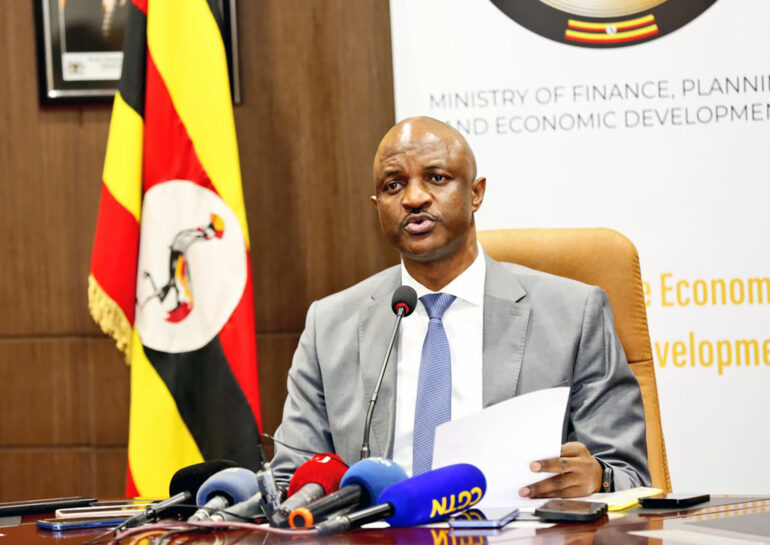
Permanent Secretary and Secretary to the Treasury Ramathan Ggoobi said the fiscal deficit for the 2025/26 financial year had been revised downwards from 7.8 percent to 7 percent of Gross Domestic Product (GDP) due to lower-than-expected expenditure, particularly on externally financed projects.
“The successful conclusion of the General Elections allows us to continue strengthening the efficiency and effectiveness of fiscal policy to increase productivity and accelerate socio-economic transformation,” Ggoobi said.
During the January-March quarter, government recorded a fiscal deficit of UGX3.74 trillion, lower than the projected UGX4.33 trillion because expenditure remained below planned levels.
Revenue collections, including grants, amounted to UGX8.542 trillion, achieving 91.5 percent of the quarterly target and leaving a shortfall of UGX792.51 billion.
Domestic revenue collections reached 97.1 percent of target, while tax revenue exceeded expectations by UGX121 billion, supported by strong collections from income taxes and taxes on goods and services.
However, grant inflows remained significantly below target. Government received only UGX79.52 billion in grants against an expected UGX620.78 billion, mainly due to delays in meeting conditions required for disbursement.