




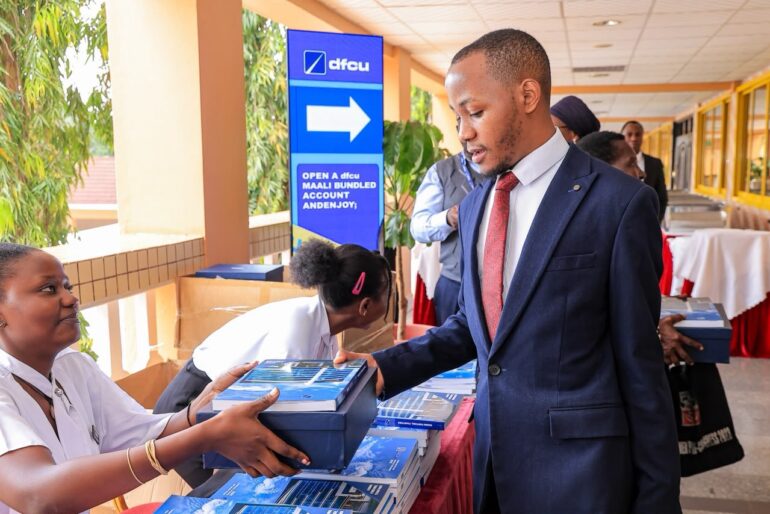
The shareholders of dfcu Limited have approved a UGX16.32 billion dividend after the banking group delivered stronger financial results for the year ended December 2025, despite facing rising loan defaults, higher funding costs and increasing operating expenses.
The dividend, approved during the company’s Annual General Meeting in Kampala on Wednesday, amounts to UGX21.8 per share, representing an increase from the UGX15.03 billion distributed for the 2024 financial year.
The higher payout reflects the group’s improved profitability and continued commitment to delivering value to shareholders.
The distribution follows a 15 per cent increase in profit after tax by dfcu Bank, the group’s main operating subsidiary, to UGX81.58 billion, up from UGX71.57 billion recorded in 2024.
At the holding company level, dfcu Limited reported a profit after tax of UGX74.99 billion, compared with UGX72.08 billion in the previous year.
Board Chairman Jimmy Mugerwa said the company adopted a disciplined and cautious strategy during the year, prioritising financial resilience over aggressive expansion amid a challenging macroeconomic environment characterised by elevated funding costs, global trade uncertainty and geopolitical tensions.
“Rather than pursuing growth at any cost, we focused on disciplined capital allocation, prudent liquidity management and careful risk management,” Mugerwa told the AGM.
Despite the stronger earnings, the group’s financial statements highlighted growing pressure on asset quality.
Non-performing loans and other impaired assets increased significantly to UGX84.94 billion from UGX51.83 billion a year earlier, while impairment provisions moved from a net recovery in 2024 to a UGX9.95 billion charge in 2025.
Bad debts written off during the year also rose to UGX19.92 billion, underscoring the challenging credit environment.
The bank also faced increased funding costs as competition for customer deposits intensified across Uganda’s banking sector.
Interest expenses on customer deposits rose by more than 25 per cent to UGX81.04 billion, while interest paid on borrowings more than tripled to UGX19.81 billion, placing pressure on net interest margins.
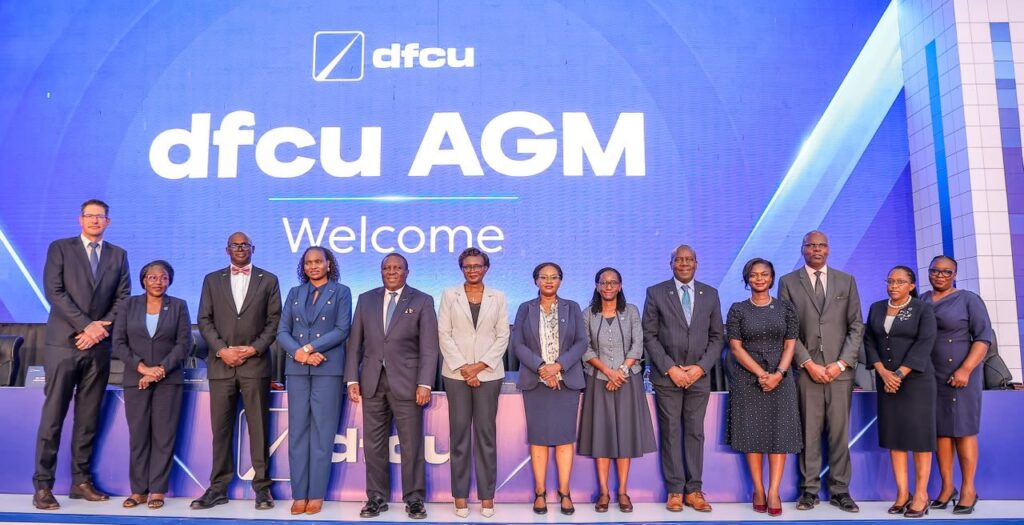
Although total group income grew by more than 16 per cent to UGX529.29 billion, higher funding and operating costs limited growth in profit before tax, which increased modestly to UGX79.88 billion. The stronger net profit was partly supported by a lower tax charge during the reporting period.
Chief Executive Officer Charles Mudiwa said the bank’s diversified business model continued to strengthen earnings by reducing reliance on traditional lending income.
Non-funded income generated from fees, commissions, foreign exchange trading and digital banking grew by 20 per cent to UGX108 billion.
Foreign exchange and trading income was the strongest-performing revenue stream, surging by more than 84 per cent to UGX43.66 billion, driven by increased cross-border transactions and favourable foreign exchange market conditions.
The group’s balance sheet also recorded steady growth during the year.
Customer deposits increased by 15 per cent to UGX2.74 trillion, while the gross loan portfolio expanded by 12 per cent to approximately UGX1.27 trillion. Total assets rose to UGX3.74 trillion, reflecting continued growth in the bank’s operations.
Mudiwa said dfcu has entered what it describes as the “Reengineering” phase of its transformation programme, with a strategic focus on sector-specific lending, digital banking, customer experience and operational efficiency.