The digital revolution has a habit of making its benefits look easier to reach than they really are. A smartphone may put the internet in someone's pocket, but that does not mean they know how to use it to find work, run a business or manage money.
That gap is becoming increasingly important in Uganda, where the government wants to turn a roughly $50bn economy into one worth $500bn by 2040. Such ambitions require more than fibre-optic cables and mobile-phone towers. They require people who know what to do once they are connected.
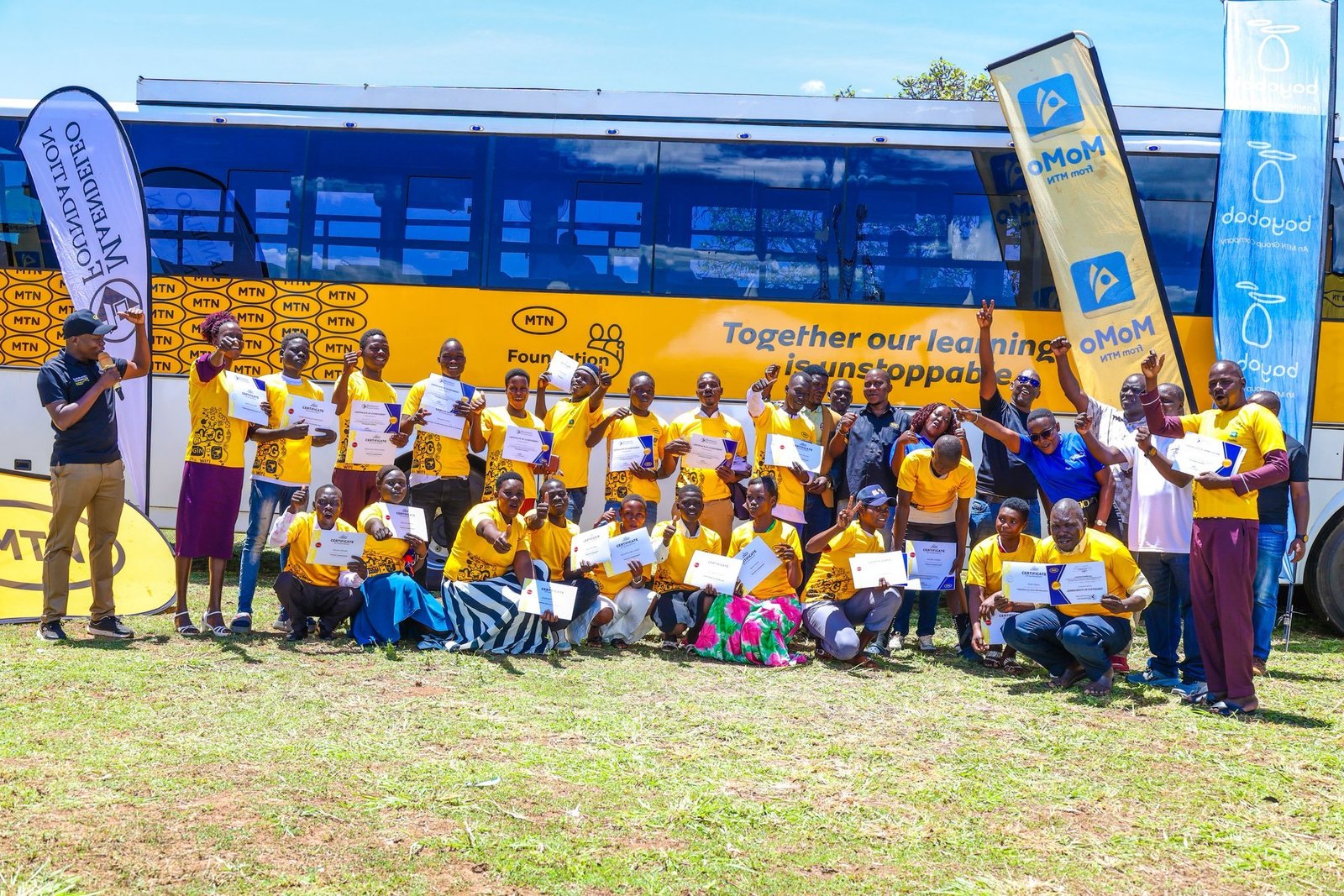
On October 8, 407 people, mostly young people and women, graduated from a three-week digital and financial literacy programme in Pader and Lamwo districts in northern Uganda.
The programme, run by the MTN Uganda Foundation in partnership with Maendeleo Foundation, taught participants basic computer skills, online safety, artificial intelligence and the use of digital financial services.
The classes arrived in an unusual form: a bus. The MTN Internet Bus is a mobile computer laboratory equipped with computers, internet access and trainers. It travels to communities where conventional digital-training facilities are scarce, bringing the classroom rather than requiring students to travel to it.
The graduation at Angagura Sub County headquarters was the second under the sixth phase of the programme. The first was held at Makerere Kikoni in Kampala last month.
Since 2022, more than 7,000 people have received training through the Internet Bus, with more than 90% completing the programme, according to MTN Uganda.
“Digital inclusion is not only about access to technology. Trainees also need the skills and confidence to use it productively,” says Peter Ochen, General Manager, Financial Operations at MTN Uganda.
Uganda, like much of Africa, has spent years expanding mobile connectivity. But access to technology does not automatically translate into higher productivity. A person can own a smartphone and still lack the skills to use the internet to learn, trade, work or manage finances.
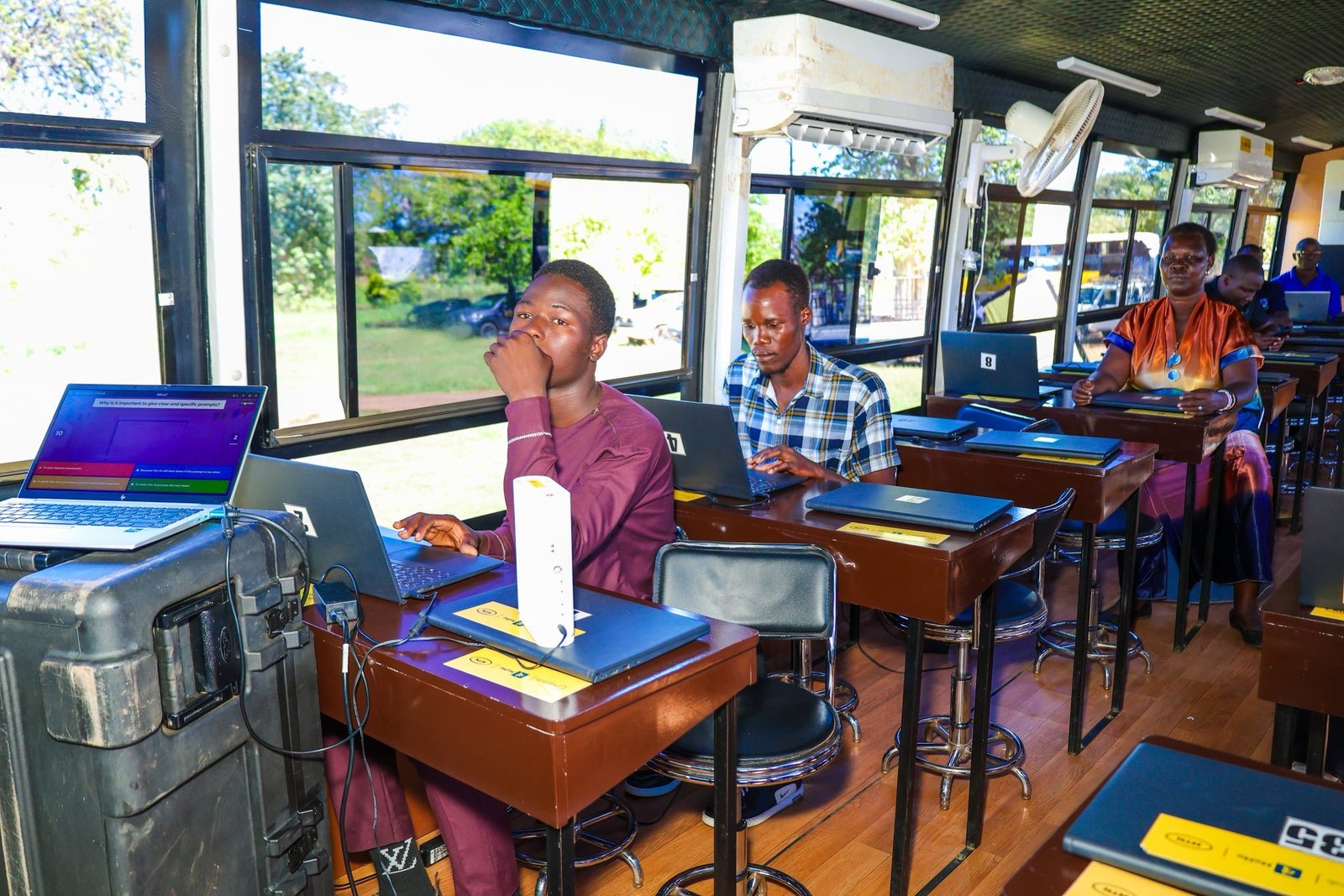
Financial literacy is particularly important as more transactions move from cash to digital platforms. Participants in the programme were taught how to manage money, make informed financial decisions and use digital financial services safely.
For Gloria Ayaa, one of the graduates, the lessons have provided a practical starting point.
“I have learnt how to use a computer, search for information on the internet and communicate online,” she says. She plans to use the skills to improve her work, continue learning and find opportunities online.
Erick Akena, another graduate, said the financial-literacy component had changed how she approached money management.
“I have learnt how to use digital tools and manage my money better,” he says.
The skills gap
Uganda's economic ambitions make the problem more pressing. Its Fourth National Development Plan, or NDP IV, envisages rapid economic expansion over the coming years. But a larger economy will need more than investment and infrastructure. It will need a workforce capable of using technology to increase productivity.
That is a particularly difficult task in rural areas, where distance and the cost of training can reinforce existing inequalities.
The Internet Bus attempts to address both. Rather than waiting for digital infrastructure and training institutions to reach every community, it moves the equipment and instructors to the learners.
The approach is modest compared with the scale of Uganda's digital ambitions. But that may be precisely the point. Digital transformation is often presented as a story about infrastructure. In practice, it is also a story about human capital.
The graduation included a regional skills competition, in which trainees demonstrated what they had learnt. Four top performers — Salume Amito, Ken Okee, Simon Peter Openyrwot and Willy Ojok — received a laptop, tablet, Kabode smartphone and MiFi device respectively to support further learning and connectivity.
The graduates were also encouraged to continue learning through the free online MTN Skills Academy and pursue opportunities in innovation, entrepreneurship and skills development through MTN ACE.