For years, African governments have complained that the way their economies are assessed by international credit rating agencies does not always reflect the realities on the ground. Now, Africa wants to have a bigger say in how that risk is measured.
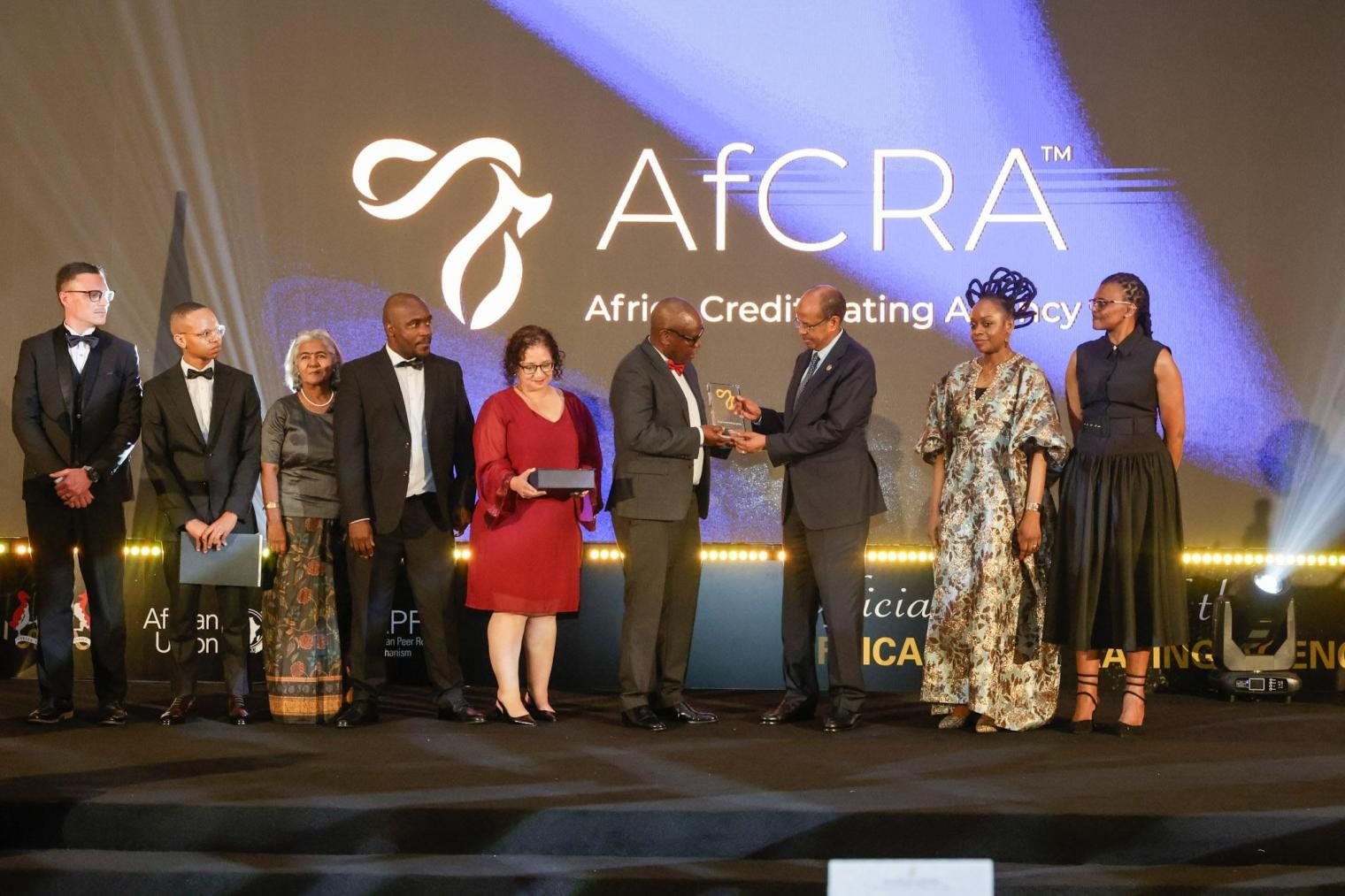
The launch of the Africa Credit Rating Agency (AfCRA) in Mauritius on Thursday marks the latest attempt by the continent to strengthen its financial architecture and reduce its dependence on institutions that are largely based outside Africa.
For decades, Africa's sovereign and corporate borrowers have largely depended on the world's three dominant rating agencies, S&P Global Ratings, Moody's and Fitch Ratings, to assess their creditworthiness.
Those assessments matter because they can influence how international investors view African debt and, ultimately, how much governments and companies pay to borrow.
The debate has become more intense in recent years, particularly after a dispute between the African Export-Import Bank (Afreximbank) and Fitch.
Fitch downgraded the bank in June 2025, cutting its long-term issuer default rating to BBB- from BBB and assigning it a negative outlook.
The agency cited increased credit risks, including its assessment of the bank's non-performing loans and concerns about risk management and exposure to sovereign borrowers.
Afreximbank disputed the assessment, arguing that Fitch's treatment did not adequately reflect the legal and institutional framework under which the bank operates.
The bank subsequently ended its relationship with Fitch in January 2026. But the disagreement did not led to the creation of the new rating agency. The African Union had already ndorsed the creation of an African rating agency in 2018, after years of concern about how African risk was assessed.
But the Afreximbank-Fitch episode gave fresh urgency to an argument that has been building for years: that Africa needs more capacity of its own to assess the risks and opportunities in its economies.
Afreximbank, one of the continent's leading multilateral financial institutions and a supporter of AfCRA, has welcomed the agency, saying it could provide investors with a deeper and more independent understanding of African credit risk.
But AfCRA faces an important test: whether it can establish the credibility needed to influence investors and financial markets without becoming an agency seen as sympathetic to African borrowers.
"The Agency must set its own standards and not follow those set elsewhere," Denys Denya, Afreximbank's executive vice-president, said at the launch.
"The rating methodology AfCRA develops must recognise the uniqueness of our environment and its institutional structures."
That is likely to be one of the agency's biggest challenges.
A credit rating is not simply a score on a government or company. It can influence how much it costs to borrow money and, in turn, how much governments spend on debt repayments rather than infrastructure, healthcare, education and other priorities.
For countries already facing tight budgets and high debt-servicing costs, even a small change in the perceived level of risk can have significant consequences.
The problem AfCRA is trying to solve
The African Union has argued that African economies are sometimes assessed without sufficient consideration of their particular economic and institutional circumstances.
The concern is not necessarily that international agencies deliberately give African countries poor ratings.
Rather, African officials say the models used to assess risk can fail to capture factors that are difficult to quantify, including the depth of domestic markets, informal economic activity, institutional reforms and the specific structure of African economies.
The dominance of the global agencies has also meant that African governments and companies have had relatively limited alternatives when seeking an external assessment of their creditworthiness.
The result, critics argue, can be a disconnect between the way risk is perceived and the realities within individual countries.
The establishment of AfCRA is intended to add an African perspective to that process. Its supporters are careful to say that it is not designed to replace international rating agencies or guarantee better ratings for African governments.
The African Union says AfCRA is intended to complement existing agencies by providing independent assessments based on African data, expertise and economic realities.
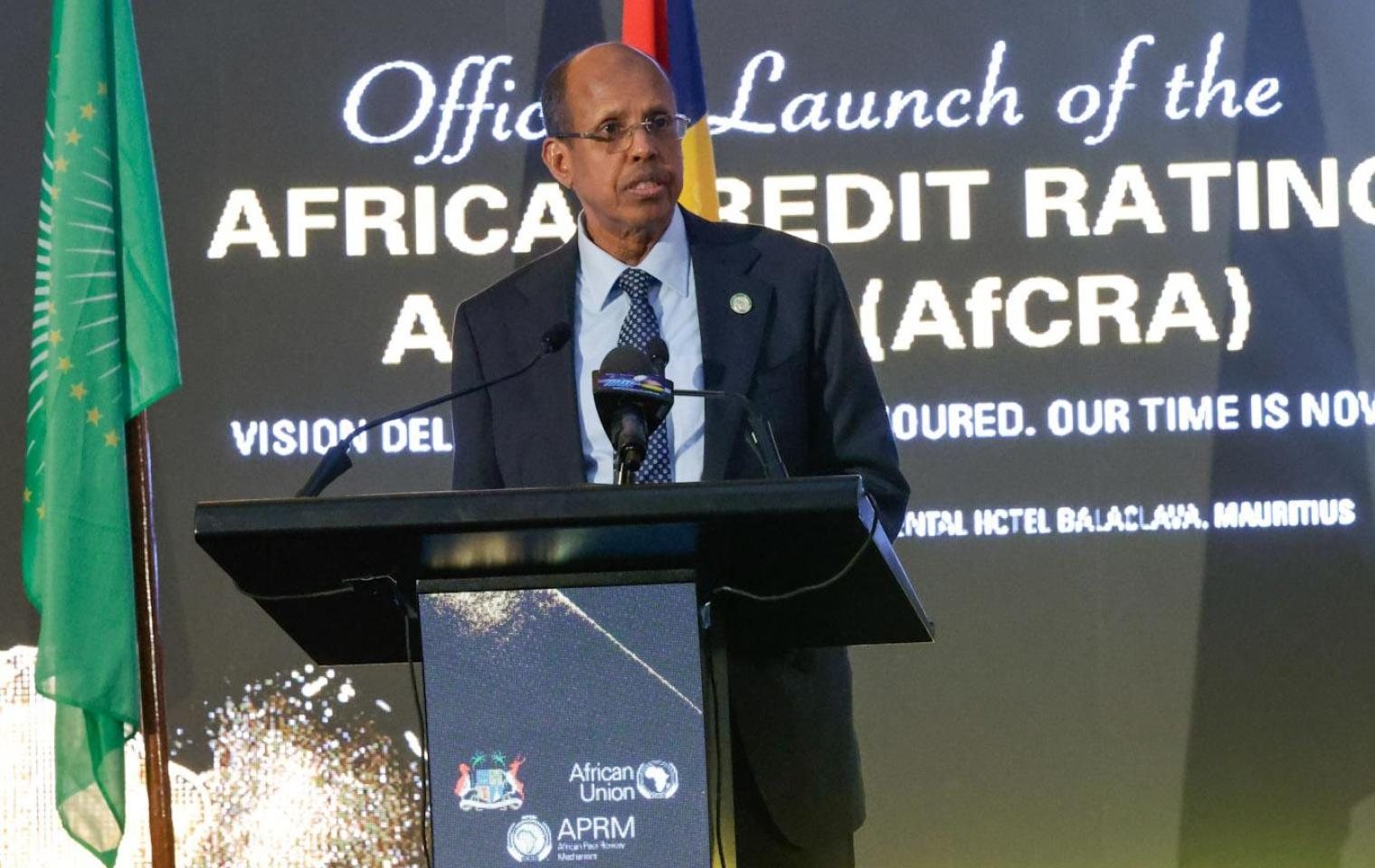
African Union Commission Chairperson Mahmoud Ali Youssouf said the agency should instead provide an additional, independent source of analysis.
Its ratings, he said, must be based on evidence, internationally recognised standards and freedom from political interference.
That independence could ultimately determine whether AfCRA succeeds.
Credibility will matter more than patriotism
There is an obvious temptation for a new African institution to be seen as a vehicle for correcting what African governments regard as unfair perceptions of the continent.
But investors will want something different. They will want to know whether an AfCRA rating can help them decide where to put their money and what price they should demand for taking that risk.
That means AfCRA will have to be willing to tell uncomfortable truths about African economies.
It will need to downgrade countries when their fiscal positions deteriorate, challenge weak economic policies and identify debt risks even when governments would prefer a more positive assessment.
At the same time, it will need to recognise strengths that may be overlooked by conventional assessments.
This is where the Afreximbank-Fitch dispute offers an important backdrop.
Afreximbank's decision to end its relationship with Fitch was based on its view that the rating exercise did not adequately understand the bank's legal framework, mandate and role as a pan-African institution. Fitch, for its part, subsequently defended its assessment by pointing to risks associated with the bank's exposure to sovereign debt restructurings.
The disagreement illustrates the broader challenge AfCRA will face.
An African agency will need to understand the continent's institutions and markets better, but that understanding cannot come at the expense of rigorous scrutiny.
Denya said this balance was essential.
"We must all use it, and in return expect a complete assessment of where we (Africa) stand: the strengths the market has ignored, and the weaknesses we still need to fix," he said.
That could prove to be the agency's defining test.
A market that remains largely unrated
The opportunity is considerable. Many African companies and public institutions remain outside the international credit-rating system. Local-currency debt and sub-sovereign markets also have limited coverage.
Reuters reported at the launch that 23 African economies currently lack ratings from the major international agencies.
A credible rating agency could therefore help fill an information gap. More ratings could give investors a better basis for comparing African companies and governments, while encouraging the development of domestic and regional capital markets.
For African businesses, that could eventually mean greater access to institutional investors and a wider range of financing options.
For governments, it could help attract investors beyond the traditional international markets.
But none of this will happen simply because AfCRA exists. Financial markets are built on trust, and trust takes time.
Africa's bigger financial ambition
The agency is part of a broader push to strengthen Africa's own financial institutions.
The continent has increasingly sought to mobilise more of its own capital to finance infrastructure, industrialisation and trade, rather than relying heavily on external borrowing and development assistance.
Afreximbank has been at the centre of that effort through its work on intra-African trade, payments and financing.
Its support for AfCRA reflects a wider argument that African institutions should have a greater role in determining how African economies are understood by global markets.
The African Peer Review Mechanism, which helped drive the establishment of AfCRA, says the African Union endorsed the idea in 2018.
APRM chief executive Marie-Antoinette Rose Quatre said the organisation had worked on the agency's technical and institutional framework and on improving African governments' understanding of credit-rating methodologies.
She said credibility would be AfCRA's greatest asset.
That credibility will also depend on the quality of information supplied by African governments and companies.
Poor or delayed data would make it difficult for even the best rating agency to produce reliable assessments.
The real test begins now
The launch in Mauritius is therefore only the beginning. AfCRA will have to build a reputation among investors, banks, governments and companies that have spent decades relying on established international rating agencies.
It will need to demonstrate that its analysts can operate independently, that its methodology is transparent and that its ratings can withstand scrutiny.
It will also need to show that an African perspective does not mean an African bias.
The Afreximbank-Fitch dispute has demonstrated why that distinction matters.
Africa wants ratings that understand its institutions, markets and economic circumstances. But investors will not accept ratings simply because they are produced on the continent. They will expect them to be commercially credible, analytically rigorous and independent.
For the African Union, the ambition is therefore much bigger than creating another rating agency.
Youssouf said AfCRA should contribute to Africa's economic sovereignty and give the continent a stronger voice in the global financial system.
But economic sovereignty does not mean insulating African economies from scrutiny.
It means having the capacity to produce credible assessments of both their strengths and weaknesses. That is the bargain AfCRA is now being asked to deliver.
If it succeeds, the agency could become an important part of Africa's financial infrastructure and give investors another way of understanding the continent.
If it fails to establish independence and credibility, however, its African ownership may matter little to global markets.