


Three years ago, the World Bank walked away from Uganda’s project pipeline.
The Anti-Homosexuality Act of 2023 had drawn a hard line, new lending was suspended, and diplomatic exchanges turned frosty enough that President Museveni accused the lender of overreach.
A few days ago in Kampala, that chapter formally closed.
The Bank’s Board of Executive Directors endorsed a ten-year Country Partnership Framework running to 2035, alongside a Public Finance Review titled “Uganda’s Oil Decade.”
Together they signal something more than a routine policy launch; they mark the Bank’s return to large-scale engagement with Uganda, at precisely the moment the country is preparing to pump its first barrels of commercial oil.
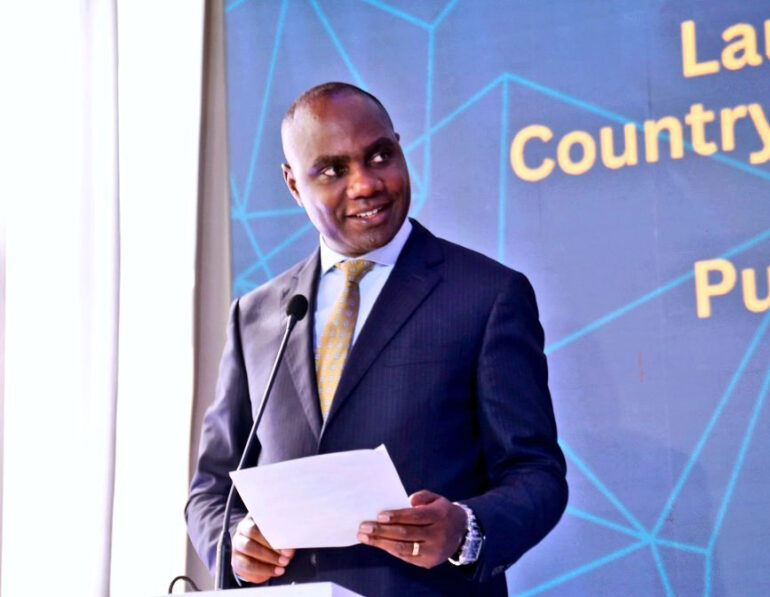
The renewed relationship rests on confidence, not sentiment. Speaking at the event, Minister of State for Finance Henry Musasizi said that the framework “demonstrates growing confidence in Uganda’s economic direction despite a challenging global environment marked by inflationary pressures, geopolitical tensions and climate-related shocks.”
That confidence is being backed with money. The World Bank has committed to an indicative $2 billion every three years through the International Development Association, and is using its “One World Bank” model – blending IDA financing,
International Finance Corporation capital, and Multilateral Investment Guarantee Agency risk cover – to help Uganda unlock an additional $3.8 billion, roughly UGX 14 trillion, in private investment.
Over the coming decade, that could translate into more than $6 billion in concessional financing, making Uganda one of the Bank’s largest regional portfolios.
Qimiao Fan, speaking on the World Bank’s behalf, framed the shift in approach plainly: the institution is moving away from financing scattered, standalone projects toward sector-wide interventions built to outlast any single administration.
“We are fully committed to supporting Uganda’s transformation agenda,” he said. That commitment is not blind optimism.
The accompanying Public Finance Review is candid about the risks.
Interest payments already consume roughly a third of Uganda’s tax revenue. Tax collection sits below 13 percent of GDP, well under the regional average.
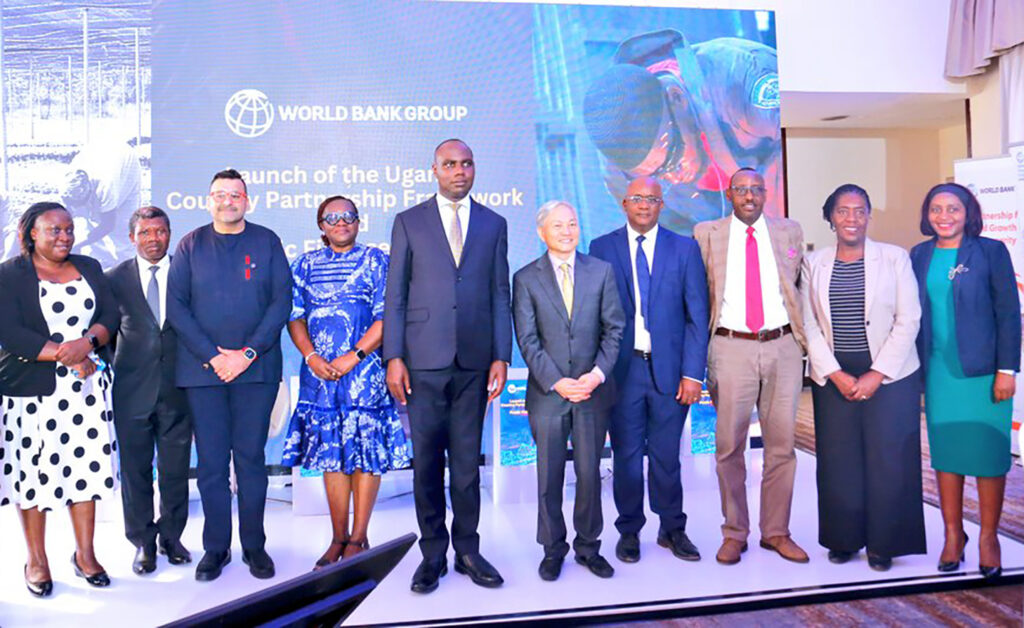
Musasizi poses with World Bank and some Goverment officials at the event
An estimated third of every Shilling spent on infrastructure is lost to poor planning and weak maintenance, and real spending per primary school pupil has fallen by a quarter over the last ten years.
The Bank’s prescription – save oil revenue rather than spend it immediately, widen the tax base, and more than triple investment in health and education – is less a warning than a stringent test of discipline Uganda will have to pass on its own.
What makes this framework significant is timing. Uganda had expected commercial oil production this month, but this has been pushed to 2027 – just as this partnership gets underway, and the government is targeting a tenfold expansion of the economy, from roughly $66 billion today to $500 billion by 2040.
The World Bank’s re-engagement gives that ambition institutional weight and access to capital markets it could not reach alone.
But the CPF is explicit that oil money and World Bank financing would only matter if Uganda spends both wisely, which is quite a big ask, if you talk to a typical Ugandan citizen.
As Musasizi put it, development would ultimately be measured “by the lives transformed, opportunities created and the lasting impact on citizens” – not by the size of the numbers unveiled at Tulip Hotel in Kampala.