



For those who attended the business networking event organised by the Embassy of Japan in Uganda in partnership with the Uganda Free Zones and Export Promotions Authority in Kampala last week, it was abundantly clear that Uganda’s trade relationship with Japan is worth watching — not because of what it is today, but because of what it signals for tomorrow.
Trade data shared during the meeting indicated that bilateral trade between the two countries topped $14 million in 2025, a figure that, on the surface, appears modest.
But scratch beneath that number and you find a story about premium agricultural commodities finding favour in one of the world’s most discerning markets, a government betting on export-led industrialisation, and a quiet but deliberate courtship between two economies that have more to offer each other than current volumes suggest.
The headline exports — coffee, flowers, vanilla, fish and cocoa beans — tell a familiar story for Uganda. Agriculture remains the backbone of the country’s export earnings, and the Japan relationship is no different. Coffee leads the way, as it does everywhere.
Uganda shipped over 6.1 million 60-kilogram bags globally in the 2024/2025 season, earning more than $1 billion in foreign exchange.
Only a fraction of that flows to Japan, but Japanese buyers are known for paying premium prices for quality — and Uganda’s specialty coffee, vanilla and single-origin cocoa are increasingly meeting that bar.
For farmers growing these crops, the Japan connection matters precisely because of that premium dynamic. Japanese consumers do not simply buy commodities; they buy provenance, quality and story.
A Ugandan vanilla farmer or a specialty coffee grower in the Mt. Elgon foothills is, whether they know it or not, competing in a market where quality commands a price that bulk commodity trading rarely delivers. That is the real opportunity embedded in this $14 million figure.
David Bahati, the junior Finance minister, said the government is committed to strengthening economic cooperation with Japan as part of its industrialisation agenda.
The institutional groundwork is also being laid. A memorandum of understanding signed in June 2025 between the Uganda Free Zones and Export Promotions Authority and the Osaka Chamber of Commerce and Industry creates a formal channel for trade promotion and industrial collaboration.
Uganda’s free zones are being actively pitched to Japanese manufacturers as a gateway to the East African Community and the broader African Continental Free Trade Area — a combined market of over 1.4 billion consumers.
For Japanese companies looking to diversify supply chains beyond China and Southeast Asia, that pitch is increasingly credible.
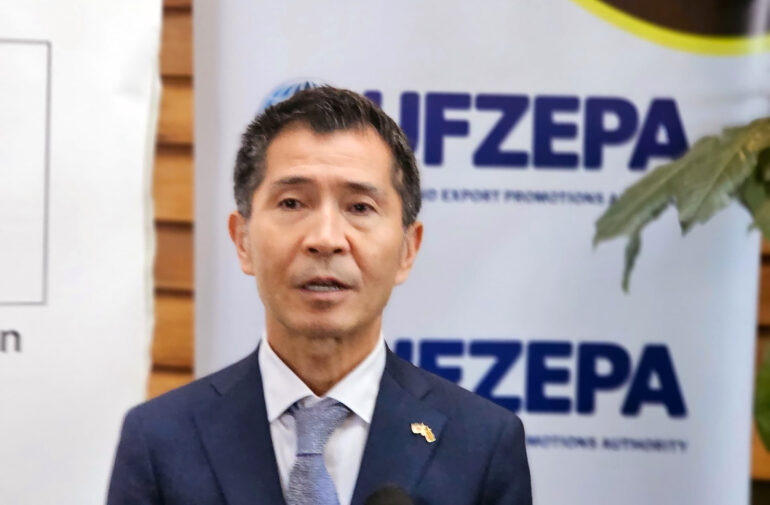
Uganda’s participation in Expo 2025 Osaka adds another layer of visibility, according to Yoshida Norimasa, an official of the Japanese Embassy in Uganda.
These platforms rarely produce immediate deals, but they plant seeds. A Japanese food importer who encounters Ugandan vanilla at a trade expo today may well become a serious buyer within two years.
The numbers need to grow significantly before this relationship matures into a genuinely strategic one. Fifteen years of modest engagement have produced $14 million.
Reaching $100 million will require consistent quality, reliable supply chains, and aggressive market development — none of which happen without sustained investment in farmer training, post-harvest handling and export infrastructure.
But the architecture is in place. The products are competitive. The interest is mutual.
Uganda has built bigger trade relationships from smaller beginnings. The Japan chapter is still in its early pages — but for exporters paying attention, it is well worth reading.