





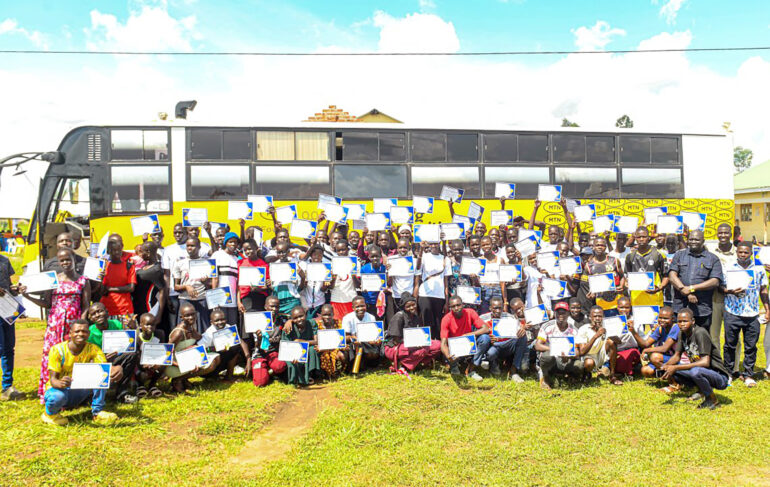
There is something quietly profound about a bus rolling into Amuru District and parking long enough to change lives.
Not a bus carrying relief food or medical supplies, as this corner of northern Uganda has grown accustomed to receiving, but one carrying laptops, internet connectivity, and the kind of practical digital skills that can open doors in the modern economy.
For a district whose collective memory is still heavy with the trauma of Lord’s Resistance Army insurgency, the arrival of MTN Uganda’s Internet Bus carries a symbolism that goes beyond corporate social responsibility.
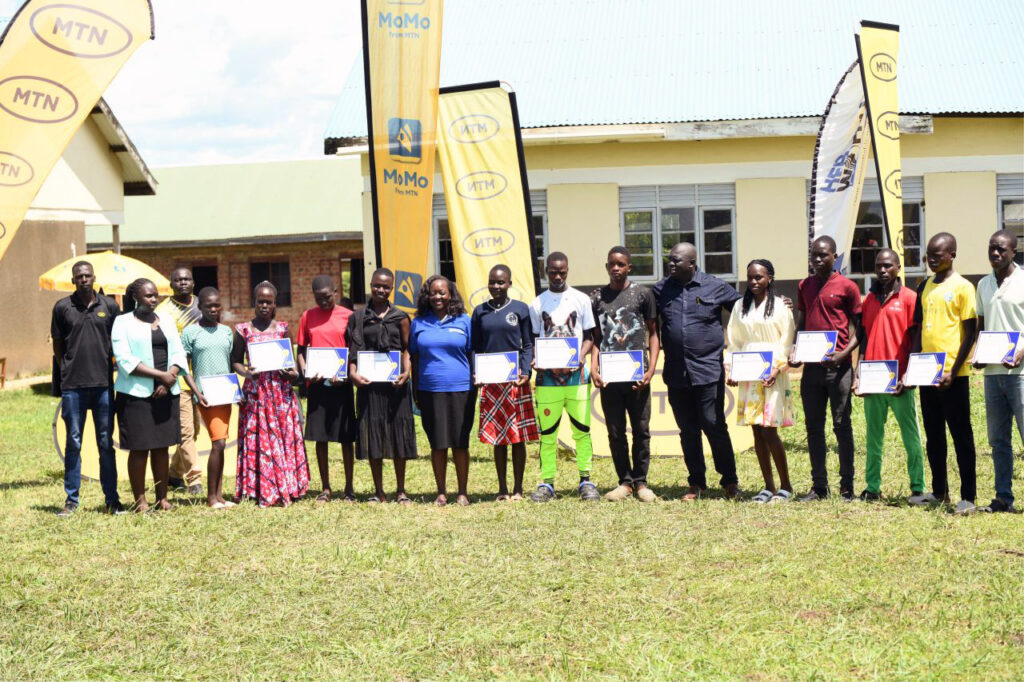
Some 225 residents of Amuru recently graduated from MTN Foundation’s Internet Bus digital literacy programme, completing hands-on training in computer basics, online safety, spreadsheets, graphic design, and e-commerce tools.
Women and youth made up the overwhelming majority of the cohort, which is precisely the point.
Amuru’s Resident District Commissioner, Geoffrey Osborn Oceng, captured it plainly at the graduation: “What we are witnessing here is not just training, but transformation. When young people and women gain digital skills, they are better equipped to create opportunities for themselves and contribute meaningfully to the development of this district and the country at large.”
In a district rebuilding its social and economic fabric after decades of displacement, giving a young woman or youth the ability to navigate the digital economy is, in the most literal sense, an act of reconstruction.
The Internet Bus itself is an elegant solution to an old problem. Uganda’s digital ambitions have long collided with hard geographic and economic realities. Rural communities cannot easily access computers.
Internet infrastructure remains thin in many areas. Training centres are concentrated in urban areas that millions of Ugandans cannot easily reach.
MTN’s response has been to remove the need for people to come to the tools by bringing the tools to the people.
The bus is a self-contained mobile computer lab, solar-powered for off-grid functionality, fitted with multiple workstations, and equipped with reliable 4G connectivity.
The ten-day intensive curriculum is deliberately practical, preparing participants not merely to browse the internet but to use digital tools professionally and safely.
Since 2022, the programme has trained more than 5,900 people across 44 communities in districts ranging from Mukono and Jinja in central Uganda to Kiryandongo, Bushenyi, and now Amuru.
MTN and its implementing partner, Maendeleo Foundation, are targeting an additional 2,000 participants across ten communities in the current programme cycle.
These numbers matter, but the quality of the outcomes matters more. Graduates are enrolled onto the MTN Skills Academy, a free online platform for advanced certifications, ensuring that the ten days of training are a beginning rather than an end.

Top performers in Amuru received laptops and MiFi devices, seeding what MTN’s regional head Philip Odoi described as a broader inclusion agenda aimed at enabling communities to participate meaningfully in the digital economy.
That agenda aligns directly with Uganda’s national Digital Transformation Roadmap, which runs through 2028 and prioritises digital skilling as foundational to the country’s Fourth Industrial Revolution readiness.
With barely a tenth of rural schools connected to the internet, the government’s policy goals face an uncomfortable implementation gap.
The Internet Bus quietly fills part of that gap, functioning as a mobile extension of national infrastructure ambition.
The deeper significance of what is happening in Amuru, and in communities like it, is this: digital exclusion is not merely an inconvenience.
In an economy where government services, banking, job markets, and commerce are rapidly migrating online, the unskilled rural citizen faces a compounding disadvantage. Every cohort that graduates from a programme like this is one less community falling further behind.
The bus has now moved on. But what it left behind, will stay for years, if not a lifetime.


Interesting perspective on how initiatives like the MTN Bus help bridge the digital divide by bringing technology and digital skills directly to underserved communities. Expanding access to knowledge and opportunities creates long-term value, much like investing in quality, lasting pieces such as a live edge dining table that continue to serve people well for years. Great read on the impact of practical innovation.