




NCBA Group closed its 2020–2025 strategic cycle with numbers that tell a compelling story.
Total income for the Uganda subsidiary rose 15.7% to UGX157.6 billion.
Total Group assets grew 8% to UGX20.41 trillion. These are not accidental outcomes but the product of deliberate strategy, disciplined execution, and a clear-eyed bet on digital innovation.
The Group’s profit before tax reached UGX795.2 billion, a 10.9% year-on-year increase. Return on equity held steady at 19.7%.
Customer deposits closed at UGX15.16 trillion. For a bank still consolidating its post-merger identity just five years ago, these figures represent a genuine coming-of-age moment.
Yet perhaps the most instructive number is this: the Group’s regional subsidiaries – Uganda, Tanzania, and Rwanda — collectively contributed UGX102.6 billion in profit before tax.
That is 13% of total Group earnings. Uganda led that charge.
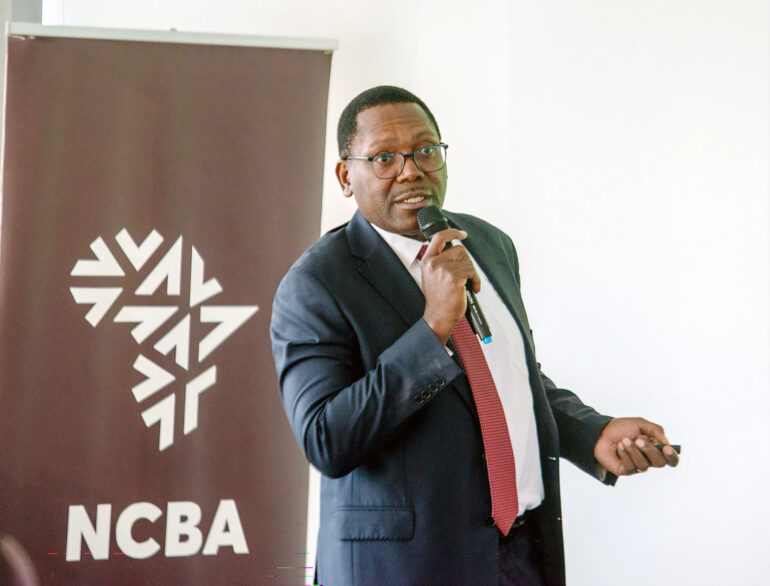
NCBA Bank Uganda CEO Mark Muyobo did not mince words about what the results represent.
“Achieving a profit before tax of UGX46.8 billion, well above our target, is a clear indication that our business model is resilient and responsive to market opportunities,” he said.
Customer deposits reached UGX804 billion, beating internal targets.
The bank also won Best Bank in Asset Finance at the 2025 Annual Bankers’ Awards.
Muyobo acknowledged one gap honestly. Gross loans and advances at UGX331 billion fell short of target.
“We recognise that lending growth did not meet our aspirations,” he said, “and this is an area we are deliberately focusing on going forward.”
That candour signals a management culture that measures itself against ambition, not just outcomes.
Uganda’s contribution to the Group goes beyond profit figures.
While Kenya’s core market faced credit stress, forcing a 46.3% spike in impairment provisions to UGX228 billion, Uganda ran a lean, disciplined credit book.
It acted as a financial hedge. It helped pull the Group’s non-performing loan ratio down to 10.2%. That is risk diversification working exactly as intended.
The bank has also carved a smart niche in asset finance and trade corridors.
Uganda sits at the heart of the Northern Corridor trade route linking Mombasa, Kampala, and Kigali.
Financing that corridor generates sticky, recurring non-funded income.
It also positions NCBA Uganda as indispensable to the Group’s broader African ambitions.
Those ambitions are substantial. The Group’s new Ubuntu Strategy runs from 2026 to 2030.
It is anchored on expanding digital services, scaling non-banking units like wealth management and bancassurance, and deepening regional monetisation.
Digital loan disbursements already surged 33% to UGX39.9 trillion in 2025. That engine is only accelerating.

The proposed Nedbank transaction – where the South African giant eyes a 66% stake – could be transformational.
It would inject global-tier liquidity into the Group. It would open corridors across Sub-Saharan Africa.
And it would make Uganda’s trade finance hub even more strategically valuable.
Muyobo has signalled what comes next locally.
“We are rolling out new digital platforms – NCBA Now for retail customers and Connect Plus for corporate clients,” he said.
The goal is seamless transactions and greater financial convenience for ordinary Ugandans.
The lesson for other financial services providers is clear and unambiguous. Innovation is not optional.
Data, digital infrastructure, and disciplined credit culture are now the primary drivers of sustainable profitability.
Banks that cling to expensive branch networks and legacy systems will find themselves outpaced.
Africa’s banking future belongs to institutions bold enough to bet on technology, regional integration, and long-term strategy.
NCBA Group, with Uganda increasingly at its centre, is betting exactly on that.