




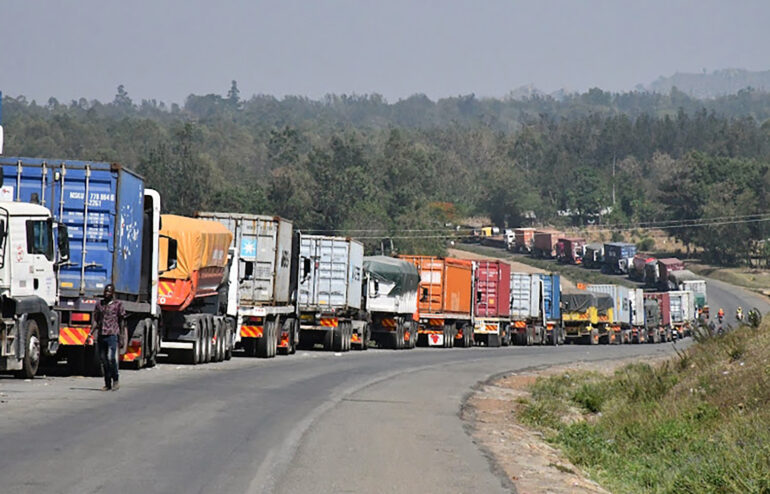
Trade within the East African Community (EAC) recorded a notable decline in the latest reporting period, highlighting a shift in the region’s trade structure and growing reliance on external markets.
According to the latest EAC Quarterly Statistics Bulletin, intra-EAC trade fell by 10.4 percent to US$4.7 billion (UGX 17.7 trillion).
This reduction also lowered the share of intra-regional trade in total EAC trade from 14.9 percent in 2025 to 10.2 percent in 2026, indicating weakening trade flows among Partner States.
The decline in internal trade comes at a time when the EAC is increasingly engaging with markets outside the bloc.
Trade with the Southern African Development Community (SADC) expanded strongly, rising to US$7.0 billion (UGX 26.3 trillion).
This growth reflects deeper commercial ties between East Africa and Southern Africa, driven by demand for commodities and expanding regional supply chains.
Despite the fall in intra-regional trade, Africa as a whole remained the EAC’s largest trading partner.
The continent accounted for 24.1 percent of total EAC trade, reinforcing its importance in supporting regional exports and imports.
Trade with African countries increased from US$9.5 billion (UGX 35.7 trillion) to US$11.2 billion (UGX 42.1 trillion), showing continued momentum in intra-African commerce beyond the EAC bloc.
These trends suggest that future growth opportunities for Uganda and other EAC economies may increasingly depend on broader continental integration, stronger industrialisation, and higher levels of value addition to raw materials.
The report highlights a significant shift in the composition of EAC exports, with minerals taking a leading role.
Mineral commodities accounted for 44.8 percent of total EAC exports, making them the single largest export category in the region.
Precious metals and stones contributed an additional 21.6 percent, meaning that nearly two-thirds of all exports from the EAC are now derived from mineral-related products.
This marks a major structural change in regional trade patterns, as mineral wealth becomes a dominant driver of export earnings.
While agricultural commodities such as coffee, tea, spices, and other traditional exports continue to support regional economies, their relative contribution has declined compared to minerals.
This shift reflects both rising global demand for minerals and increased investment in mining activities across the region.
Opportunities, challenges
For Uganda, the evolving trade environment presents both opportunities and challenges.
The country has traditionally relied on agricultural exports, particularly coffee, as a key source of foreign exchange earnings.
However, the growing dominance of mineral exports in the EAC signals increased competition from countries that are more heavily endowed with mineral resources.
Uganda must therefore strengthen its export competitiveness by expanding into higher-value production and reducing dependence on raw agricultural commodities.
Investment in agro-processing, light manufacturing, and mineral beneficiation could play a key role in improving export earnings and ensuring more stable trade performance.
The report also shows that the EAC’s major export destinations include China, the United Arab Emirates, South Africa, Hong Kong, Switzerland, the United States, the Netherlands, India, and Vietnam.
These markets highlight the bloc’s growing integration into global trade networks beyond the African continent.
For Uganda, this diversification of export destinations presents an opportunity to broaden its trade relationships and reduce over-reliance on a few traditional markets.
Expanding access to high-value markets in Asia, Europe, and the Middle East could help stabilize export revenues and support long-term economic growth.
As export structures across the EAC continue to shift toward minerals and other high-value commodities, competition among Partner States is expected to intensify.
Countries that invest in industrialisation, infrastructure, and export diversification are likely to gain a stronger foothold in both regional and global markets.
At the same time, the decline in intra-EAC trade highlights the need for stronger regional integration efforts to boost internal commerce.
Enhancing cross-border trade efficiency, reducing non-tariff barriers, and improving logistics infrastructure could help reverse the downward trend and strengthen economic ties within the bloc.