




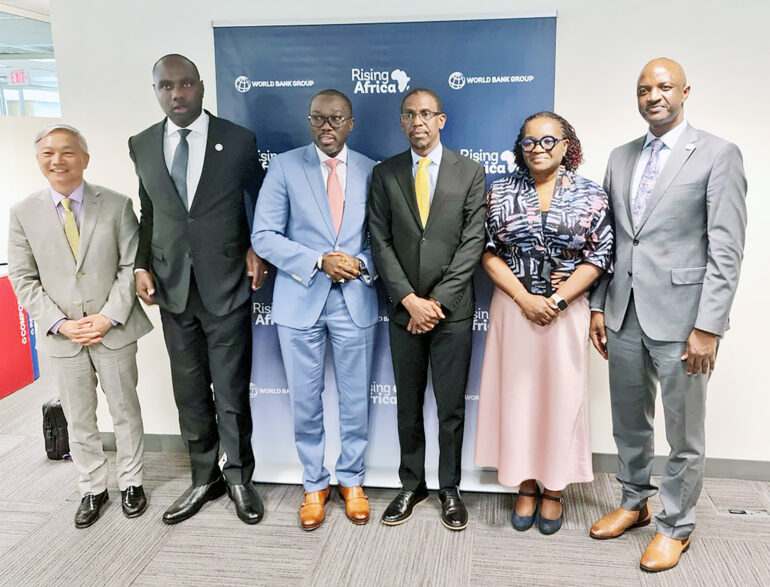
The World Bank Group has unveiled plans to provide Uganda with approximately US$6 billion (about UGX 21.9 trillion) in financing over the next 10 years under its new Country Partnership Framework (CPF), a long-term strategy aimed at accelerating private sector-led growth, creating jobs, and improving living standards.
The financing package will be disbursed in three cycles of roughly US$2 billion (about UGX 7.3 trillion) each between 2026 and 2035, according to a press statement issued yesterday.
It will be implemented alongside the Bank’s existing portfolio in Uganda, which currently stands at US$4.05 billion (about UGX 15.3 trillion).
The new framework aligns with Uganda’s Fourth National Development Plan, Vision 2040, and the government’s Tenfold Growth Strategy.
It is designed to unlock economic transformation by investing in infrastructure, human capital, and institutional reforms while encouraging greater private sector participation in the economy.
“Uganda has extraordinary assets: a young population full of potential, abundant natural resources, and a government committed to long-term transformation,” said Francisca Ayodeji (Ayo) Akala, the World Bank Country Manager for Uganda.
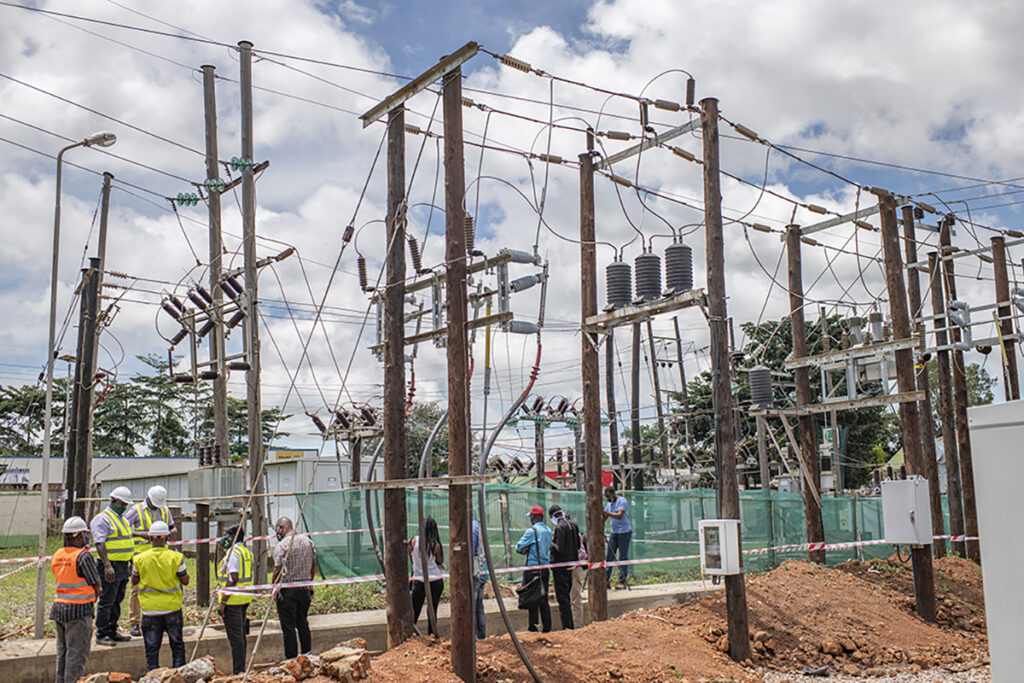
A new substation in Gulu. The World Bank initiative aims to double electricity access from 25 million people today to 50 million by 2035 through investments in power distribution and transmission infrastructure.
“The CPF is our commitment to walk alongside Uganda over the next decade by investing in its people, infrastructure, and institutions that will power prosperity and translate growth into jobs and better living standards. When Ugandans work, families thrive and communities grow,” she added.
A key pillar of the strategy is to mobilise greater private investment into Uganda’s economy.
Although the country has attracted some of the highest levels of foreign direct investment in the region, reaching about 6 percent of gross domestic product in 2025, much of that investment has been concentrated in the oil and gas industry.
According to the World Bank Group, investment across the broader private sector remains constrained by high financing costs, limited access to affordable long-term credit, stringent collateral requirements, shallow capital markets, and governance challenges.
The Bank believes these obstacles have also contributed to reduced lending by commercial banks to businesses, limiting expansion opportunities for many enterprises.
To address these challenges, the CPF adopts what the World Bank describes as a “One WBG approach,” bringing together its financing and advisory institutions to unlock private capital at scale.
Policy reforms supported through the International Development Association are expected to reduce public domestic borrowing, strengthen macroeconomic stability, and ease pressure on interest rates.
At the same time, reforms aimed at deepening financial markets and improving the business environment are expected to create conditions for increased investment.
Through these coordinated efforts, the World Bank Group expects to facilitate at least US$1.3 billion in investments and mobilise an additional US$2.5 billion in private capital over the life of the programme.
The CPF also sets ambitious development targets for the next decade. Under the Mission 300 initiative, the Bank aims to double electricity access from 25 million people today to 50 million by 2035 through investments in power distribution and transmission infrastructure.
Despite its optimism, the World Bank acknowledges that the programme faces substantial implementation risks. These include weaknesses in institutional capacity, public procurement systems, and governance structures that could affect the delivery and sustainability of planned interventions.
The Bank says these risks will be addressed through targeted capacity-building measures and reforms designed to strengthen public institutions and improve project implementation.
By placing greater emphasis on private sector development, infrastructure investment, and human capital, the World Bank hopes the new Country Partnership Framework will help Uganda generate more inclusive growth and create sustainable employment opportunities for its rapidly expanding youthful population.