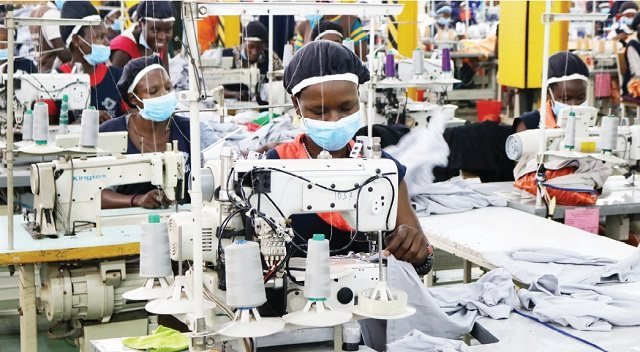
East Africa produces large quantities of cotton, hides and oilseeds, but much of the region’s demand for clothes, footwear and cooking oil is met by imports.
The region’s manufacturers say a shortage of affordable financing, unreliable supplies of raw materials and inconsistent trade policies are making it difficult for local factories to compete.
The challenges were discussed at a two-day meeting organised by the East African Business Council (EABC) and the African Development Bank in Dar es Salaam, Tanzania, last week.
Figures presented at the meeting show that East Africa produces about 370,000 tonnes of hides and skins each year. However, it imported about $566m (£426m) worth of footwear, footwear parts and leather goods in 2025, while exports of hides and semi-processed leather totalled just $46m.
The textile industry faces a similar problem. The region produces an estimated 119,000 tonnes of cotton lint annually, but only 37% is spun locally.
Imports of textiles, clothing and second-hand garments reached $3.24bn in 2025, compared with exports of about $970m.
The edible-oil sector also relies heavily on foreign supplies. Imports cost about $3.1bn, while exports amounted to $1.2bn. Local production meets only 37% of the region’s consumption.
The figures highlight the gap between producing raw materials and turning them into finished goods that can create jobs, generate income and reduce reliance on imports.
Why factories are struggling
The problem is not simply a lack of factories. Many existing manufacturers are producing far below their capacity.
A study presented by Onesmos Shuma of Excellon Group found that 79% of surveyed firms were operating below 75% of their production capacity.
About two-thirds had delayed investment, while 78% reported gaps in technology. Some 76% said they could obtain more of their raw materials from within the East African Community (EAC).
Leather and footwear businesses were among the most affected. The study found that 86% were operating below 75% of capacity, while 79% had postponed or cancelled investment.
In textiles and clothing, 74% were operating below that level and 61% had delayed or cancelled investment. Among edible-oil manufacturers, the figures were 75% and 59%, respectively.
Manufacturers say they face several obstacles, including expensive loans, old machinery, shortages of skilled workers and unreliable supplies of raw materials.
Frank Dafa, executive director of the Confederation of Tanzania Industries, said agriculture, livestock production and manufacturing needed to be better connected.
He argued that investment in technology, skills and infrastructure must go hand in hand with consistent implementation of regional trade rules.
Having raw materials nearby does not automatically make local production cheaper. Factories also need reliable supplies, affordable working capital, functioning machinery and customers willing to buy their products.

Differences in trade policies
Manufacturers say differences in import duties and other trade rules across East African countries are adding to their difficulties.
Research presented by Margaret Chemengich of Charmy Investments found that 25 of 39 temporary tariff exemptions affecting the leather, textile and edible-oil industries had been renewed in every budget since the 2022-23 financial year.
Import duties on refined sunflower oil also varied significantly, ranging from about 26% in Tanzania to 60% in Uganda.
Such differences can affect where businesses choose to process raw materials and how easily goods move between neighbouring countries.
Sylvester Kazi, a member of the EABC-African Development Bank project steering committee, called for a more coordinated approach to regional trade policies.
Proposals included reviewing rules governing the origin of edible oils, improving access to industrial inputs and assessing tariff exemptions more carefully rather than repeatedly renewing them.
The East African Community aims to make it easier for businesses to trade and invest across borders. But manufacturers say differences in national policies can make it harder to operate across the region and benefit from a larger market.
There are also concerns that high import duties can increase production costs by making machinery and intermediate goods more expensive.
This means that protecting local factories from imported finished products may not always help them become more competitive.
Calls for action
Amedeus Arbogast Mzee of Tanzania’s Ministry of Foreign Affairs and East African Cooperation, who was the chief guest at the meeting, urged participants to turn their recommendations into practical proposals with clear deadlines, financing plans and measurable targets.

The proposals include increasing local production of agricultural raw materials, providing loans suited to manufacturing businesses, upgrading machinery and improving technical skills.
Participants also called for stronger links between farmers, suppliers and manufacturers, alongside shared testing and environmental facilities to help reduce costs.
They said progress should be measured by whether businesses are investing, factories are using more of their capacity, manufacturers are buying more regional raw materials and trade performance is improving.
One proposal is to develop regional supply chains in which different stages of production take place in different countries.
For example, cotton could be grown in one country, spun into yarn in another and turned into fabric or finished clothing elsewhere.
But this would require raw materials and finished products to cross borders with fewer delays, lower costs and greater certainty over trade rules.
Governments would also need to work together, while manufacturers would have to improve productivity rather than rely mainly on import restrictions.
East Africa does not need to make every product it consumes. But manufacturers say the region could create more jobs and retain more income locally if it processed a greater share of the raw materials it already produces.
The challenge is to make that production competitive enough for local factories to supply the region’s markets and, eventually, sell more goods abroad.