Uganda is seeking investment from Thai companies in manufacturing, mineral processing and agriculture as it steps up efforts to grow its economy to $500bn (£372bn) by 2040.
Finance Minister Henry Musasizi urged Thai businesses to establish factories in Uganda and produce goods for domestic consumption and export markets across Africa.
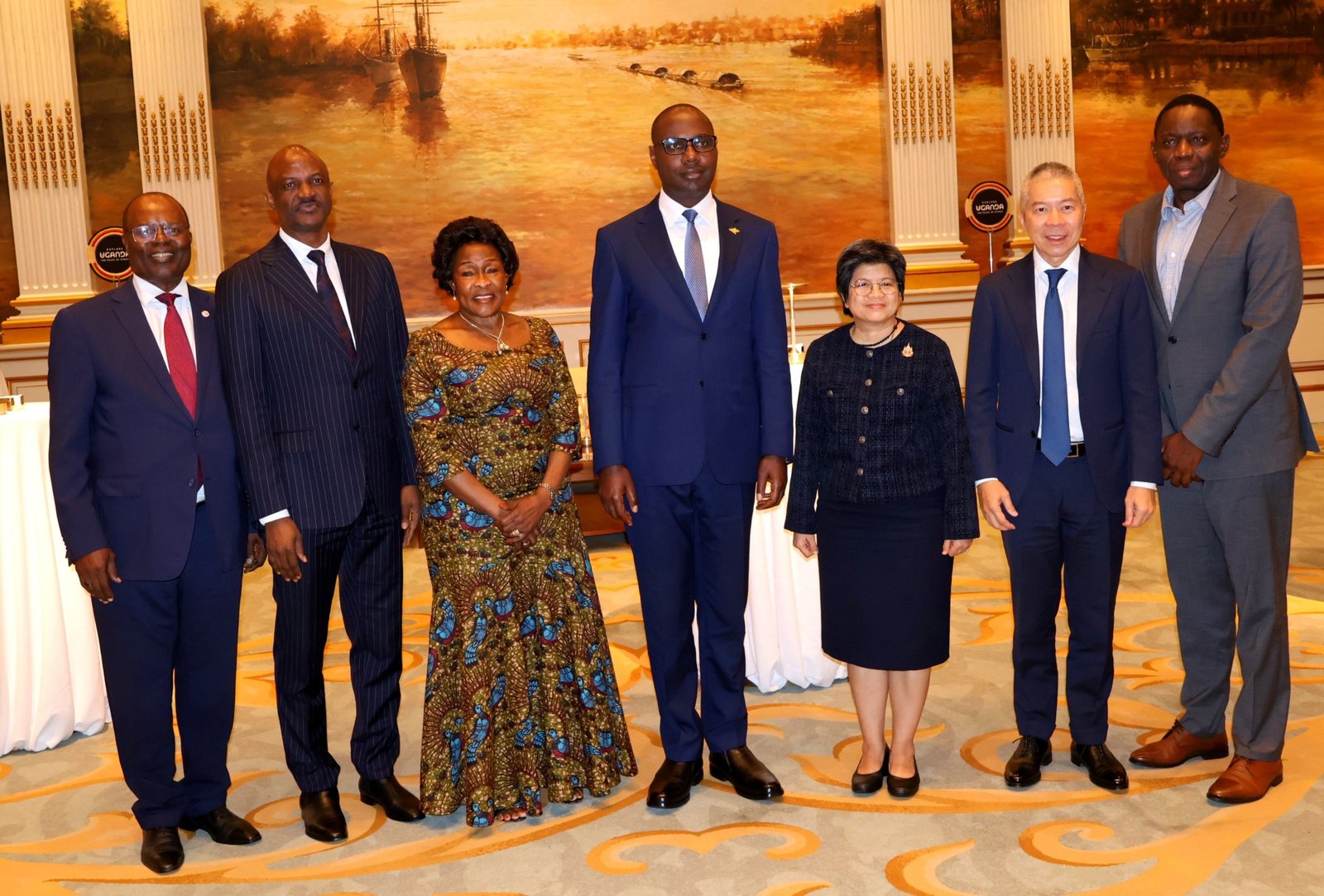
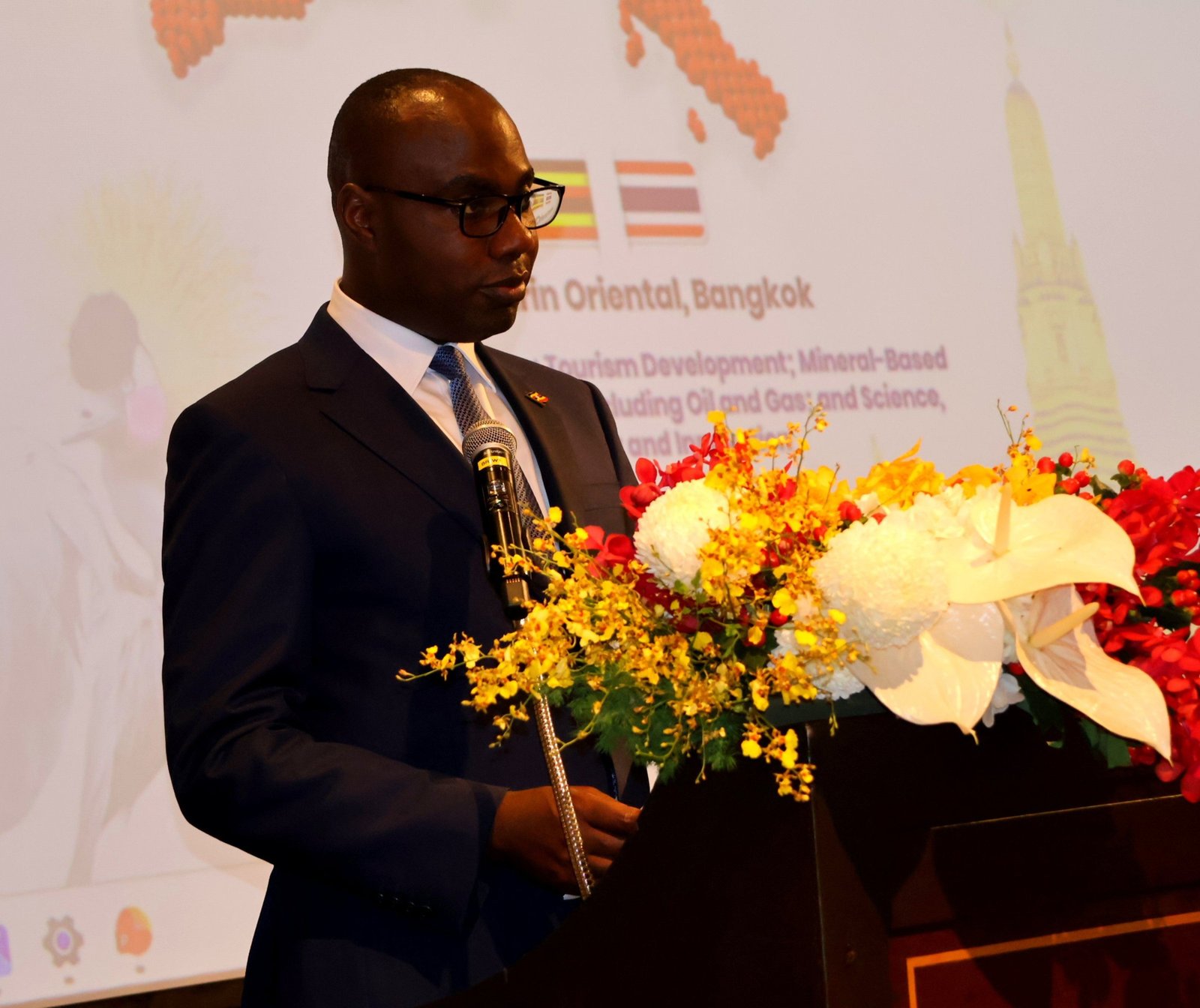
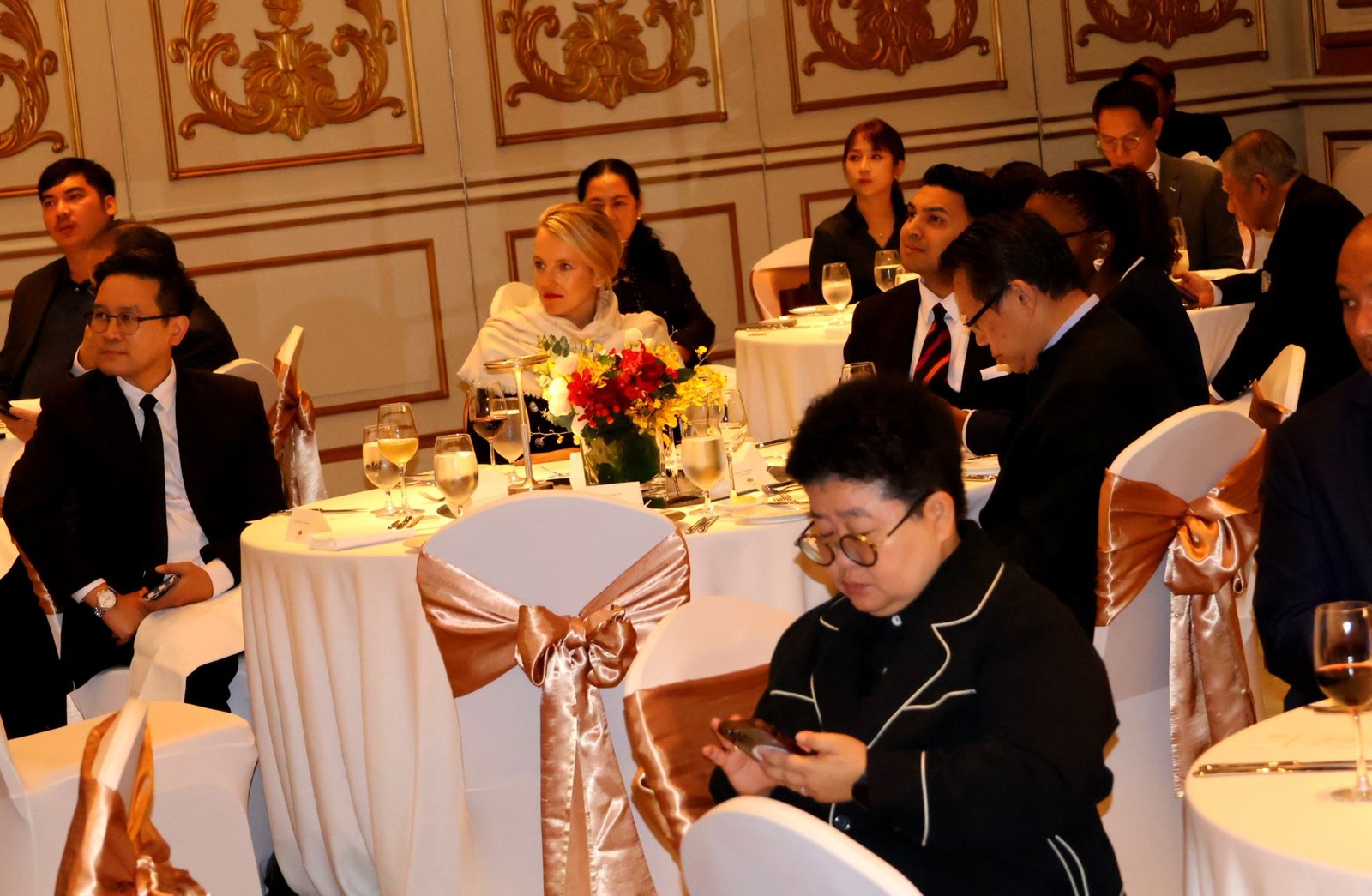
He was speaking at the Uganda–Thailand Economic Networking Dinner in Bangkok, Thailand, on Monday where he said closer commercial ties could help Uganda create jobs, increase exports and move away from dependence on raw commodity sales.
“Together, let us turn the friendship between our two countries into factories, export growth, jobs and shared prosperity,” Musasizi said.
Musasizi said Uganda wants to draw on Thailand’s experience in food processing, agricultural exports, tourism and high-tech manufacturing to increase the value of its agricultural and mineral resources.
The government, he said, has identified opportunities in coffee processing, packaged foods, pharmaceuticals, steel products, fertilisers, cement, meat and dairy processing, as well as tourism and hospitality.
It is also seeking investors to develop industries based on minerals such as lithium, iron ore, phosphates, copper, and cobalt. These include electric battery production, steel manufacturing, fertiliser processing and the production of electrical conductors.
The strategy is intended to enable Uganda to earn more from its natural resources by processing them locally instead of exporting them in raw form.
However, developing these industries will require substantial investment in factories, electricity, transport infrastructure and technical skills.
Regional market
Uganda is also presenting itself as a gateway to the wider African market for Thai businesses.
Its membership of the East African Community (EAC) provides access to a regional market of about 530 million people, while the African Continental Free Trade Area (AfCFTA) offers opportunities to sell goods across the continent.
The government says it is supporting investment through industrial parks, export free zones and fiscal incentives, alongside spending on energy, transport, irrigation and digital infrastructure.
Musasizi said investors could register businesses within one day, own 100% of their investments and repatriate profits without restrictions.
Permanent Secretary and Secretary to the Treasury, Ramathan Ggoobi told the gathering that Uganda's economy grew by 6.4% in the 2025/26 financial year.
Exports of goods and services rose by 34% to $18.4bn, while foreign direct investment inflows reached $3.7bn in 2025, according to figures he presented.
Tourism receipts stood at $1.62bn, while 31 new export products had been added over the past 15 years, generating about $333m annually, Ggoobi said.
Ggoobi said the government expects economic growth to accelerate to 10.2% in the 2026/27 financial year under its Tenfold Growth Strategy. The plan prioritises agro-industrialisation, tourism, minerals and oil, and science, technology and innovation.
But achieving that rate of growth will depend partly on whether new investment creates productive industries, expands employment and increases the range of goods Uganda sells abroad.
Thailand's Ministry of Foreign Affairs, represented by Director General Urasa Mongkolnavin, reaffirmed the importance of closer cooperation between the two countries.
“Let us continue to build a bond of friendship between our two countries,” Mongkolnavin said, adding that Asia is not far from Africa.
Uganda's High Commissioner to Thailand, Betty Bigombe, also called for stronger business ties to expand trade and investment.