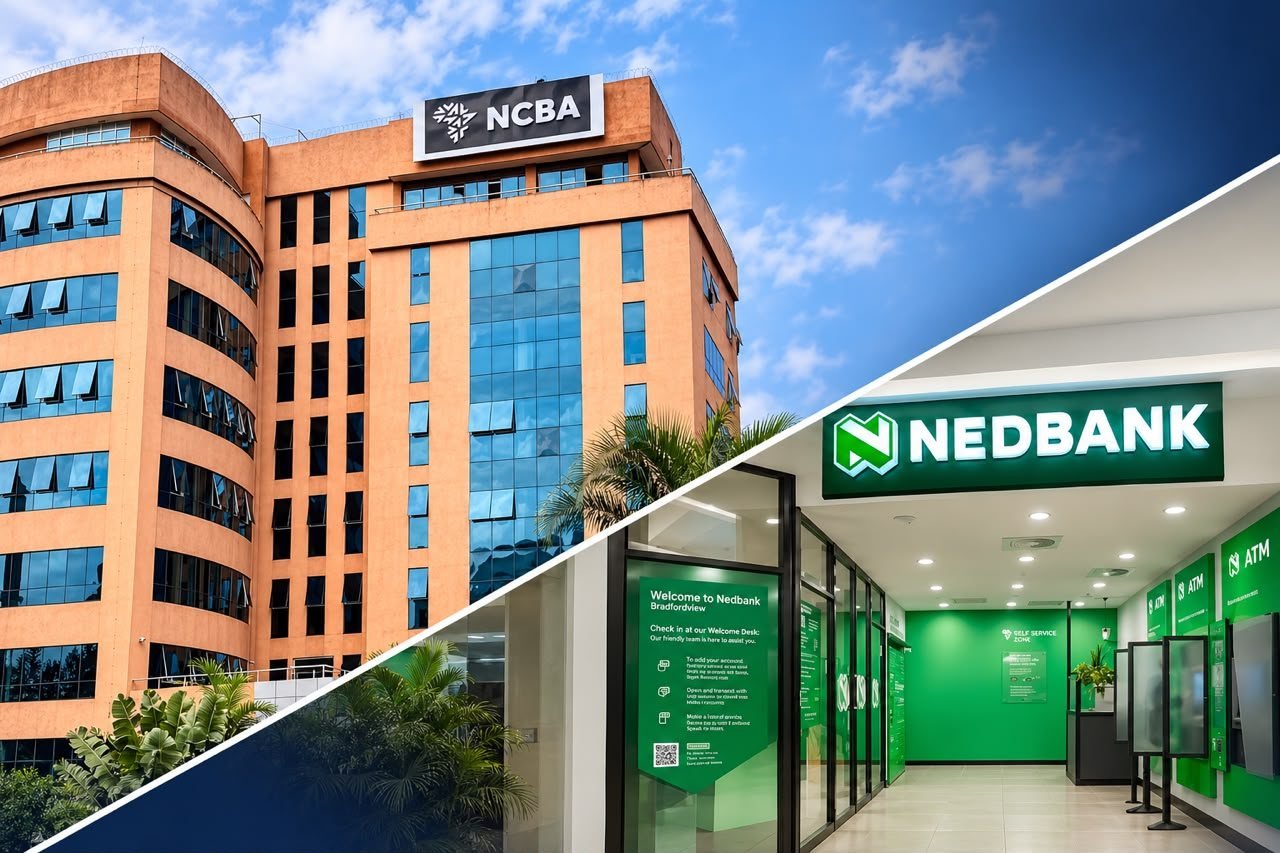
South Africa’s Nedbank has secured a route into East Africa through its acquisition of a controlling stake in Kenya’s NCBA Group, intensifying the contest among African lenders for growth beyond their domestic markets.
The purchase of 66 per cent of NCBA gives Nedbank an established presence in Kenya, Uganda, Tanzania and Rwanda, as well as a joint venture in Ivory Coast. It also provides access to a regional customer base and banking infrastructure that would have taken years to build organically.
The deal, completed on Monday after regulatory approvals, marks a significant shift in Nedbank’s African strategy. The Johannesburg-listed lender has historically concentrated its operations in Southern Africa, leaving it with a smaller continental footprint than rivals Standard Bank and Absa.
The acquisition brings Nedbank into a market that its competitors are also seeking to penetrate more deeply.
Standard Bank, which operates in East Africa through Stanbic, has outlined plans to expand its regional business, while Absa has moved to increase its stake in its Kenyan subsidiary.
Nigeria’s Access Bank has also entered the market through its acquisition of National Bank of Kenya. The lender had last year also agreed to acquire majority stakes in Uganda’s Finance Trust Bank before reversing its decision.
The convergence of these strategies reflects a search for growth in markets beyond South Africa, where economic expansion is more subdued and the banking sector is relatively mature. East Africa offers lenders opportunities in corporate finance, trade, consumer lending and digital financial services, supported by regional commerce and demand for credit.
Kenya is central to that ambition. Its developed financial infrastructure and role as a regional commercial hub make it an attractive entry point for lenders seeking to serve businesses operating across neighbouring economies.
Equity and KCB Group
But the market is not an open field. Equity Group and KCB Group have extensive domestic customer networks, established regional operations and strong digital platforms. Their position makes it difficult for foreign entrants to gain market share quickly, even when they bring additional capital and international banking expertise.
For Nedbank, buying NCBA offers a shortcut into this competitive landscape. Rather than establishing branches, recruiting teams and building customer relationships from scratch, it gains control of a functioning banking group with expertise in asset finance, investment banking and digital services.
The combination could also help Nedbank serve companies operating across Southern and East Africa, offering financing, transaction banking and advisory services across a wider geographical network.
“This landmark transaction establishes a significant presence for Nedbank in East Africa and marks a decisive step forward in our African growth strategy,” Nedbank chief executive Jason Quinn said.
The deal also changes the competitive landscape for NCBA. The Kenyan lender gains the backing of a larger banking group, potentially widening its access to capital, expertise and products as it competes with established regional banks and international entrants.
NCBA chief executive John Gachora said the partnership would enable the bank to pursue new opportunities and develop more sophisticated products.
“The name is the same, the people are the same, but the ambition and capabilities are tremendously magnified,” Gachora said.
Shareholder participation exceeded Nedbank’s initial target. NCBA investors tendered 1.316 billion shares, equivalent to 79.9 per cent of the issued share capital, before excess applications were scaled back to deliver Nedbank’s intended 66 per cent holding.
NCBA brand retained
NCBA will retain its Nairobi headquarters, local leadership, brand and listing on the Nairobi Securities Exchange. Public investors will continue to hold the remaining 34 per cent, while the existing branches, digital channels and day-to-day banking services are expected to remain unchanged.
The arrangement allows Nedbank to acquire control without immediately dismantling the local business model that has helped NCBA establish itself in the region. The commercial test will be whether the new ownership produces stronger lending, more cross-border business and improved returns without undermining the bank’s local relationships.
Nedbank’s purchase does not immediately close the gap with its larger South African competitors. Standard Bank operates in 21 African markets, while Absa has a presence in multiple countries outside South Africa, giving both groups a broader established network
Nor does the acquisition guarantee that Nedbank will gain market share from its rivals. NCBA must continue competing against domestic lenders with deep customer relationships, while Nedbank will need to demonstrate that its capital and wider network can translate into profitable business.
NCBA shares are scheduled to be suspended from trading from on or about October 21 to November 2 to allow reconciliation of the share register. The transfer of shares and settlement of the transaction are scheduled for November 3.