Uganda is preparing to use its state-owned telecommunications operator to sell subsidised internet data directly to consumers, marking a shift towards greater government intervention in a market dominated by two major players, MTN Uganda and Airtel Uganda.
The proposed entry of Uganda Telecommunications Corporation Limited (UTel) into the retail internet market is intended to lower connectivity costs for households and businesses. It could also introduce a new competitive dynamic in an industry where the two established operators command a substantial share of subscribers and data traffic.
The move comes as internet access becomes an increasingly important source of revenue for telecommunications companies and a critical input for businesses adopting digital payments, online marketing and electronic commerce.
Uganda had 19.7 million active mobile internet subscriptions by June 2026, according to the Uganda Communications Commission (UCC), reflecting the growing importance of data services in the country's telecommunications industry. The number represents subscriptions rather than necessarily unique users.
MTN Uganda, the country's largest mobile operator, reported 26.4 million subscribers in September 2026, equivalent to 63.4% of the mobile subscriber market. Its active data subscribers had reached 12.6 million. Airtel Uganda, its main competitor, reported 8.7 million data customers at the end of 2025, with data revenue increasing by 22.4% during the year.
The two companies have built extensive mobile networks and distribution systems, making it difficult for smaller competitors to challenge their position in the mass market. Outside mobile telecommunications, providers including Roke Investments, Liquid Intelligent Technologies, Simba Fibre, Savanna Fibre and Tangerine serve parts of the fixed broadband, enterprise and wireless internet markets.
We acknowledge the challenge of data accessibility, especially affordability, but as government we are taking that path
ICT and National Guidance Minister Justine Kasule Lumumba
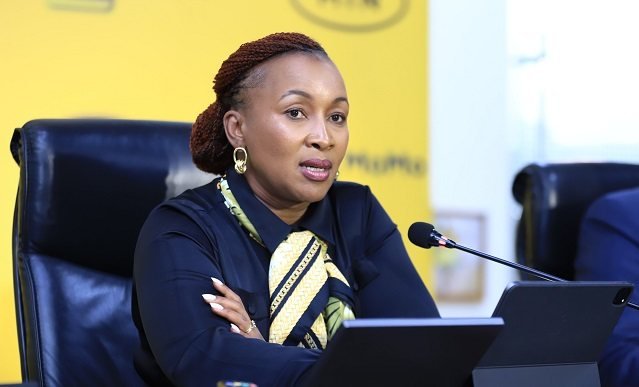
ICT and National Guidance Minister Justine Kasule Lumumba said the government had begun implementing the initiative as part of its digital transformation agenda under the Fourth National Development Plan.
Speaking to journalists at the Uganda Media Centre, Lumumba said the government had recognised that relying on private telecommunications companies alone had not delivered affordable internet access to all Ugandans.
“We acknowledge the challenge of data accessibility, especially affordability, but as government we are taking that path,” she said.
The government has not disclosed the proposed retail tariffs, the level of subsidy or when the service will be launched. These details will determine whether UTel can offer a meaningful alternative to existing providers and whether its entry will force competitors to reconsider their pricing.
Demand for cheaper connectivity
The intervention comes against a backdrop of growing demand for cheaper connectivity and the expansion of informal internet distribution networks. UCC has previously estimated that about 4,000 unlicensed hotspot operators were providing public Wi-Fi services across the country.
The regulator estimated that licensed providers charged an average of Shs2,000 per gigabyte, compared with about Shs1,000 among unlicensed operators, a price difference of roughly 50%.

The gap points to a market in which consumers are increasingly willing to seek cheaper alternatives, even as formal operators contend with licensing requirements, taxation and investment in network infrastructure.
The government has directed enforcement teams to stop confiscating hotspot equipment as consultations continue on how to regulate operators offering lower-priced internet services.
For established telecommunications companies, UTel's entry could create pressure on retail data prices, particularly among prepaid customers who are sensitive to the cost of internet bundles. However, the extent of that pressure will depend on whether the state-owned operator can offer comparable network coverage, speeds and reliability.
UTel is expected to draw on its telecommunications infrastructure and international connectivity investments to support the government's affordability programme.
The company's Chief Operations Officer, Maggie Mukiibi Lutwama, told government officials that UTel provides internet and data, mobile, fixed-line and managed services to government institutions, businesses and communities.
The company operates 16 service centres, has a presence in about 35 districts and employs approximately 250 people.
UTel also has a shareholding in West Indian Ocean Cable Company (WIOCC), an international telecommunications infrastructure provider. Management reported that the value of the investment had increased from about $3.9 million to $39 million, equivalent to approximately Shs14 billion and Shs140 billion respectively.
The reported increase could strengthen the company's position in accessing international bandwidth, an important component of the cost of delivering internet services.
International bandwidth connects domestic telecommunications networks to global internet infrastructure. Greater access to this capacity could help reduce wholesale connectivity costs, although the prices consumers ultimately pay also depend on domestic transmission infrastructure, electricity, network maintenance, taxes and distribution expenses.
Lumumba said the government was engaging the Ministry of Finance, Planning and Economic Development to identify ways of reducing the cost of internet services and digital devices.
Public education on data consumption
She also called on UCC to intensify public education on data consumption, arguing that consumers needed to understand how their devices and applications affected internet usage. Newer smartphones, including 5G-enabled models, can consume more data depending on their settings and the applications being used.
Sophia Nantongo, the ministry's acting permanent secretary, said the cost of internet services and digital devices remained a significant barrier to wider participation in the digital economy, calling for a coordinated government response.
For businesses, cheaper data could reduce expenditure on digital payments, online marketing, customer communication and electronic transactions. Small enterprises, particularly those operating outside Kampala, could benefit from improved access to online markets and customers.
But the government's proposed intervention raises questions about the economics of providing subsidised telecommunications services.
Network infrastructure requires sustained capital investment, while maintenance and expansion generate recurring costs. If UTel sells data below the cost of providing it, the difference will have to be financed through government support, cross-subsidisation or efficiencies elsewhere in its operations.
There is also the question of whether state-backed competition could affect investment decisions by established operators. MTN and Airtel have invested in network coverage, fibre infrastructure and newer technologies, with returns depending partly on their ability to generate revenue from data consumption.
A significant reduction in retail prices could stimulate demand and bring more consumers online, but it could also put pressure on operators' margins if revenue growth fails to compensate for lower prices.