




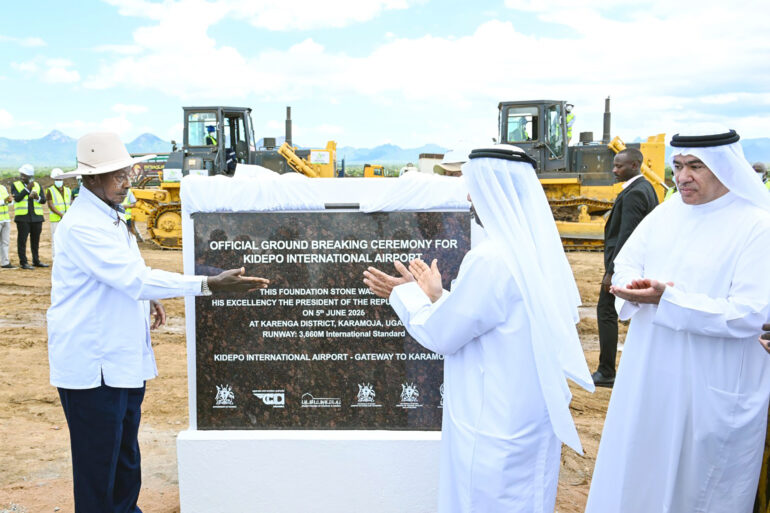
When President Yoweri Museveni broke ground on the Kidepo International Airport in Karenga District recently, it was more than a ribbon-cutting moment.
It was a reckoning – an acknowledgment that one of Uganda’s most storied yet most neglected regions had, for too long, been left to fend for itself.
The project, funded by the Sharjah Chamber of Commerce and Industry of the United Arab Emirates at an estimated cost of over USD 72 million, will deliver a 3.6-kilometre runway, a passenger terminal exceeding 7,400 square metres, and a cargo terminal nearly ten times that size. Its scale is deliberate.
This is not a bush airstrip; it is a statement of confidence in Karamoja’s potential to compete on a continental stage.
That confidence rests, in large part, on Kidepo Valley National Park — a wilderness of golden savannas, rugged mountains, and river valleys in Uganda’s far northeastern corner that conservationists and seasoned safari travellers have long regarded as one of Africa’s finest.
Home to over 77 mammal species, including lions, cheetahs, and the rare Rothschild’s giraffe, and recording over 470 bird species, Kidepo is a natural asset of the first order.
Its problem has never been quality; it has always been remoteness. The airport fixes that. International tourists who once abandoned the idea after calculating the punishing road journey from Kampala now have a viable alternative – flying in directly from Europe, Asia and America.
A credible investor
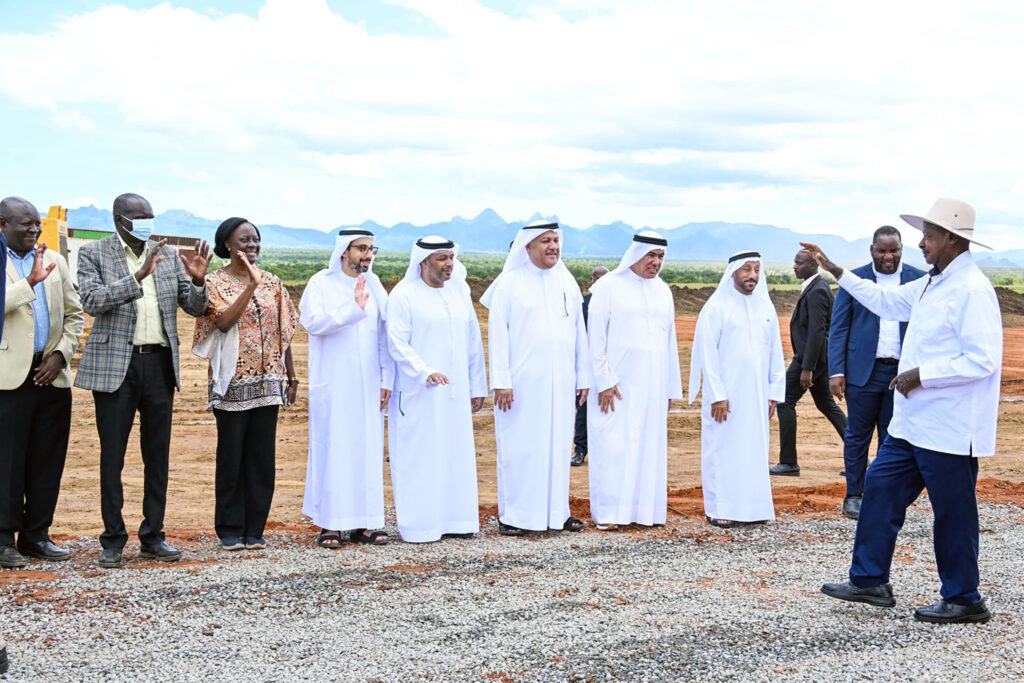
President Museveni (R), salutes the investors and other officials at the launch. PPU PHOTO
The Sharjah Chamber’s involvement deserves particular attention. In recent years, the Chamber has made Africa central to its international trade strategy, prioritising structured, long-term investment partnerships over transactional engagements.
Its commitment to Kidepo, which includes the construction of tourist hotels within the national park, currently employing over 1,600 Ugandans, reflects the kind of serious, multi-sector investor confidence that Uganda has worked hard to attract. When capital of this quality chooses Karamoja, others take notice.
The economic logic extends well beyond tourism. The cargo terminal positions the region to export produce, minerals, and goods directly to international markets.
The airport integrates Karamoja into the national logistics network and, critically, reduces the cost of doing business with neighbouring South Sudan and Kenya — a factor of no small importance as the African Continental Free Trade Area reshapes regional commerce.
Connectivity, as East Africa’s growth story has consistently demonstrated, is not a luxury; it is infrastructure’s most essential output.
For Karamoja itself, the symbolism is inseparable from the economics. A region that spent decades defined by insecurity, cattle rustling, and underdevelopment is now drawing sovereign-backed Gulf capital and international tourist traffic.
Peace and stability, secured through deliberate government effort, made this possible.
The airport consolidates those gains and creates conditions for productive manufacturing industries, marble extraction, and other investments already taking root to mature into a genuine industrial base.
Kidepo is no longer just Uganda’s best-kept secret. It is becoming its most promising economic frontier.