




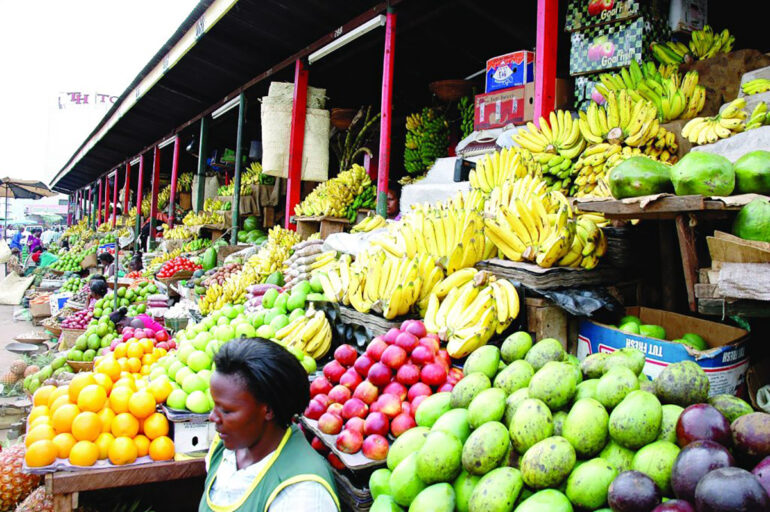
Uganda has remained in the low-income category in the latest World Bank income classification, underscoring the country’s continued struggle to raise average household incomes despite years of sustained economic growth and rising public investment.
The World Bank’s 2026 income classification update, released on July 8, 2026, places the world’s economies into four categories: low-income, lower-middle-income, upper-middle-income and high-income – based on Gross National Income (GNI) per capita.
For the 2026 financial year, economies with a GNI per capita of US$1,145 or less are classified as low-income, while those with incomes between US$1,146 and US$4,515 fall into the lower-middle-income category.
Upper-middle-income economies have GNI per capita ranging from US$4,516 to US$14,005, while countries above US$14,005 qualify as high-income economies.
Uganda remains among 20 African countries classified as ‘low-income’ alongside Burkina Faso, Burundi, the DR Congo, Ethiopia, Madagascar, Malawi, Mali, Mozambique, Niger, Somalia, South Sudan, Sudan and several others.
On the continent, eight countries attained upper-middle-income status: Algeria, Botswana, Cabo Verde, Equatorial Guinea, Gabon, Libya, Mauritius and South Africa.
Seychelles continues to be Africa’s only high-income economy, maintaining a position it has held for several years owing to its relatively high income per capita and diversified economy.
The World Bank notes that its income classifications are not intended to measure a country’s overall development or quality of life. Instead, they are used to determine lending eligibility, shape development policy and provide a standardized way of comparing national income levels across countries.
Uganda’s Economic Growth Versus Household Income
Uganda’s economy has expanded steadily over the past decade. However, average income per capita remains below the threshold required to graduate into the lower-middle-income category.
Economists say this reflects one of Uganda’s longstanding economic challenges: while the economy is expanding, population growth of more than 3 percent annually, widespread informality and relatively low labour productivity continue to suppress income per person.
The country also faces persistent challenges including youth unemployment, low industrial value addition, limited export diversification and dependence on rain-fed agriculture, all of which slow improvements in household earnings.
Makerere University economist Fred Muhumuza defended the World Bank’s classification.
“Uganda’s economy remains heavily supported by foreign investment, development financing and external borrowing, meaning international institutions often have access to extensive macroeconomic data that inform their assessments,” he said.
He said the World Bank’s classification reflects average income levels rather than the size of the economy, explaining that a country can record strong GDP growth while remaining low-income if that growth does not translate into higher earnings for the average citizen.
As Uganda prepares for commercial oil production and continues investing in industrialization, infrastructure and export promotion, policymakers hope these investments will eventually translate into higher household incomes and improve the country’s standing in future World Bank classifications.