Thousands of residents in three Ugandan districts are expected to benefit from improved schools, water and sanitation services under an US$8 million (Shs32 billion) grant from Iceland.
The funding will support projects in Namayingo, Kwania and Amolatar between 2026 and 2028.The projects are intended to address gaps in basic services, with better school facilities expected to improve learning conditions and investment in water and sanitation helping to improve public health.
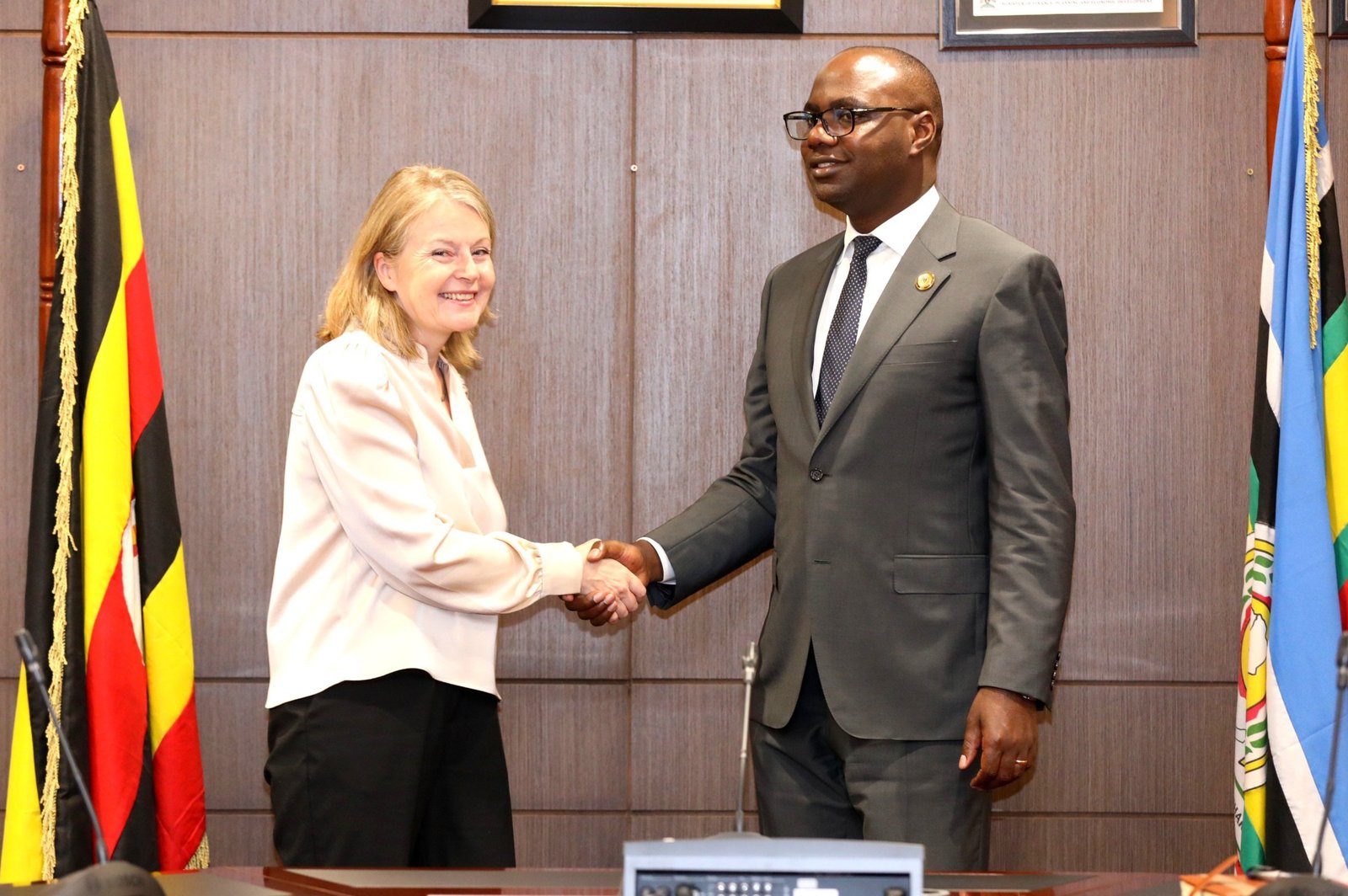
Katrín Einarsdóttir, head of the Iceland Mission in Kampala, announced the grant during a meeting with Finance Minister Henry Musasizi on Monday.
The grant is part of Iceland's continuing development support to Uganda and follows earlier projects in Kalangala, Buikwe and Namayingo.
Einarsdóttir said Iceland remained committed to supporting programmes that could deliver lasting benefits, particularly in education.
But she also stressed the need for the money to be properly managed. The Icelandic mission said strong financial controls, oversight and good implementation would be important in ensuring the projects deliver the intended results and that Icelandic taxpayers could account for how the money was spent.
The new funding comes as Uganda seeks to mobilise more external financing and attract private investment to support economic growth.
The two countries have very different economic profiles. Iceland had a population of about 392,000 in 2025 and a GDP of US$38.58 billion, compared with Uganda's population of 51.4 million and GDP of US$61.99 billion, according to the World Bank statistics.
But the difference is clearer when measured by income per person. Iceland's GDP per capita was about US$98,323, compared with US$1,206.30 in Uganda. This means that means that the average economic output per person in Iceland was more than 80 times that of Uganda, despite Iceland having a much smaller population.
Uganda, however, recorded faster economic growth. Its economy expanded by about 6.3% in 2025, compared with 1.3% in Iceland, according to the World Bank.
Against this backdrop, Musasizi urged Iceland to link future support to Uganda's Tenfold Growth Strategy, which sets out the government's ambition to expand the economy to US$500 billion by 2040.
“Uganda has clearly defined what it wants to be in the next 15 years through the Tenfold Growth Strategy. Iceland is welcome to support the anchor sectors of the economy—Agro-Industrialization, Tourism Development, Mineral-Based Industrialisation, and Science, Technology—and their enablers,” Musasizi said.
He also called for Iceland to help Uganda attract foreign investors and tourists and support businesses that add value to locally produced goods.
“We want you to attract foreign direct investments, tourism as well as support value addition and innovations. We would also like Promote Uganda as the best investment destination,” he said.
Musasizi said Uganda hopes increased investment will help expand businesses, create jobs and raise incomes, while giving international partners a greater role in the country's economic transformation.