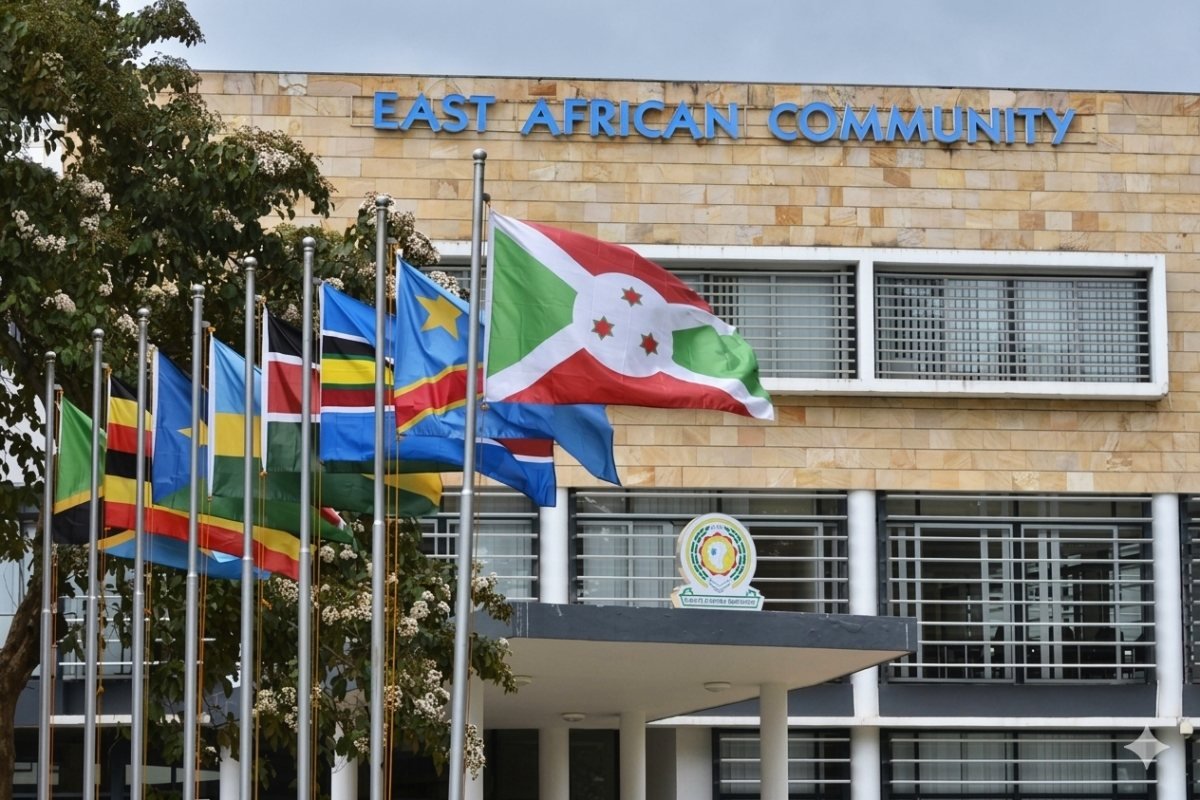
The East African Community is facing a deepening funding crisis, with more than $125mn in unpaid contributions from member states threatening its ability to finance regional institutions and advance economic integration.
The outstanding arrears exceed the bloc’s approved annual budget of $110.86mn for the 2026/27 financial year, highlighting the scale of the financial strain facing an organisation whose ambitions include expanding regional trade, improving infrastructure links and advancing monetary integration.
The crisis has been compounded by slow payments, with partner states having remitted only 17 per cent of their assessed contributions for the current financial year.
The figures were disclosed at the 21st Ordinary Meeting of the Bureau of Speakers of EAC national parliaments and the East African Legislative Assembly (EALA), which concluded in Arusha, Tanzania, on October 2.
Parliamentary leaders urged governments and finance ministries to clear outstanding payments, warning that continued delays could undermine the operations of the regional bloc.
Abdulkadir Mohamed Nur, Speaker of Somalia’s House of the People, who chaired the meeting, said legislators would use parliamentary channels to press their respective governments to honour their financial commitments.
The funding difficulties come as Uganda assumes the EAC’s rotating chairmanship under Uganda’s President Yoweri Museveni.
The eight-member bloc comprises Uganda, Kenya, Tanzania, Rwanda, Burundi, the Democratic Republic of Congo, South Sudan and Somalia.
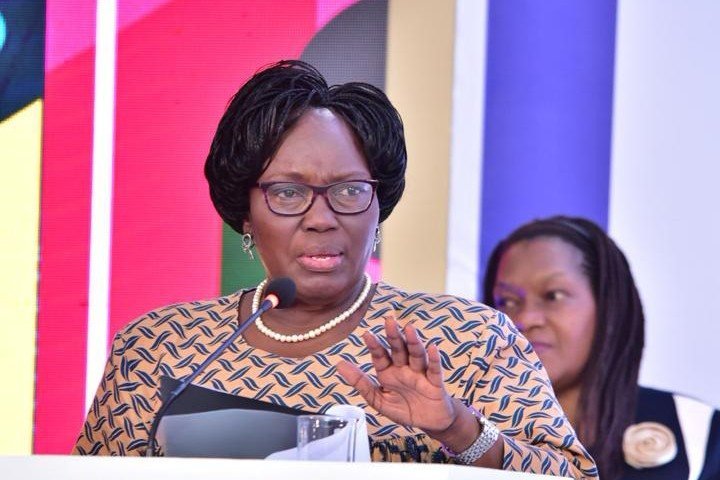
The October report did not provide a country-by-country breakdown of the outstanding arrears. However, Uganda’s First Deputy Prime Minister and Minister for East African Community Affairs, Rebecca Kadaga, said in July that only Kenya and Tanzania had fully met their annual contributions. She also disclosed that DR Congo owed $14.7mn at the time.
The funding gap threatens programmes covering trade, infrastructure, industrialisation, monetary integration and institutional development. These are central to the bloc’s ambition to create a more integrated regional market and reduce the cost of cross-border business.
New funding formula faces early test
In an attempt to address persistent financing challenges, EAC heads of state adopted a revised contribution formula at their March summit, which took effect on July 1.
Under the arrangement, half of each country’s contribution is shared equally among the eight members, while the remaining half is determined by economic capacity, measured using average GDP per capita over the preceding five years.
The formula is designed to distribute the financial burden more equitably, requiring economies with greater capacity to contribute more.
Kenya has the largest assessed contribution for 2026/27 at $11.6mn, followed by Tanzania at $8.2mn. Uganda is expected to pay $7.3mn, while Rwanda’s assessment stands at $7.2mn.
DR Congo has been assessed at $5.9mn, Somalia at $5.8mn, South Sudan at $5.2mn and Burundi at $4.5mn. The eight contributions amount to approximately $55.7mn.
The reforms also provide for a conditional waiver of 50 per cent of accumulated historical arrears, with the remaining balance expected to be cleared within two years from March 7, 2026. The waiver does not extend to new arrears accumulated during the current financial year.
Heads of state have also directed the EAC Council of Ministers to finalise sanctions against countries that fail to meet their financial obligations.
But the latest figures raise questions about whether the revised model will resolve the bloc’s longstanding dependence on timely government contributions.
For businesses, prolonged funding constraints could weaken the institutions responsible for coordinating regional trade and integration.
Delays in implementing agreed programmes risk increasing transaction costs, creating uncertainty for exporters and limiting opportunities for small and medium-sized enterprises seeking to enter neighbouring markets.
Funding challenges hurt regional integration
The funding problem is also affecting national participation in regional integration processes. Stella Kiryowa, a Ugandan member of the East African Legislative Assembly, said inadequate funding and poor coordination among government agencies were weakening the country’s engagement in regional affairs.
She rejected suggestions that Uganda was lagging in advancing integration, arguing that the country had made progress in legislative processes but needed to address institutional weaknesses.
“Ugandans naturally, we are not slow. If you look at what is happening right now, Uganda is doing much, much better in most of these things,” she said.
Kiryowa identified poor coordination among government agencies as a major obstacle, saying some key stakeholders were not adequately informed about regional initiatives.
“There are gaps in coordination. We established that some of the key stakeholders were not being informed; they didn’t know what was happening,” she said.
She also expressed concern that activities previously supported by government funding, including consultations and legislative processes relating to East African affairs, were struggling to secure resources as competing national priorities took precedence.
The constraints, she warned, could limit Uganda’s ability to participate in regional policy discussions and implement agreed programmes.