




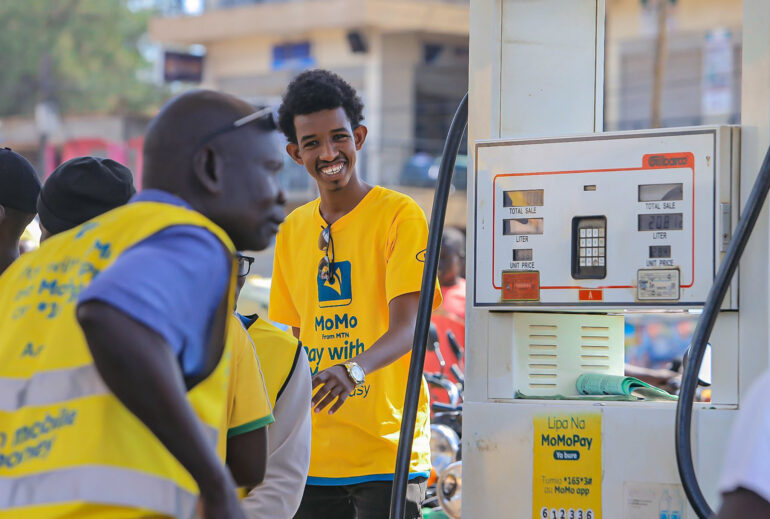
There is a stubborn fiction that persists in Uganda’s markets, on its boda bodas, and behind the counters of its supermarkets: that cash is easier. It is not. It is simply familiar.
And familiarity, as any economist will tell you, is a poor substitute for efficiency.
That is why MTN Mobile Money Uganda’s latest campaign, “The Power of MoMo,” deserves more than a passing glance from the business community.
Launched on March 25th, the campaign is the next chapter in MTN MoMo’s “Power to Be More” platform – and this time, the company has put its money where its mouth is. All payments below UGX 5,000 are now free. No charges.
Consider the scale at which this plays out. MTN MoMo today serves over 14 million customers across Uganda.
In the 2024/25 financial year, mobile money transaction values jumped nearly 24 percent, reaching over UGX 42 trillion in a single quarter.
The agent network – the human infrastructure behind this digital revolution – grew by 23.8 percent in the same period, swelling from 883,343 to more than 1.09 million agents nationwide.
These figures represent a financial ecosystem that has quietly become the circulatory system of Uganda’s economy.
For businesses, especially the SMEs that form the backbone of Uganda’s private sector, the practical case for going cashless has never been stronger. Cash is notoriously leaky.
It is harder to track, easy to steal, and a daily headache to reconcile. Every MoMo transaction, by contrast, creates an instant and permanent record: a digital trail that simplifies tax compliance with the Uganda Revenue Authority and, crucially, builds the kind of financial history that unlocks access to formal credit.
Platforms like MoKash already use transaction data to extend instant, collateral-free micro-loans. For the trader who has never been near a bank loan, this is transformative.
There is also the matter of security. Moving large sums of cash from a Kikuubo shop to a bank branch is, frankly, an act of faith in a city that does not always reward it.
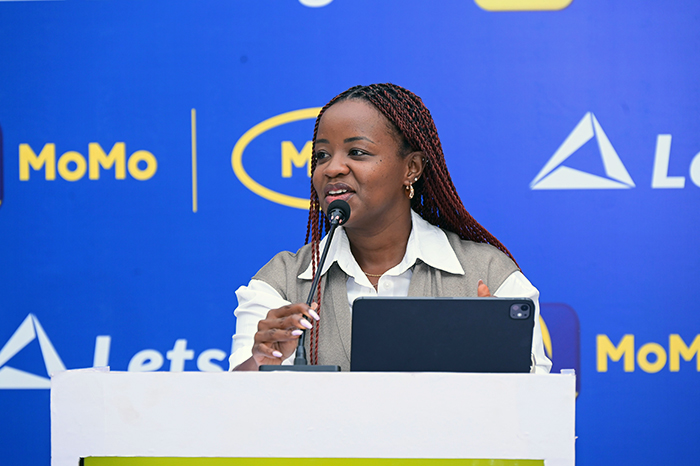
Ms Jemima Kariuki, Chief Product Officer at MTN MoMo, says the campaign is about embedding MoMo into the daily lives of Ugandans.
Keeping value in a digital wallet eliminates the risk of theft — by strangers and, it must be said, by staff. And geography is no longer an obstacle: a Kampala trader can receive instant payment from a buyer in Arua and dispatch goods on the next available courier.
Mobile money does not respect distance.
MTN MoMo’s campaign uses a “12-hour cashless challenge” – where influencers navigated an entire day in Kampala without touching a single shilling note – to demonstrate, in vivid and relatable terms, that this is neither a luxury for the developed nations nor a dream for the future.
It is practical, today. From a boda fare to breakfast at the market to a utility bill, MoMo handles it all. Customers can access these benefits simply by using the MTN MoMo app or by dialling *165*3# on any mobile phone.
In a recent report, the government noted that agent networks have become the dominant access points for financial services, reshaping how both households and businesses participate in the economy.
Critics have often raised the spectre of high mobile money taxes and transactional fees. They are not wrong to flag the cost conversation.
But the honest accounting must include what cash actually costs: transport to the bank, and the working capital locked up waiting for a cheque to clear. When you add it all up, the digital alternative is not just more convenient; it is cheaper.
MTN MoMo’s “Power of MoMo” campaign does not ask Ugandans to take a leap of faith.
Instead, it removes the cost barrier, hands them a free tool, and dares them to try. For Ugandans and the business community, the only wrong move now is to stand still.