Uganda and Tanzania have agreed to accelerate major energy, railway and trade infrastructure projects in a push to deepen economic integration, attract investment and lower the cost of doing business across East Africa.
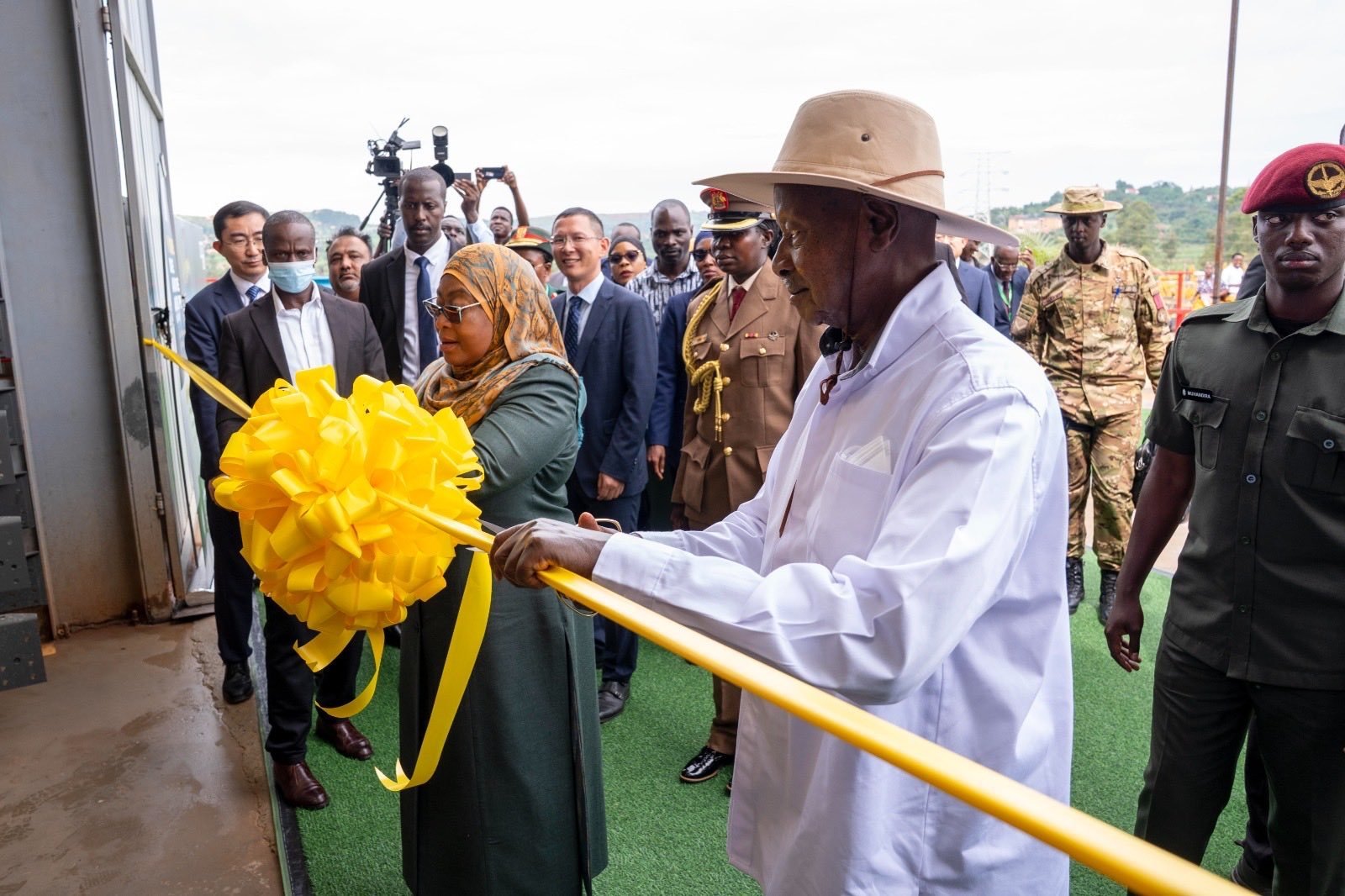
The commitments followed a two-day state visit by Tanzanian President Samia Suluhu Hassan to Uganda from November 18 to 19, during which she held bilateral talks with President Yoweri Museveni at State House, Entebbe.
The agreements focus on expediting the East African Crude Oil Pipeline (EACOP), developing a regional petroleum industry, establishing cross-border railway links and removing trade barriers that continue to impede commerce between the neighbouring countries.
The discussions reflect a broader effort by the two governments to translate their geographic proximity and economic ties into more efficient transport networks, expanded industrial capacity and increased cross-border investment.
Museveni argued that production alone could not deliver economic prosperity without access to markets, efficient infrastructure and investment in productive sectors.
“Production alone cannot generate wealth without markets to absorb goods,” he said, calling for stronger regional cooperation to expand production and improve access to markets.
Hassan described relations between the two countries as strong, but urged both governments to move beyond signing agreements and prioritise implementation. She reaffirmed Tanzania’s commitment to cooperation with Uganda under the principle of “one people, one destiny”.
Oil pipeline anchors regional energy ambitions
A central priority is the completion of EACOP, which was reported to be 93.9 per cent complete at the time of the visit.
The 1,443-kilometre pipeline will transport crude oil from Uganda’s oilfields in the Albertine Graben to an export terminal at Chongoleani, near Tanzania’s Tanga Port.
The two presidents directed their respective institutions to accelerate outstanding construction, testing and commissioning activities to prepare the pipeline for operations.
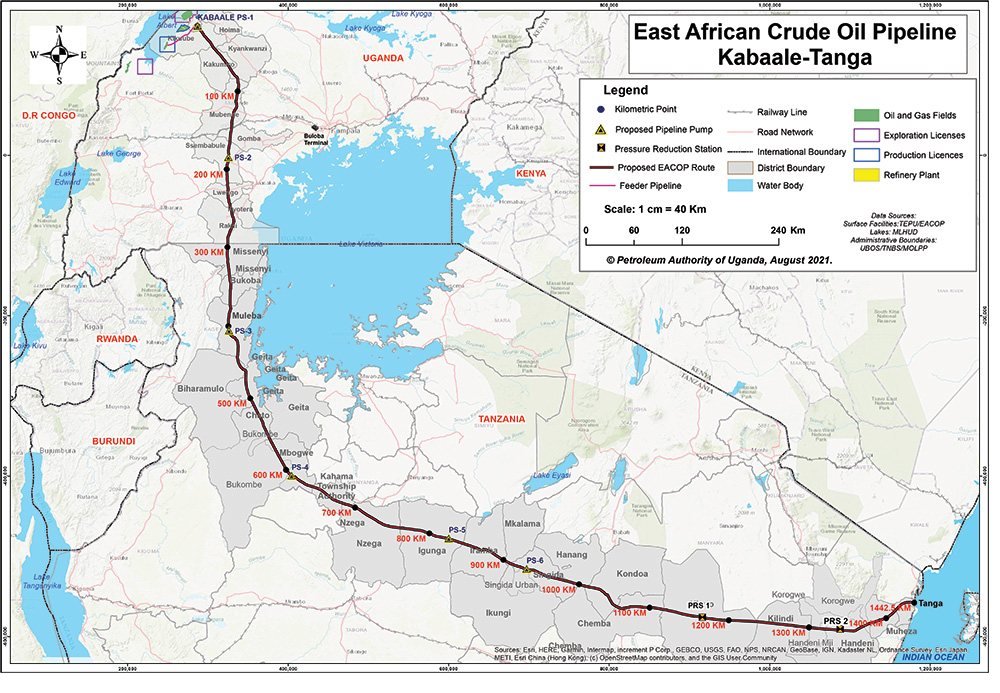
Beyond providing an export route for Uganda’s crude, the project is expected to generate business for Tanzania in transportation, logistics, petroleum services and associated infrastructure.
The two governments are also seeking to capture more value from the emerging oil economy by developing an integrated regional petroleum industry.
Under the partnership, they will accelerate plans to develop Tanga into a regional energy hub, with investments in petroleum storage, refining, trading, distribution and logistics.
The initiative also envisages joint ventures in fertiliser production, plastics, industrial chemicals and other petroleum-based products.
Such investments could create opportunities for manufacturers, industrial processors and logistics companies while helping establish regional supply chains around the oil industry.
Energy cooperation extends beyond petroleum. The two countries also prioritised proposed natural gas and refined petroleum products pipelines, alongside a 400-kilovolt electricity interconnector linking Wobulenzi, Masaka, Ibadakuli and Shinyanga.
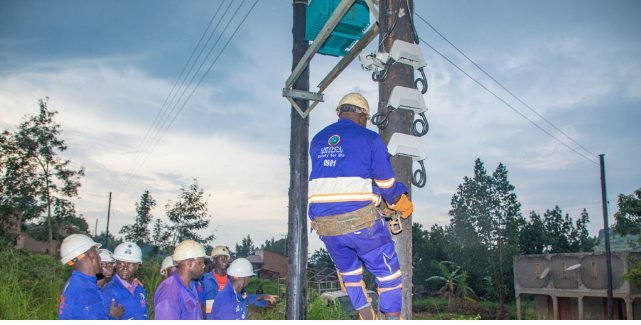
The electricity project is intended to strengthen cross-border power transmission, improve energy security and facilitate electricity trade. Reliable and competitively priced power will be critical to the expansion of manufacturing and other energy-intensive industries.
Railway and lake transport to reshape trade corridors
Transport infrastructure was another major focus. The presidents witnessed the signing of a framework agreement for the proposed Isaka-Lusahunga-Murongo/Kikagati-Mpondwe Standard Gauge Railway.
The railway is intended to improve the movement of goods and passengers between the two countries, lower transport costs and provide businesses with better access to regional and international markets.
The leaders directed their respective ministries, railway authorities and other institutions to expedite feasibility studies, technical designs and financing arrangements ahead of implementation.
For Uganda, improved railway connectivity could provide an additional route to Tanzania's transport network and the Port of Dar es Salaam. This would potentially diversify export and import corridors for agricultural produce, manufactured goods and industrial raw materials.
The two governments also agreed to improve infrastructure at Port Bell and strengthen its railway connection to Kampala to increase cargo-handling capacity and facilitate passenger and freight transport across Lake Victoria.
Improved lake transport could complement road and railway networks, ease pressure on highways and create opportunities for logistics operators and businesses engaged in regional trade.
Trade imbalance and barriers test integration ambitions
Trade expansion is another priority, particularly efforts to diversify exports, improve market access and address the substantial imbalance in commercial exchanges.
Figures presented during Uganda's 2025 trade mission to Tanzania show that bilateral trade reached approximately $2.23 billion in 2024, up from $1.36 billion in 2023.
Uganda exported goods worth about $185 million to Tanzania, while imports from the neighbouring country stood at approximately $2 billion.
The figures underline Tanzania's importance as a trading partner but also expose the scale of Uganda's trade deficit and the challenge of expanding its export base.
Production alone cannot generate wealth without markets to absorb goods
President Museveni
The renewed cooperation could provide Ugandan agricultural producers, manufacturers and service providers with greater access to the Tanzanian market, while encouraging Tanzanian businesses to invest in Uganda.
However, persistent non-tariff barriers remain a constraint. The two presidents expressed concern about administrative and regulatory obstacles that increase the cost of cross-border trade and delay the movement of goods.
They directed relevant government agencies to resolve outstanding barriers and agreed to establish a Tanzania-Uganda Joint Trade Committee to address commercial disputes and improve trade relations.
The partnership also covers public health, with the two governments committing to strengthen disease surveillance, information sharing and cross-border preparedness, as well as access to vaccines, medicines and essential health commodities.
They further reaffirmed cooperation through the East African Community, African Union, Intergovernmental Authority on Development and United Nations on regional peace, security and stability.
For businesses and investors, the agreements offer the prospect of a more integrated regional market supported by improved energy, transport and trade infrastructure.
But the economic returns will depend less on the number of agreements signed than on their implementation. Financing arrangements, regulatory coordination, project execution and the removal of trade barriers will determine whether the proposed infrastructure translates into lower business costs and stronger commercial activity.